I’m Joshua Sortino, a Miami + NYC-based Design Director, advisor, and investor. I will improve your startup’s user experience, design culture, and team. We should talk →


An Ethereum L2 with native yield
Design Director · 2023 – Current
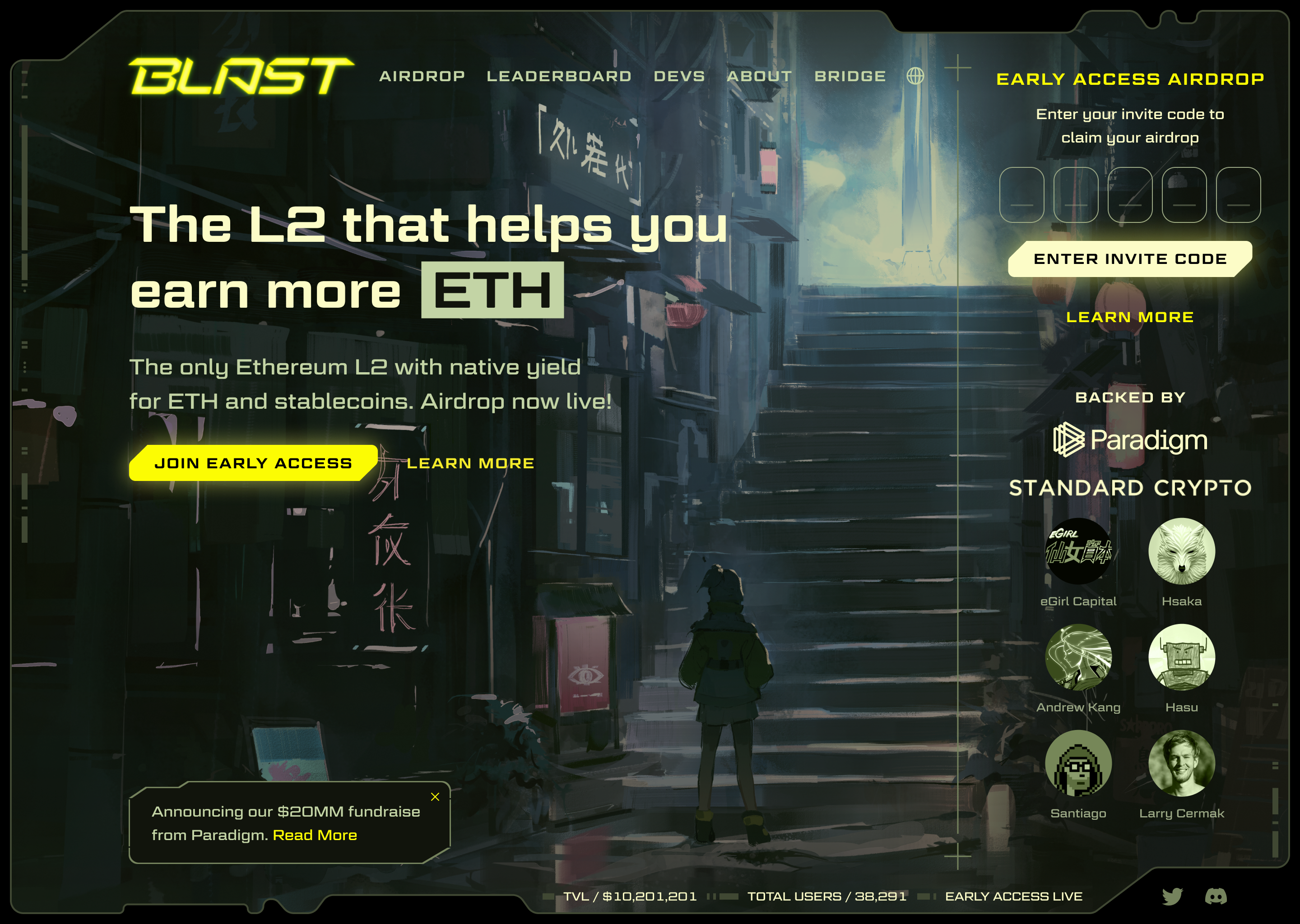
- $2B+bridged before mainnet existed
- 3,000+teams building by launch
- 180K+waitlist users before launch
Yield as the product
Most L2s compete on fees and block times. Blast launched on an innovative promise: bridge ETH or stablecoins and they earn native yield automatically without staking or wrapping. The chain was the easy part, but the real problem was turning a launch into something that felt unique and that people wanted to be a part of.
Building anticipation for a big launch
The lead up to the Blast launch was highly anticipated in the crypto community, with thousands waiting for the very second the project went live.
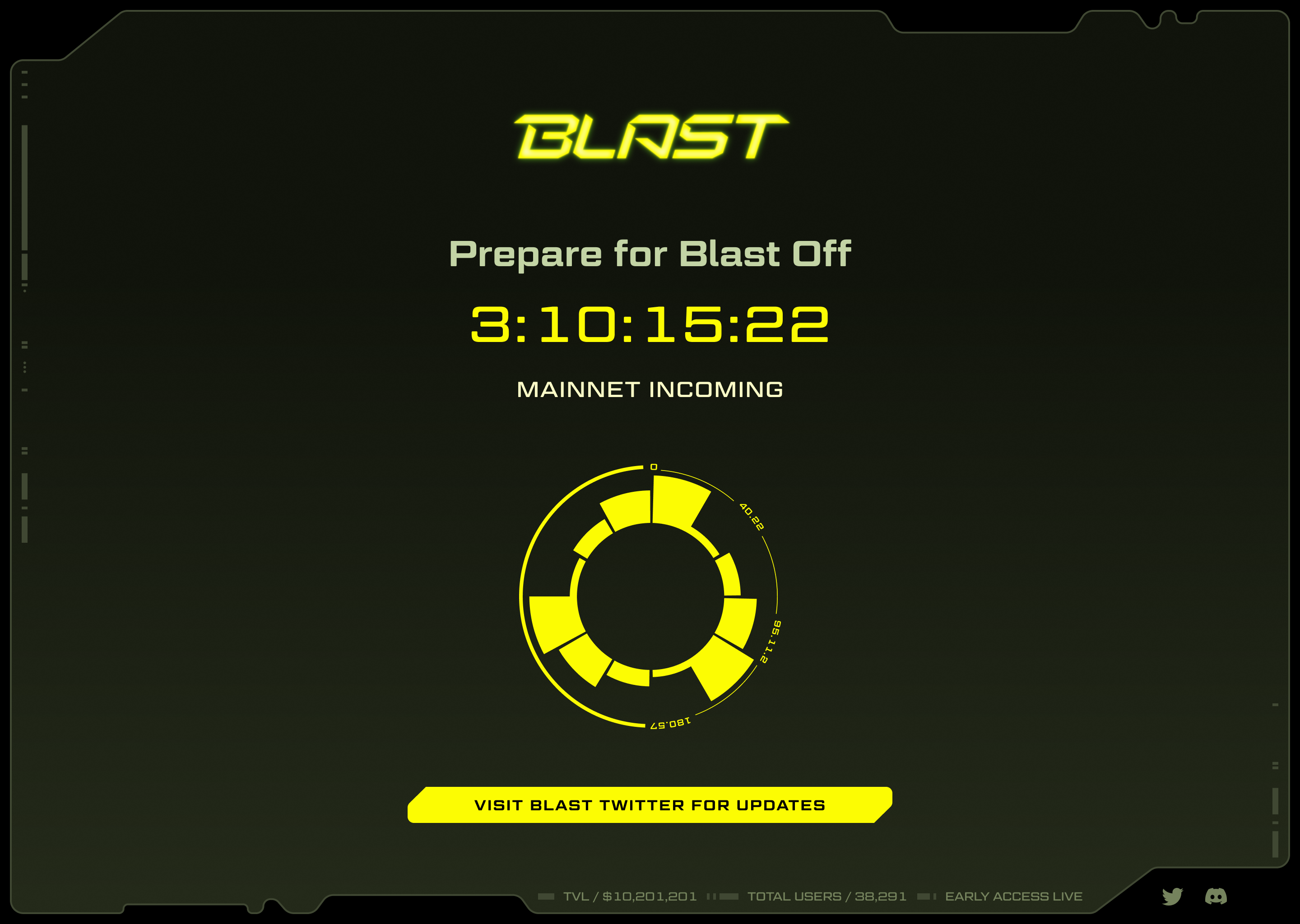
The countdown screen turned the wait into a social event with the airdrop ticking down in real time.
An airdrop you earn your way into
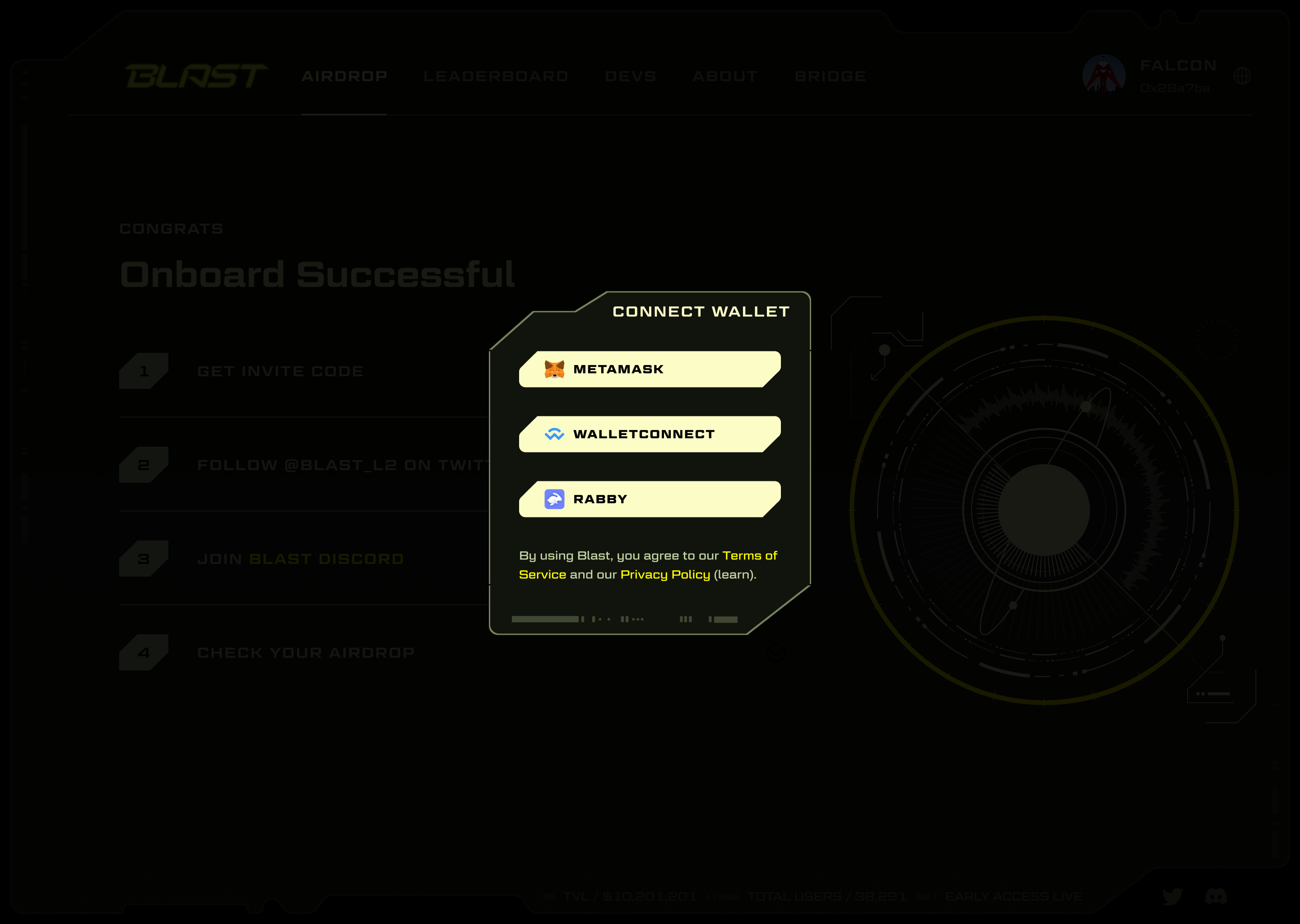
Access was invite-only and gated behind a short set of tasks, so growth was built into the front door. The onboarding had to make a multi-step funnel feel like a single, fast motion rather than a set of chores.
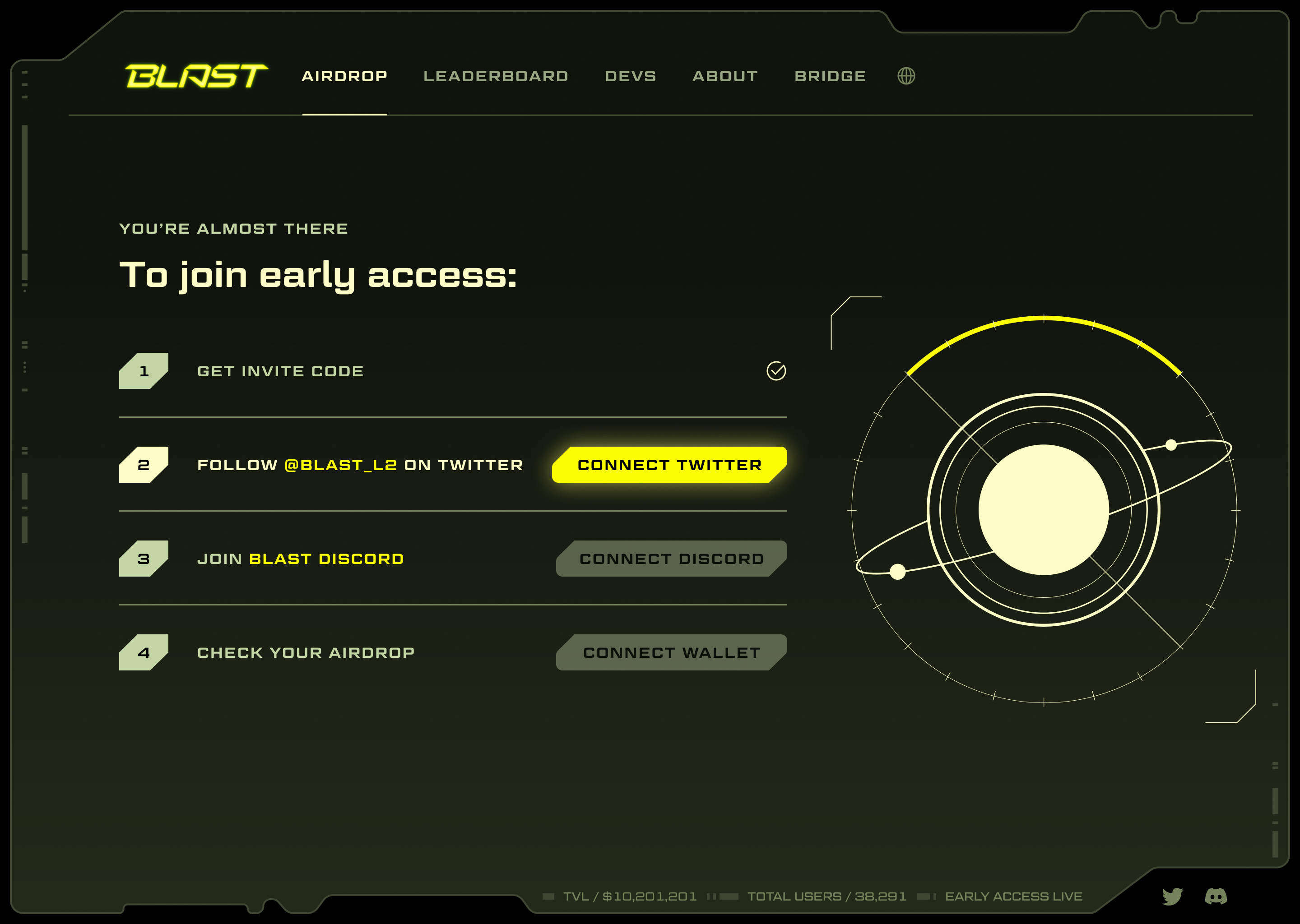
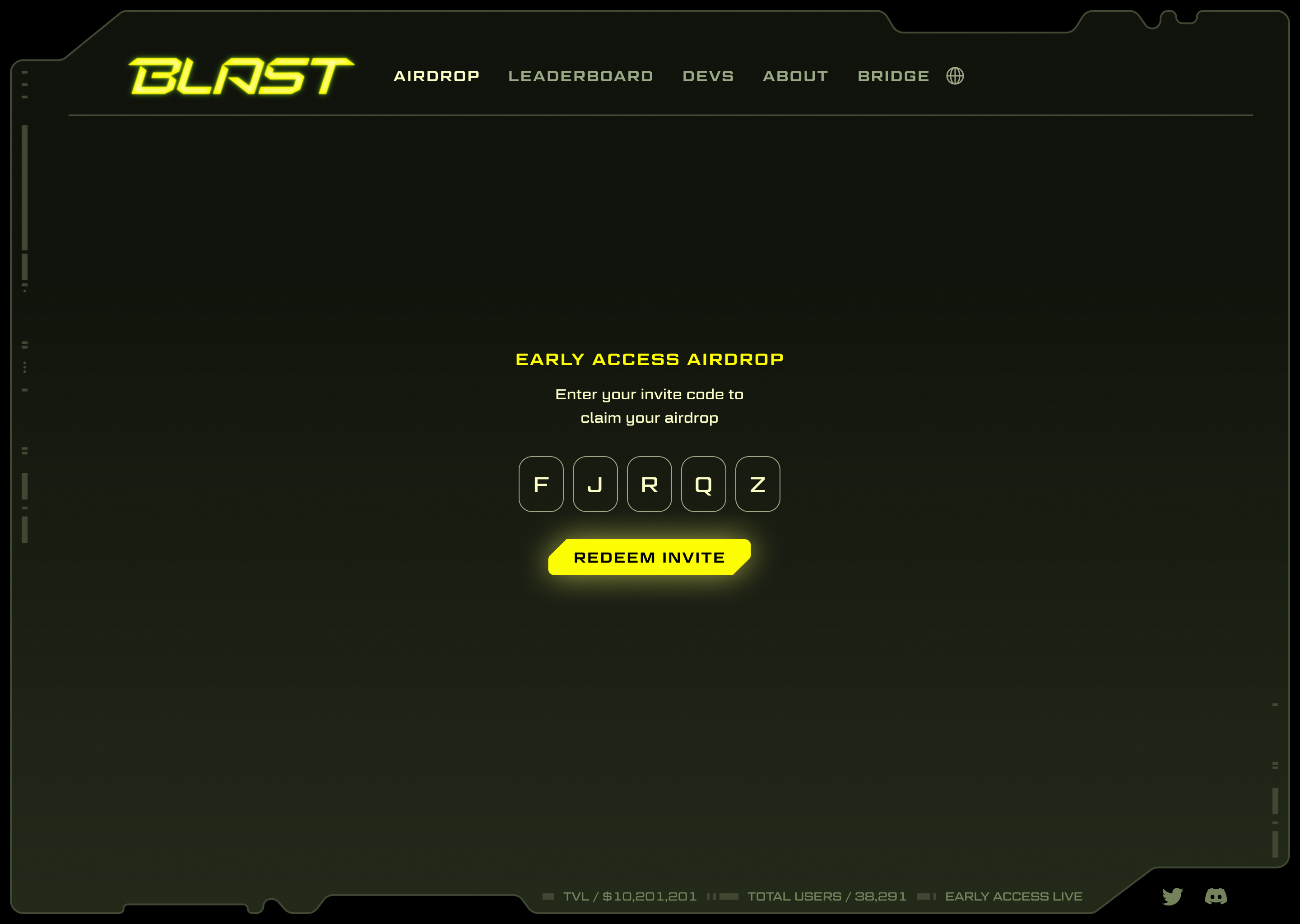
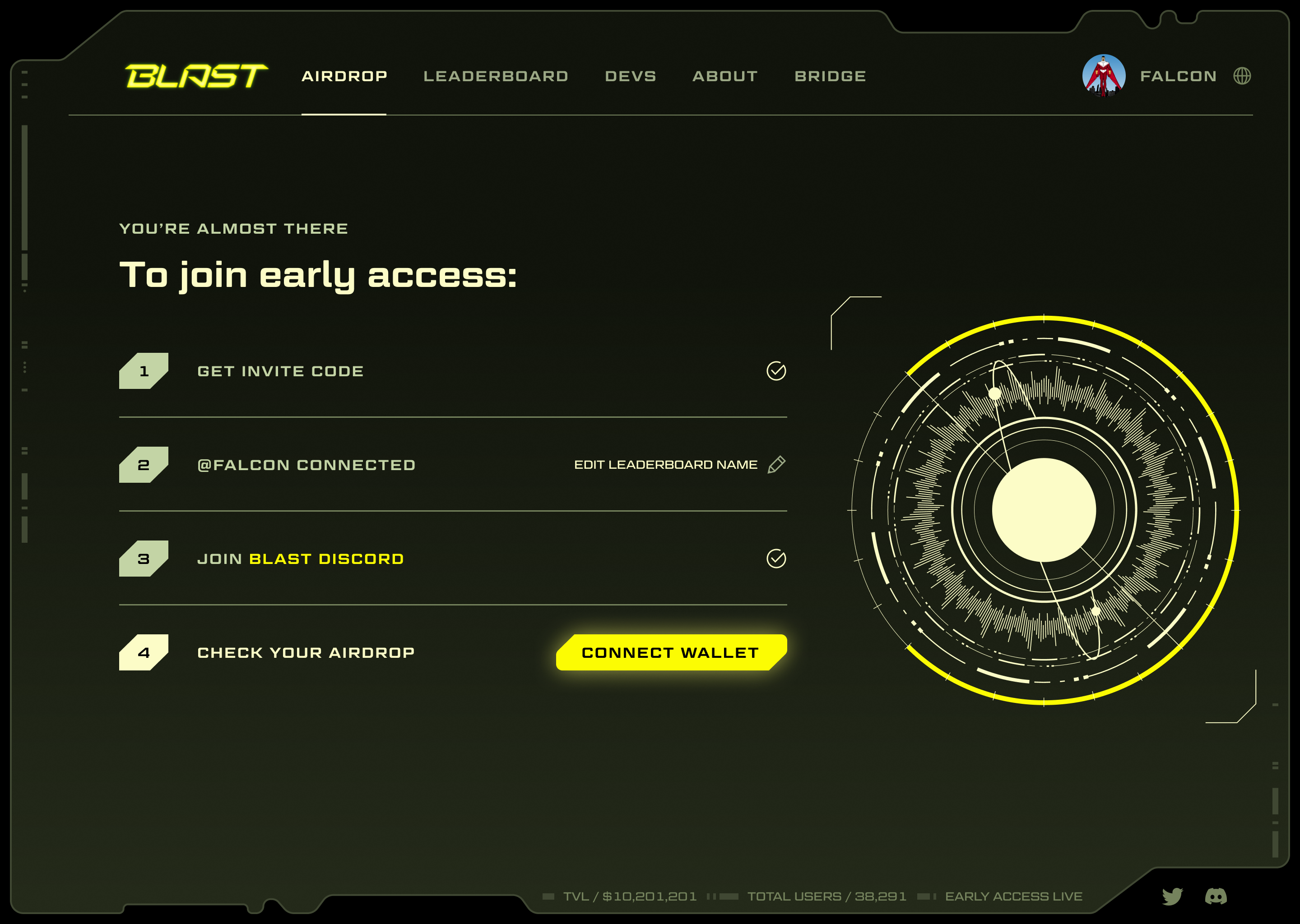
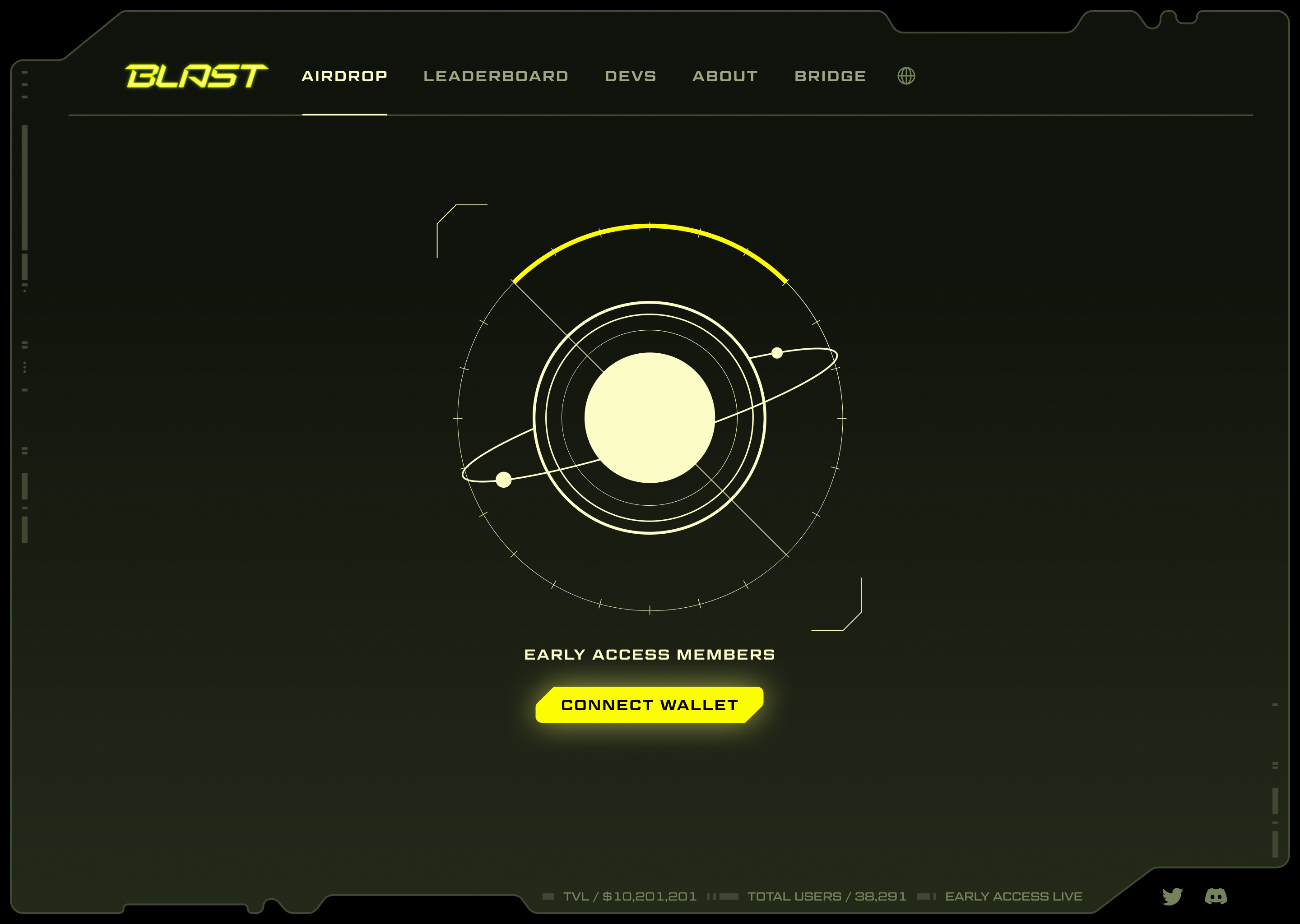
Then the payoff
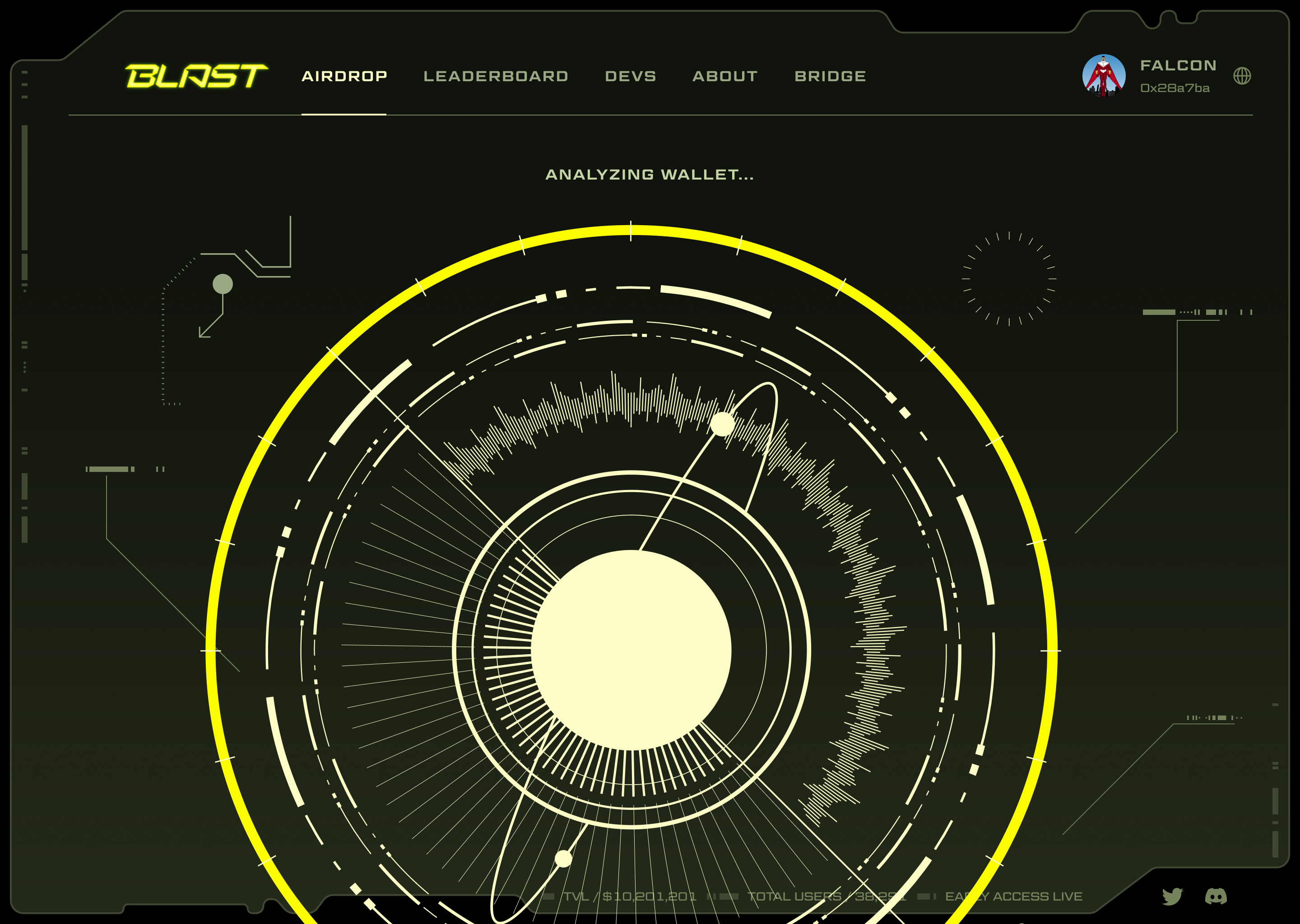
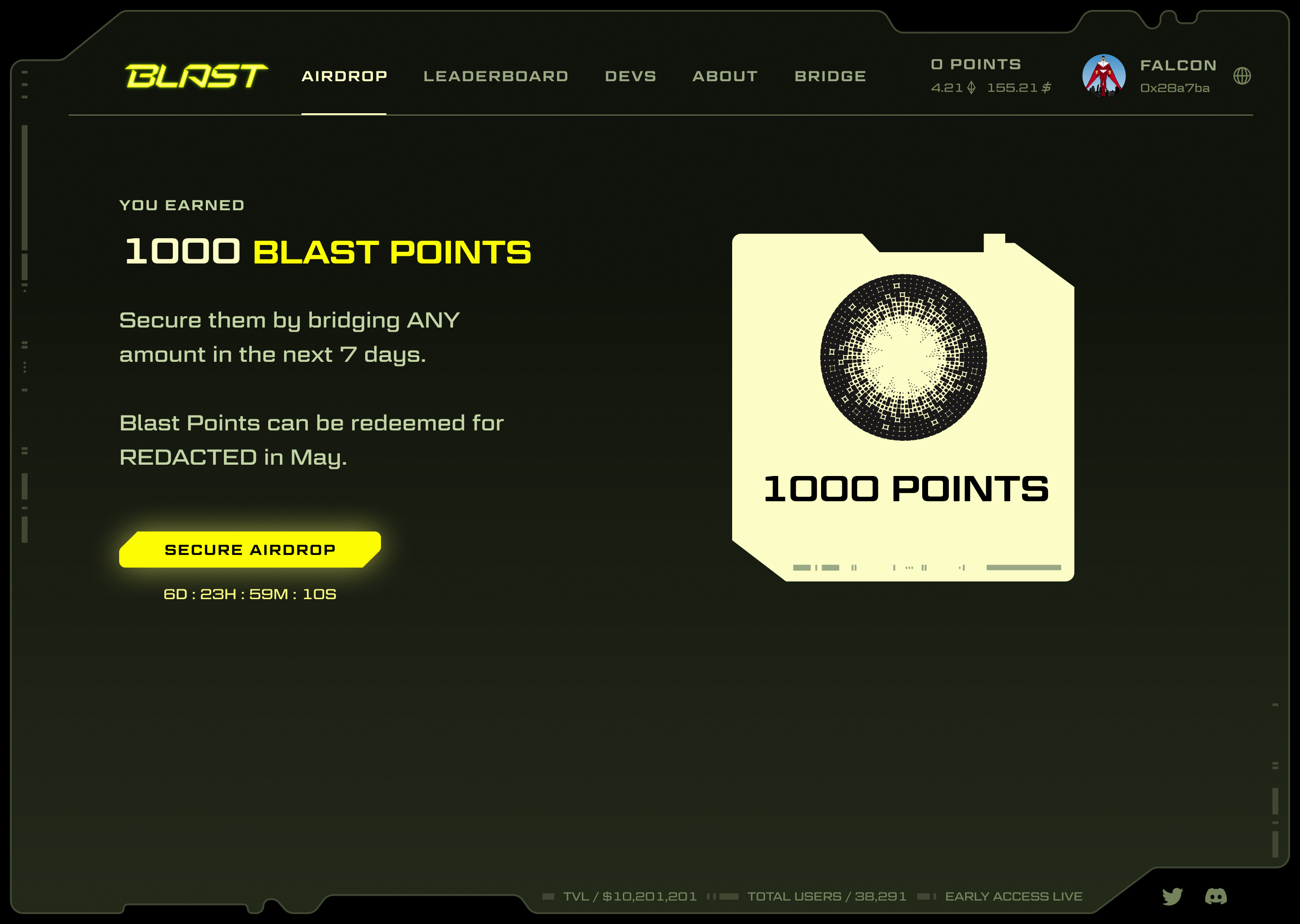
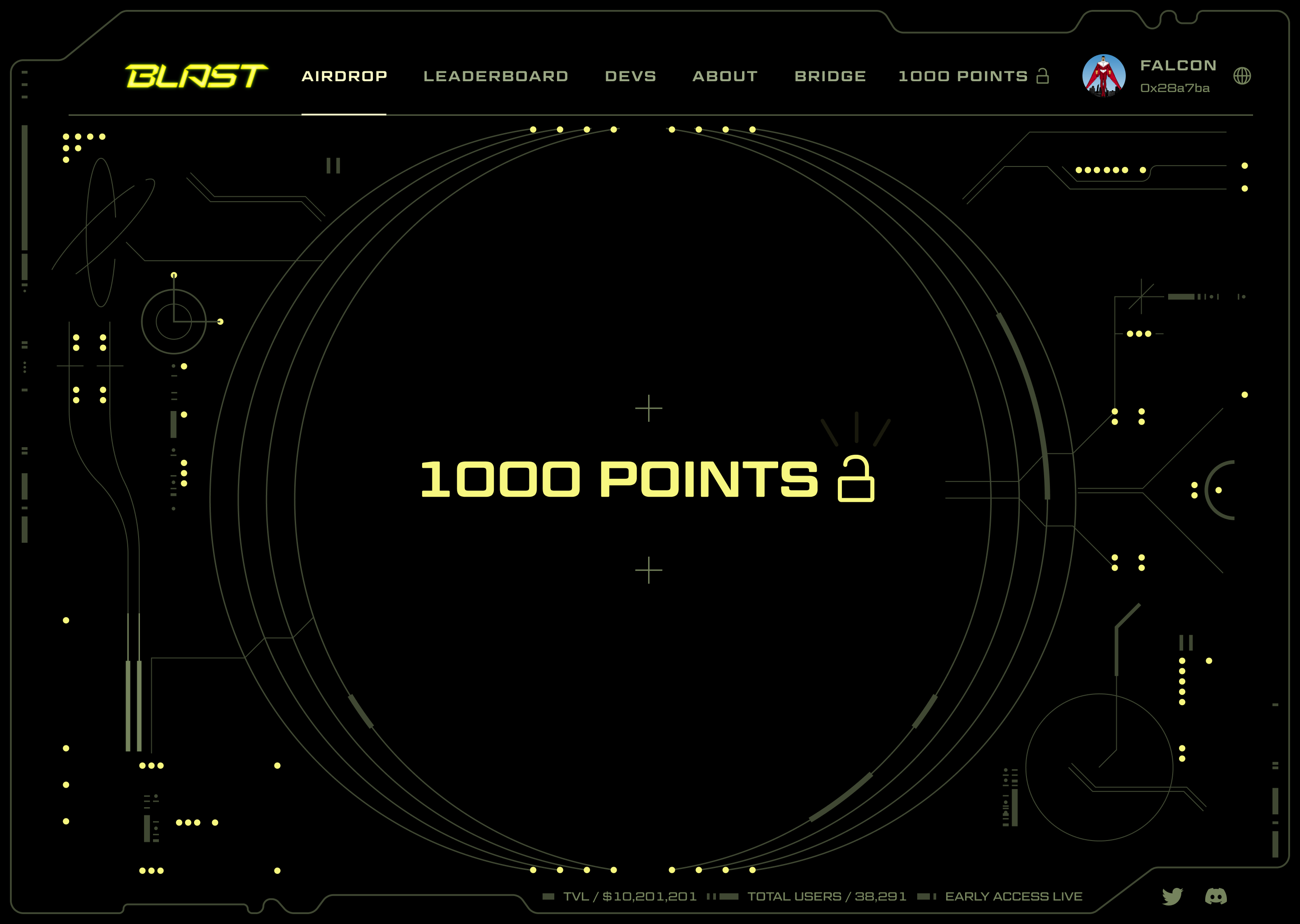
The funnel ends on a radar scan sweep over the connected wallet that resolves into an allocation. It is the most-anticipated moment of the whole flow, so it earned the most considered animation and the boldest use of the brand.
Bridge once, earn automatically
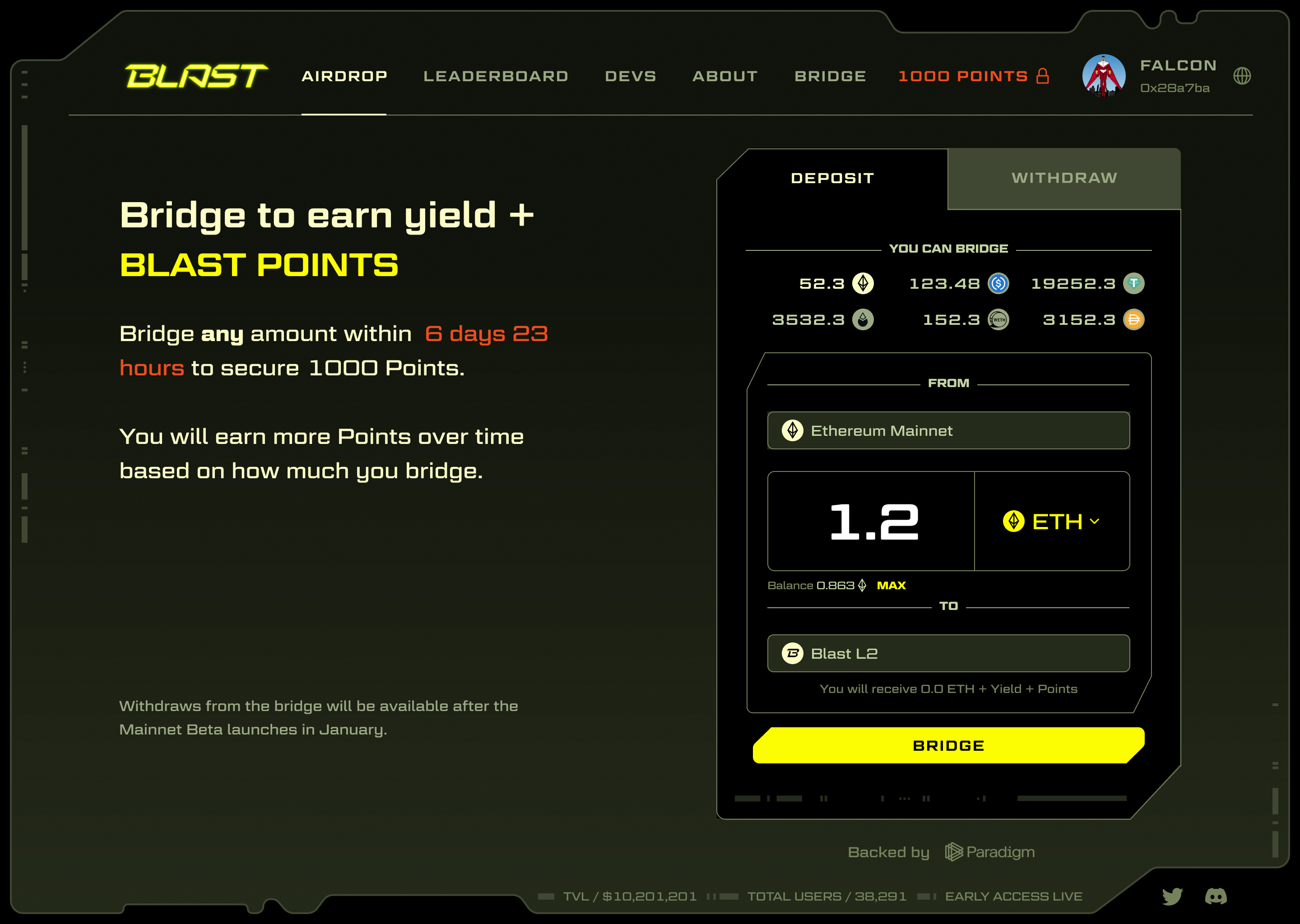
The bridge is the core action of the product. Deposit ETH or a stablecoin and you start earning native yield and Blast Points in the same move. The design compressed the value proposition into one screen, with the amount, the yield, and the points all legible before a user commits.
Turning deposits into a game
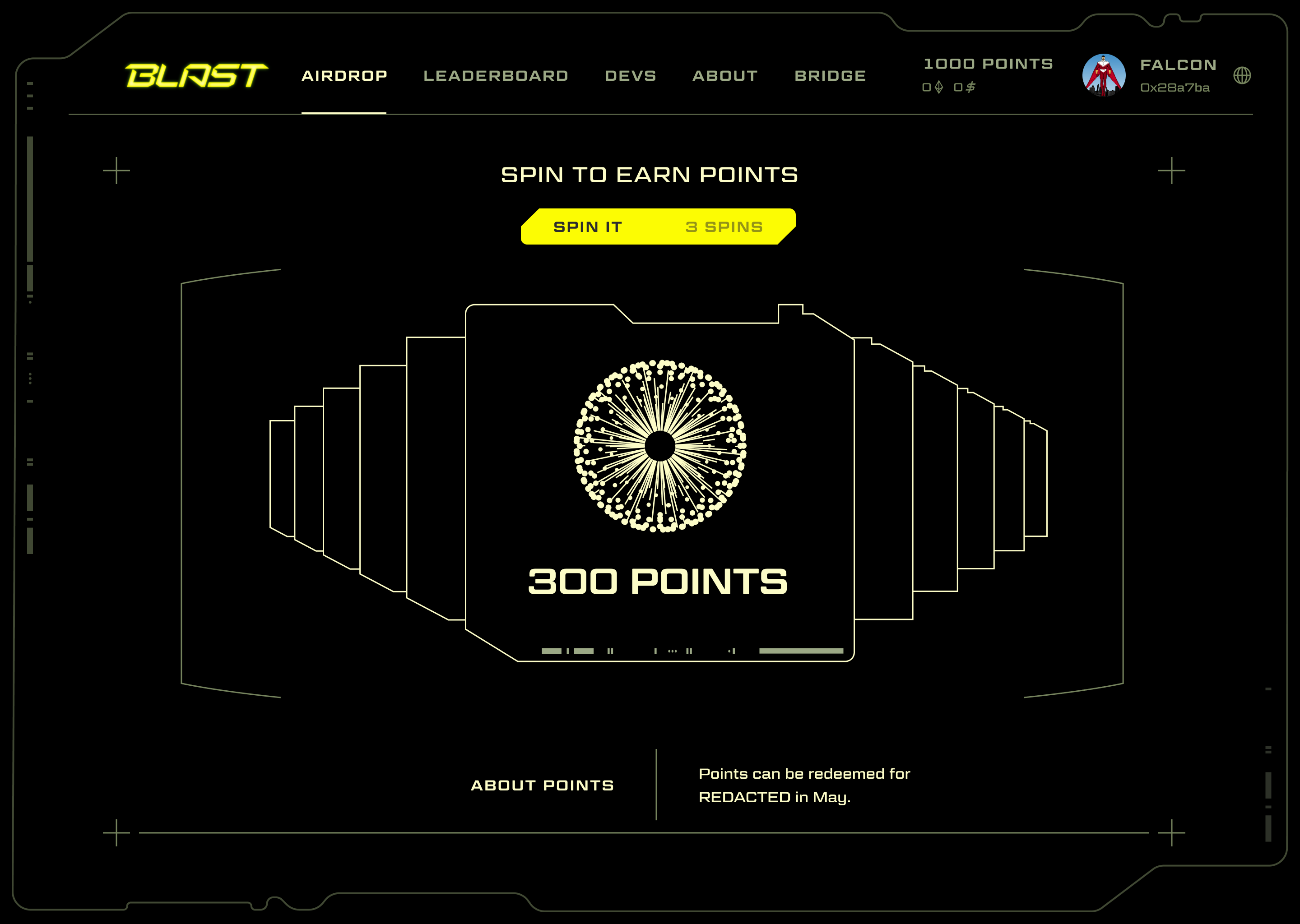
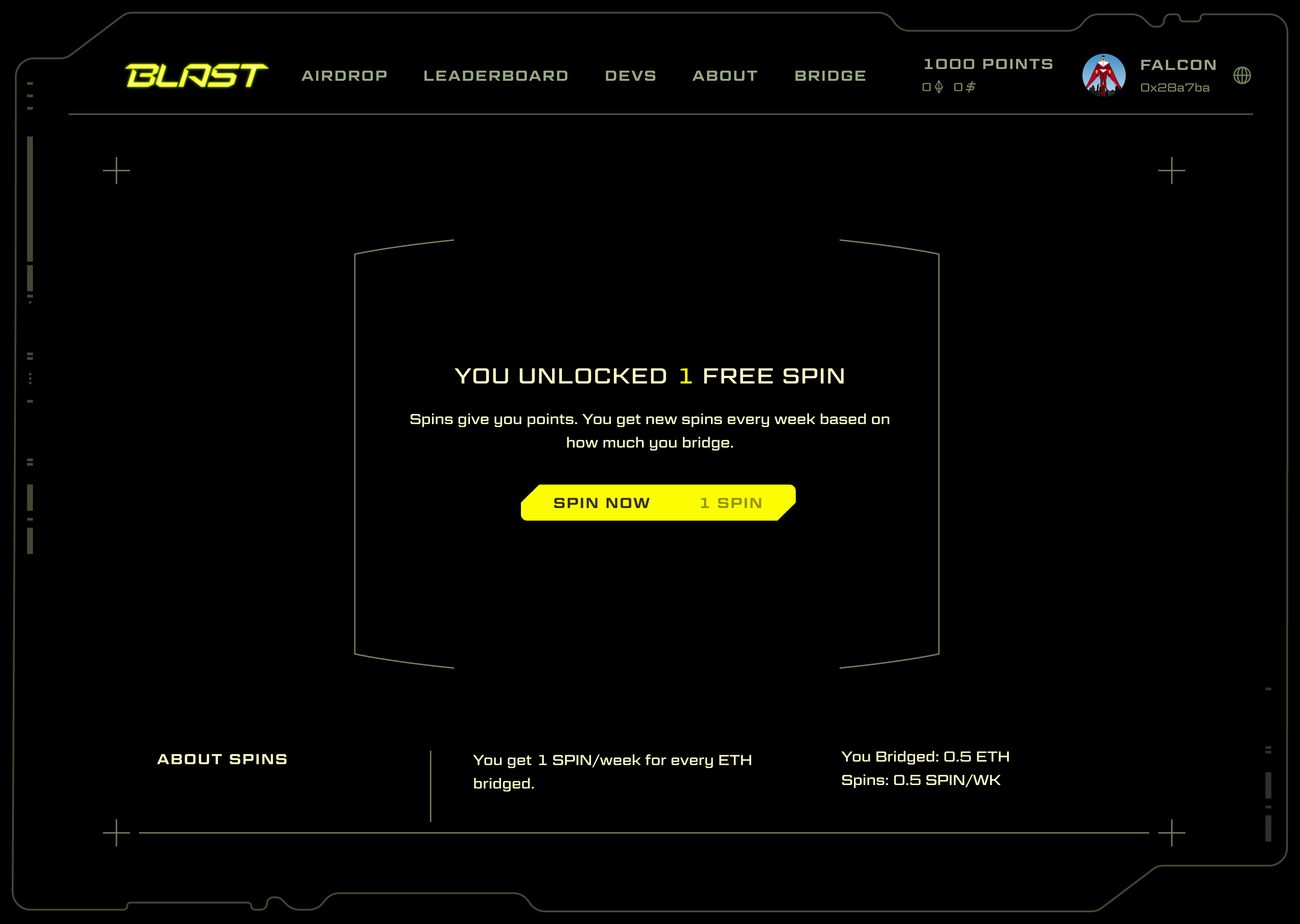
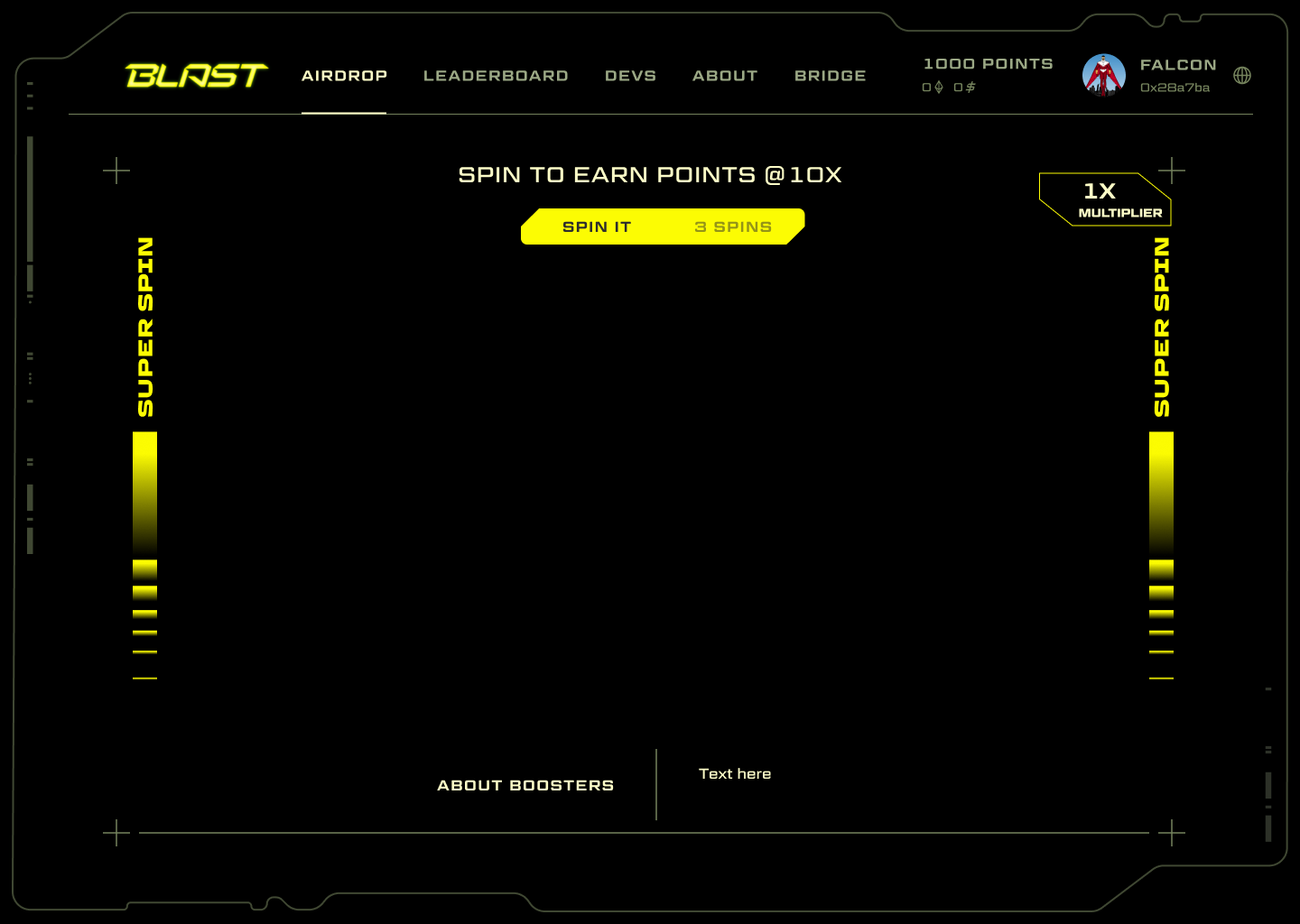
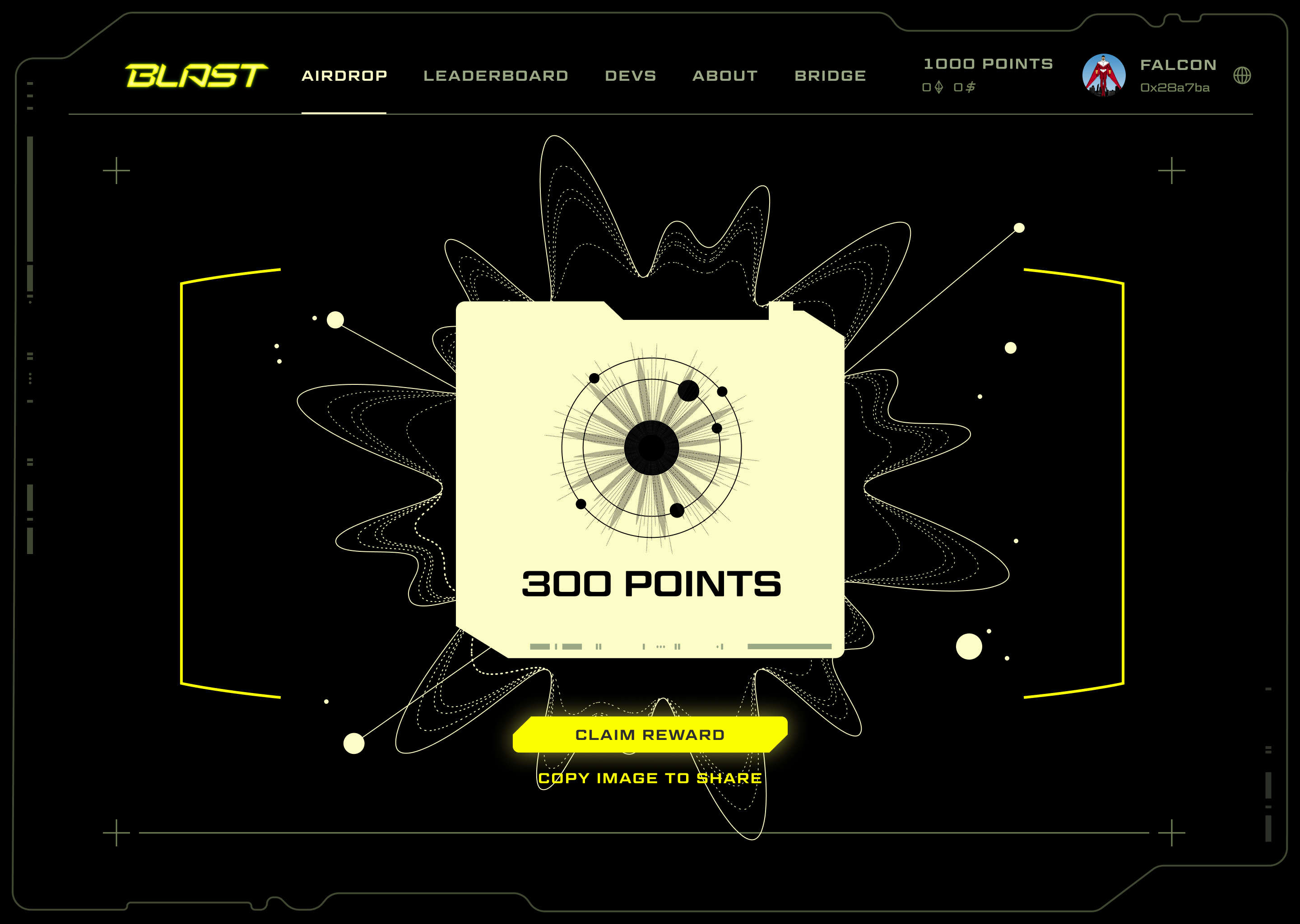
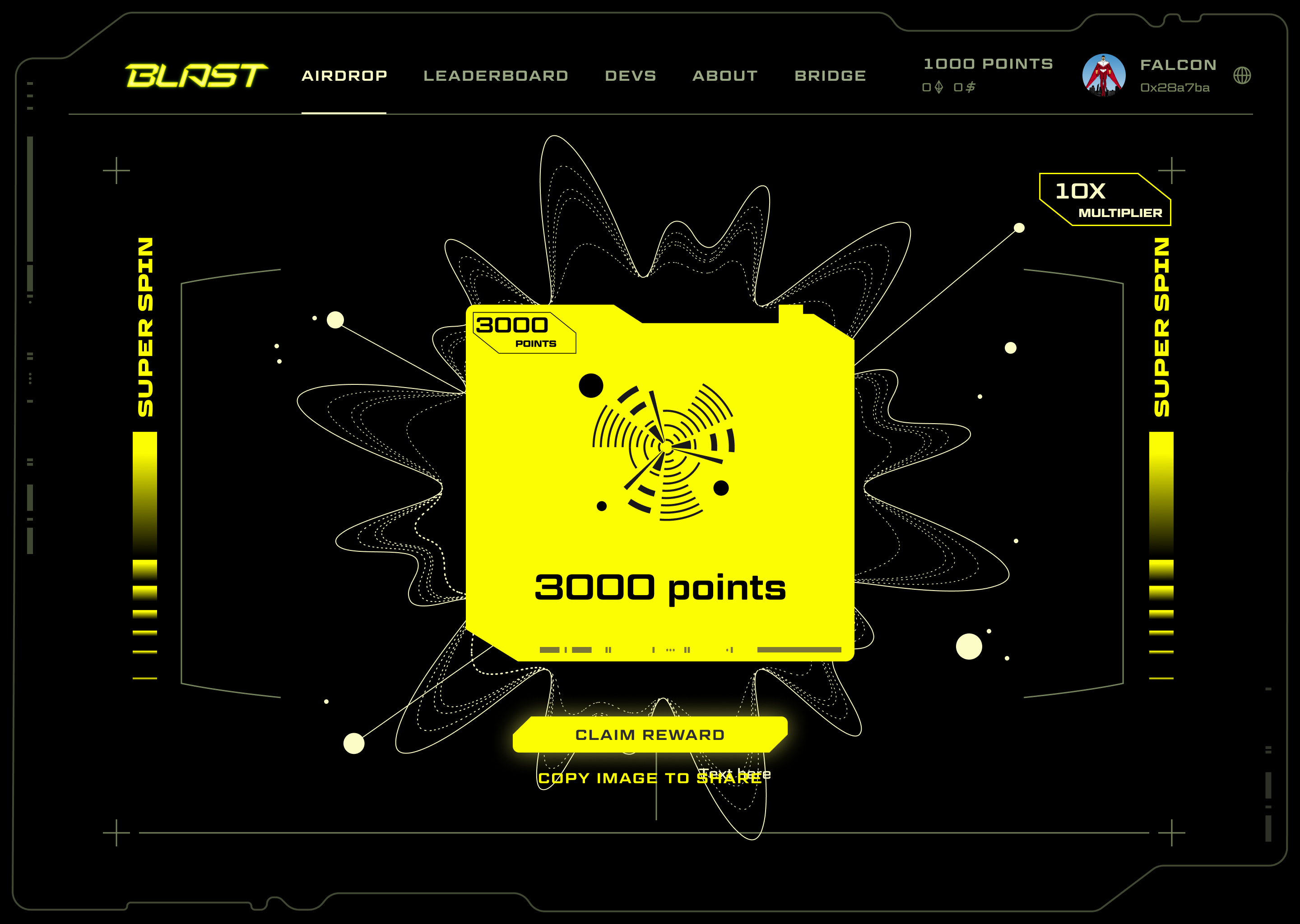
Points keep people in, but a number on a screen isn’t a reason to come back. So the points economy was wrapped in mechanics with spins, card flips, and limited-time events that turn a passive balance into something you want to check daily. All designed in the same radial, terminal-styled system, so the games feel native to the product.
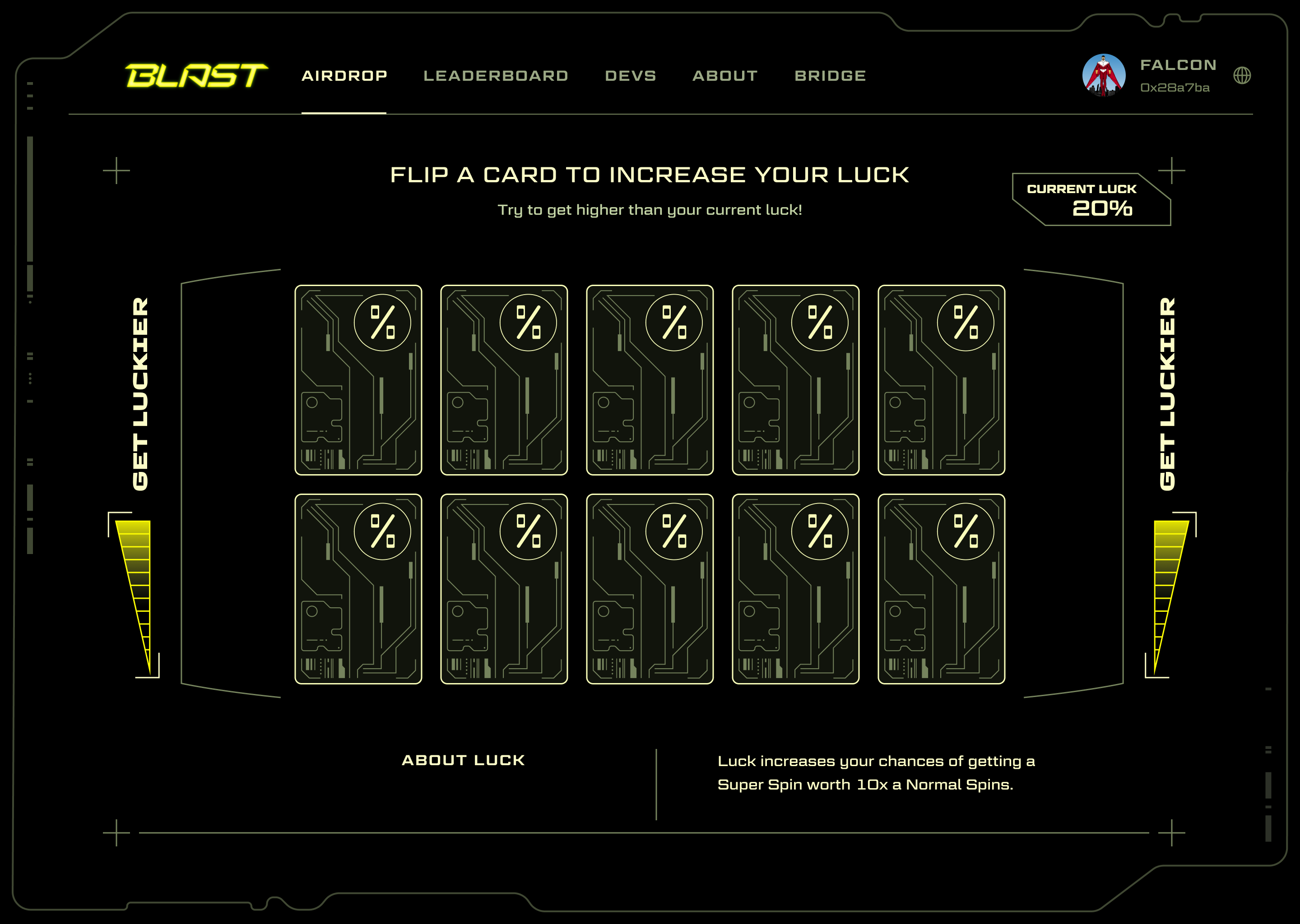
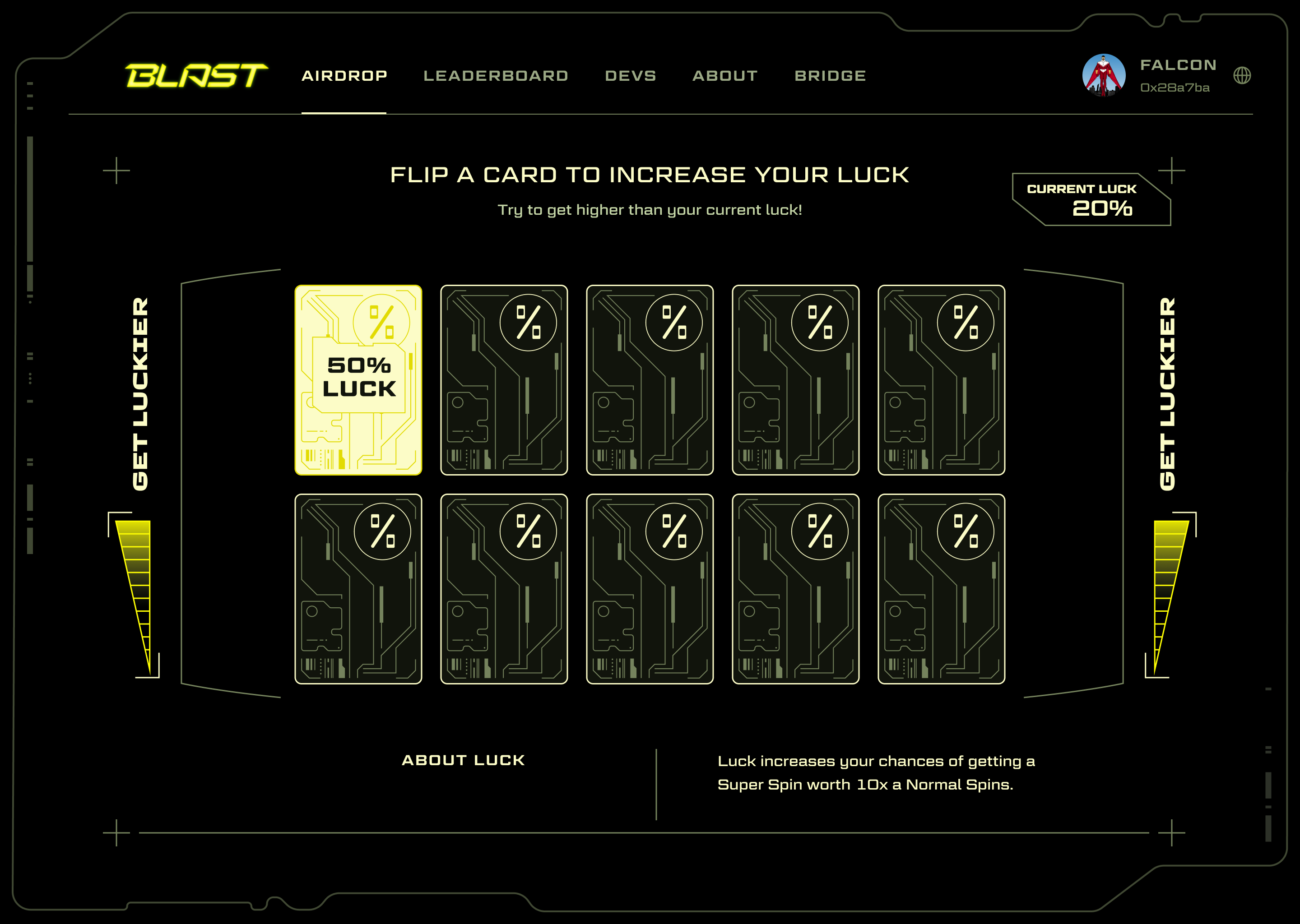
Flip a card to increase your luck
The Luck Card game layers a second loop on top of spins: flip cards to raise a luck multiplier that boosts future rewards.
Growth built into the product
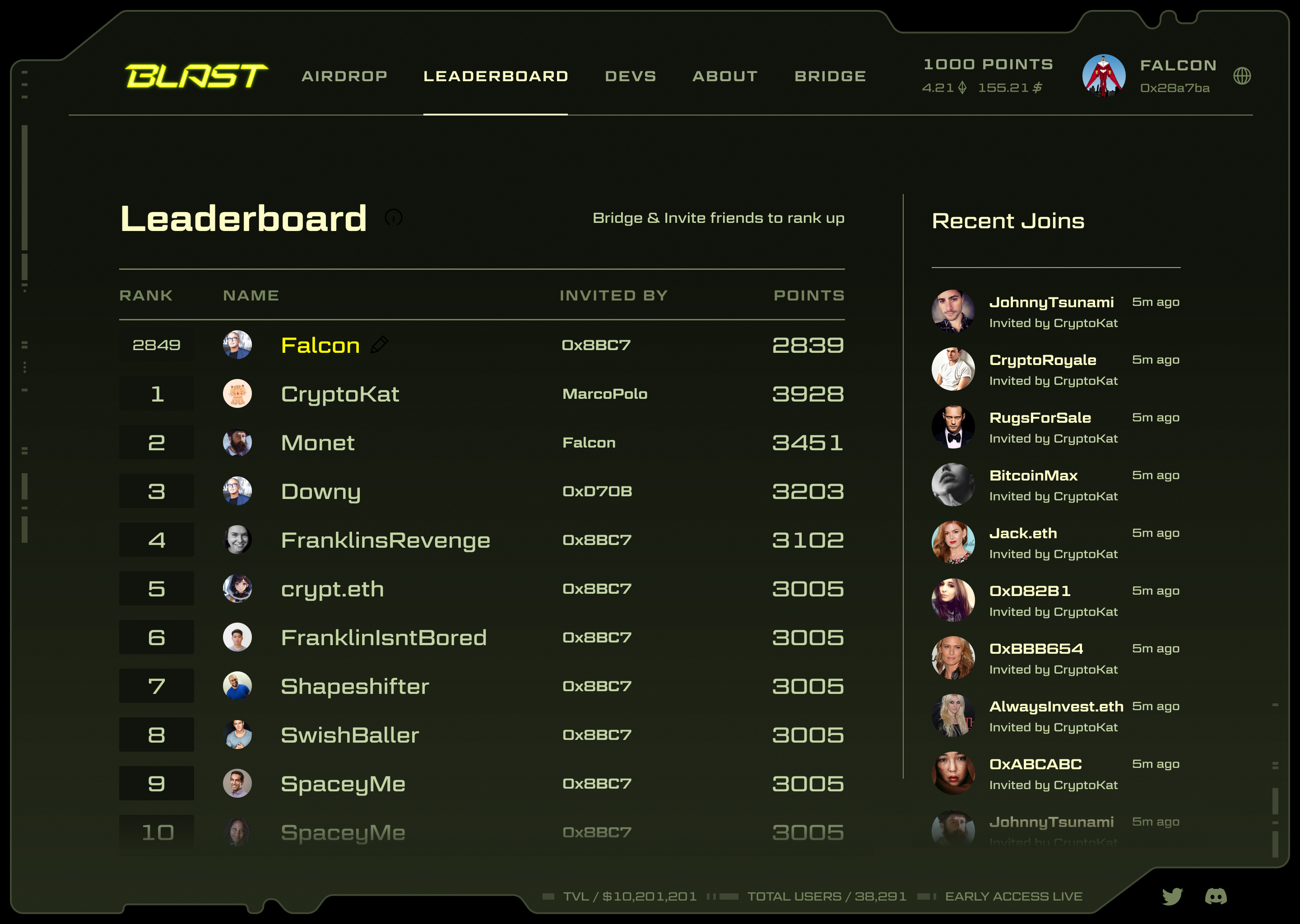
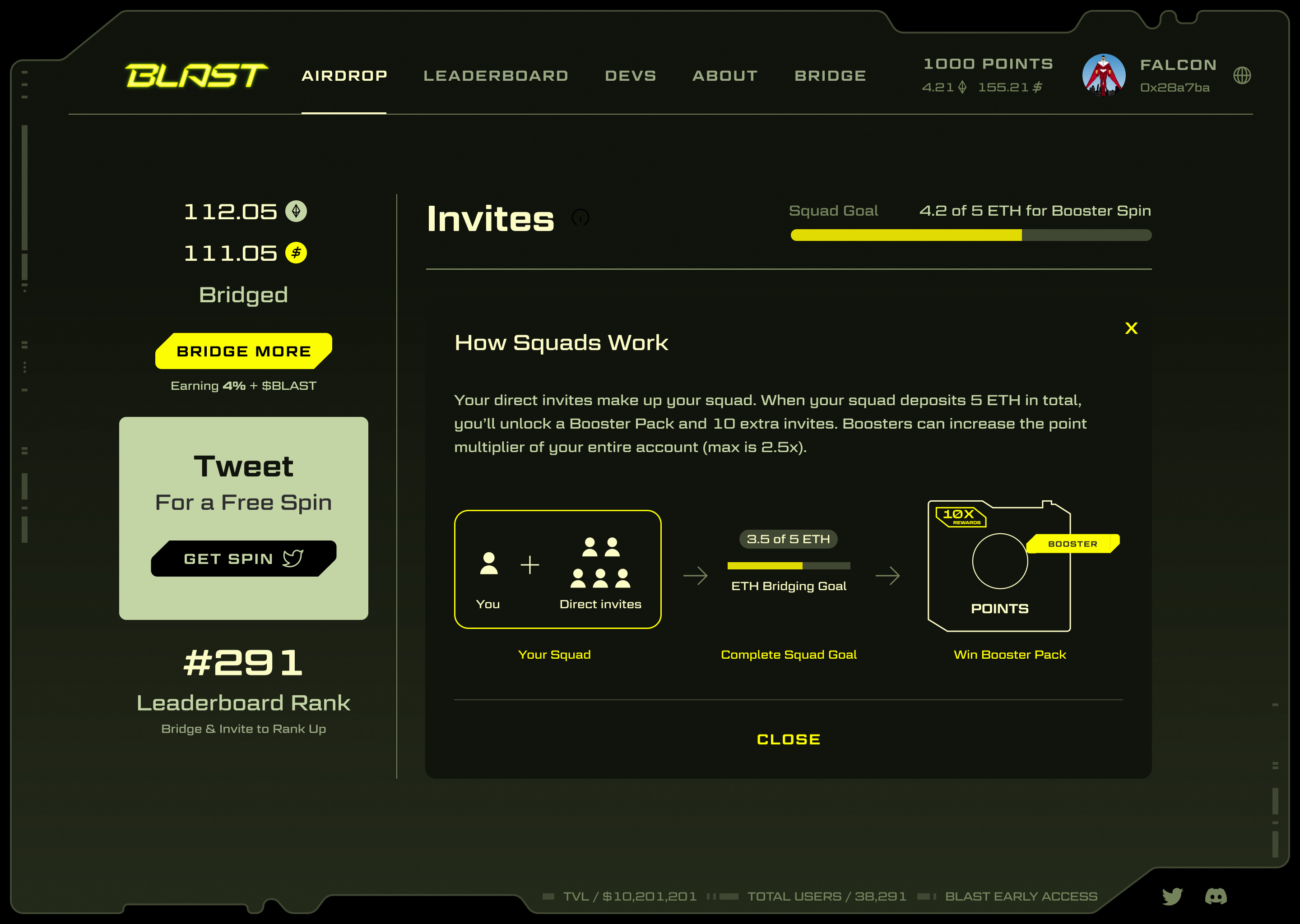
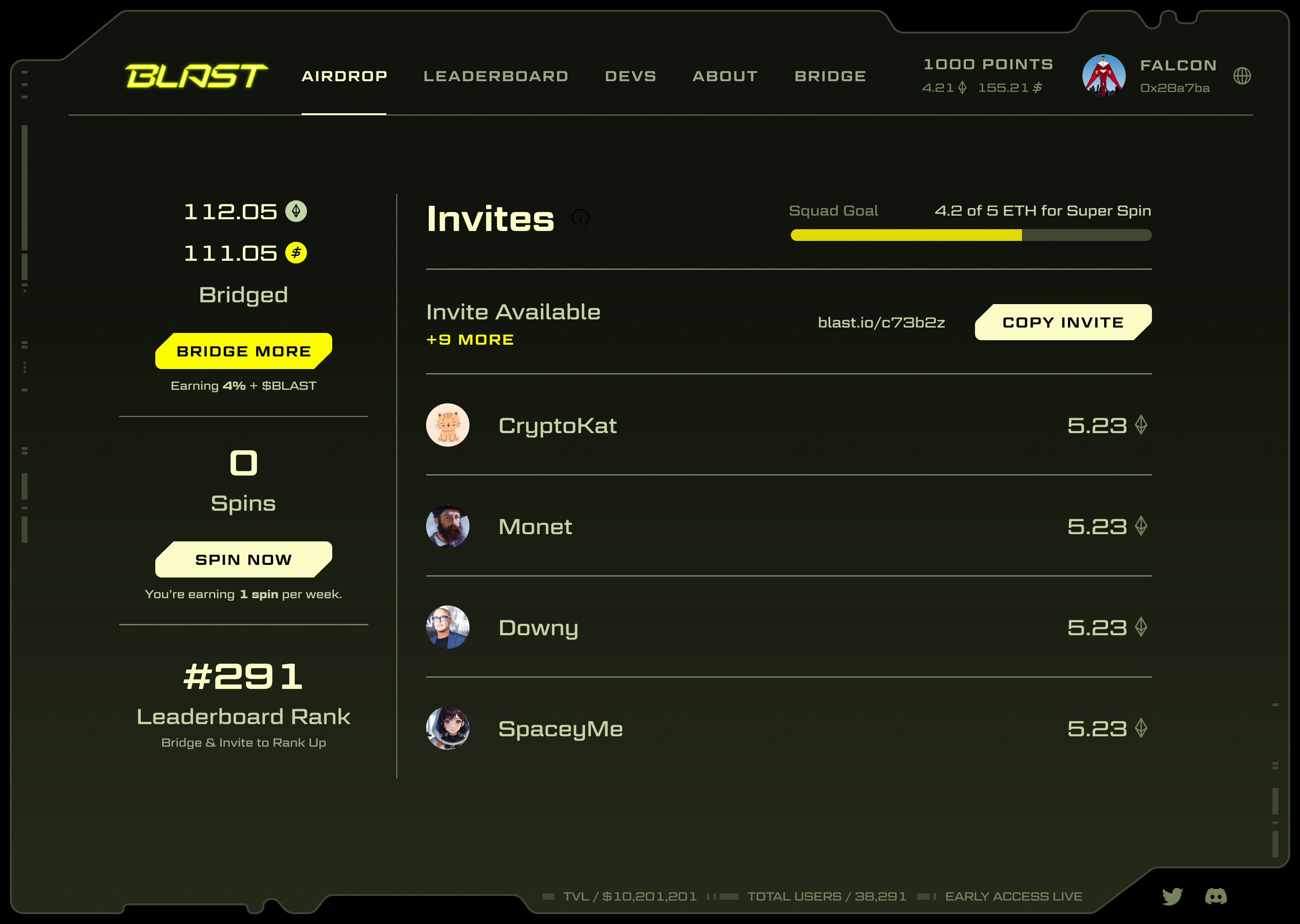
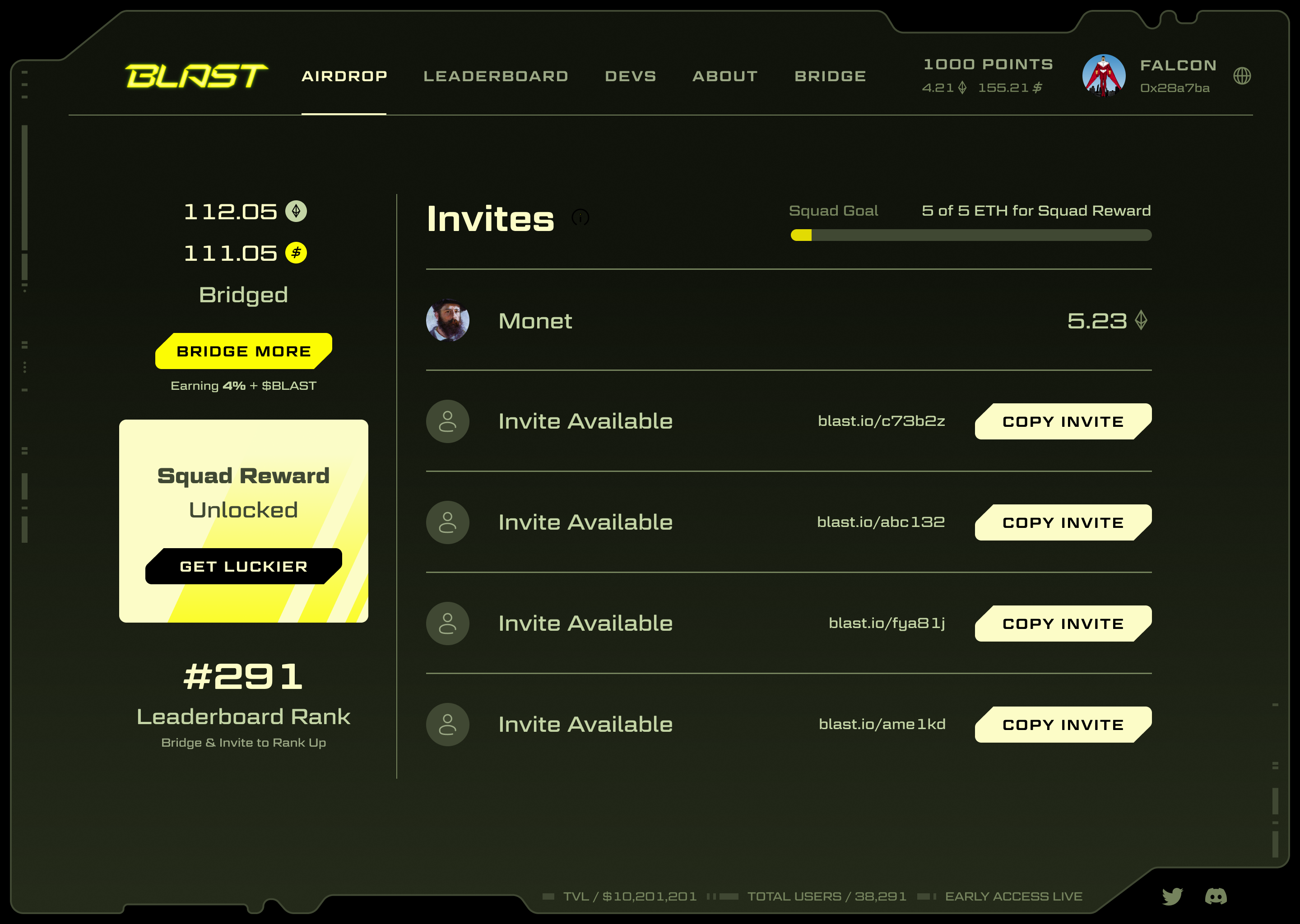
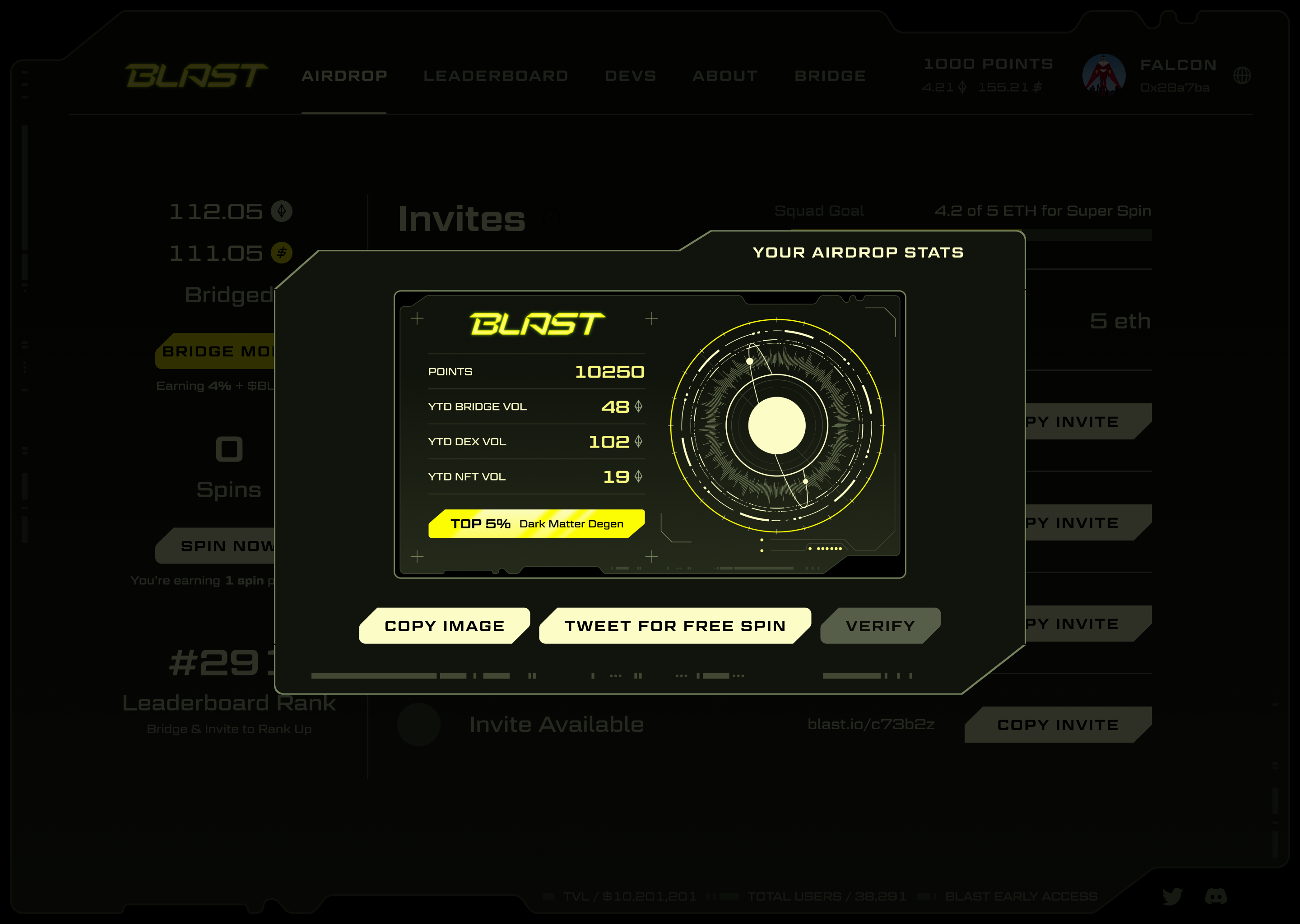
Referrals aren’t a settings page tucked away in a corner — they’re a dashboard. Every user gets invites to hand out, sees who’s claimed them, tracks rewards, and watches their own rank move. The whole loop (invite, earn, climb) lives on one surface.
Breaking news, built in
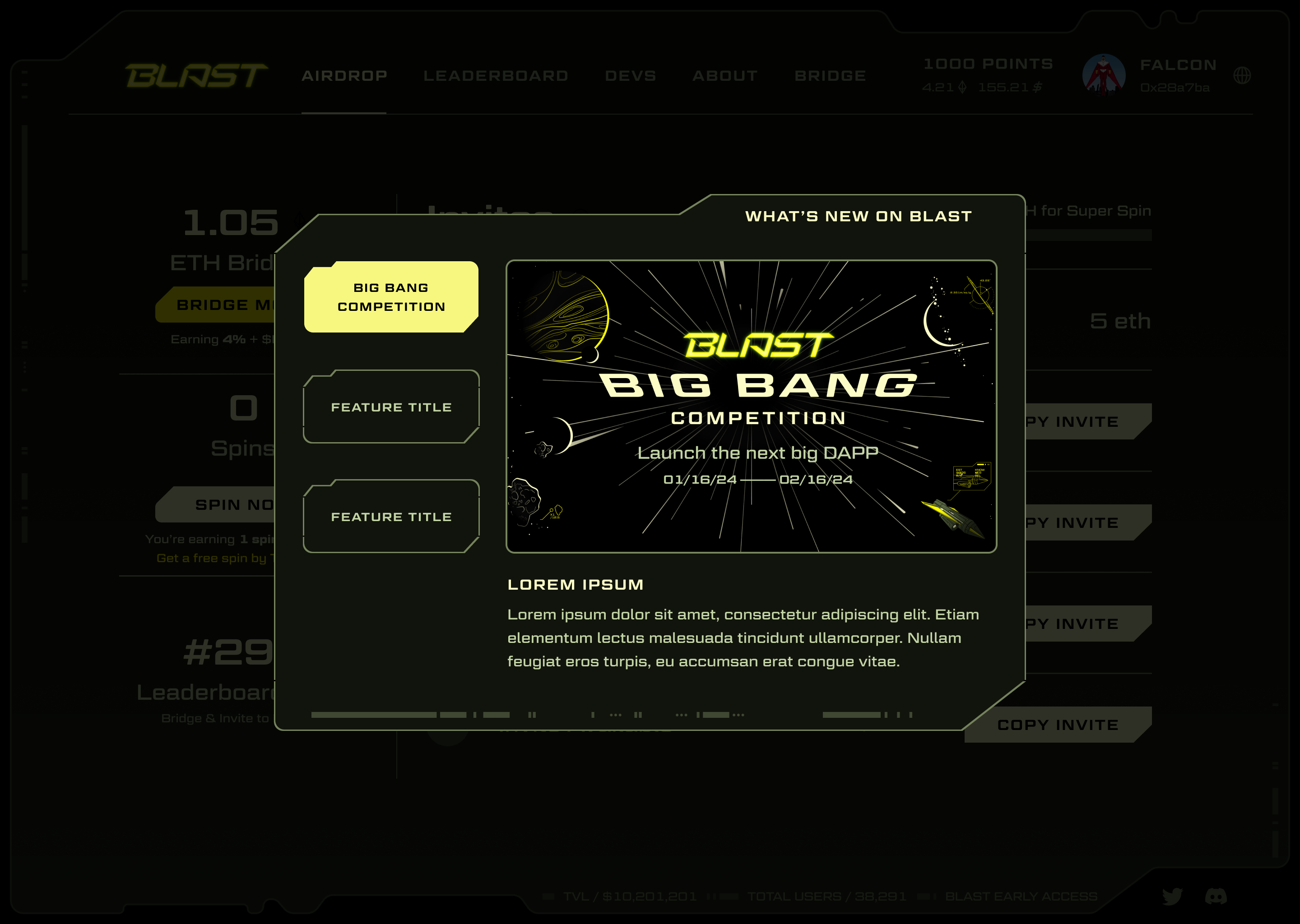
Blast moved fast. New dapps, events, and mechanics ship every week. Marketing materials and interfaces were introduced to keep users in the know.
Selling the chain to users and builders
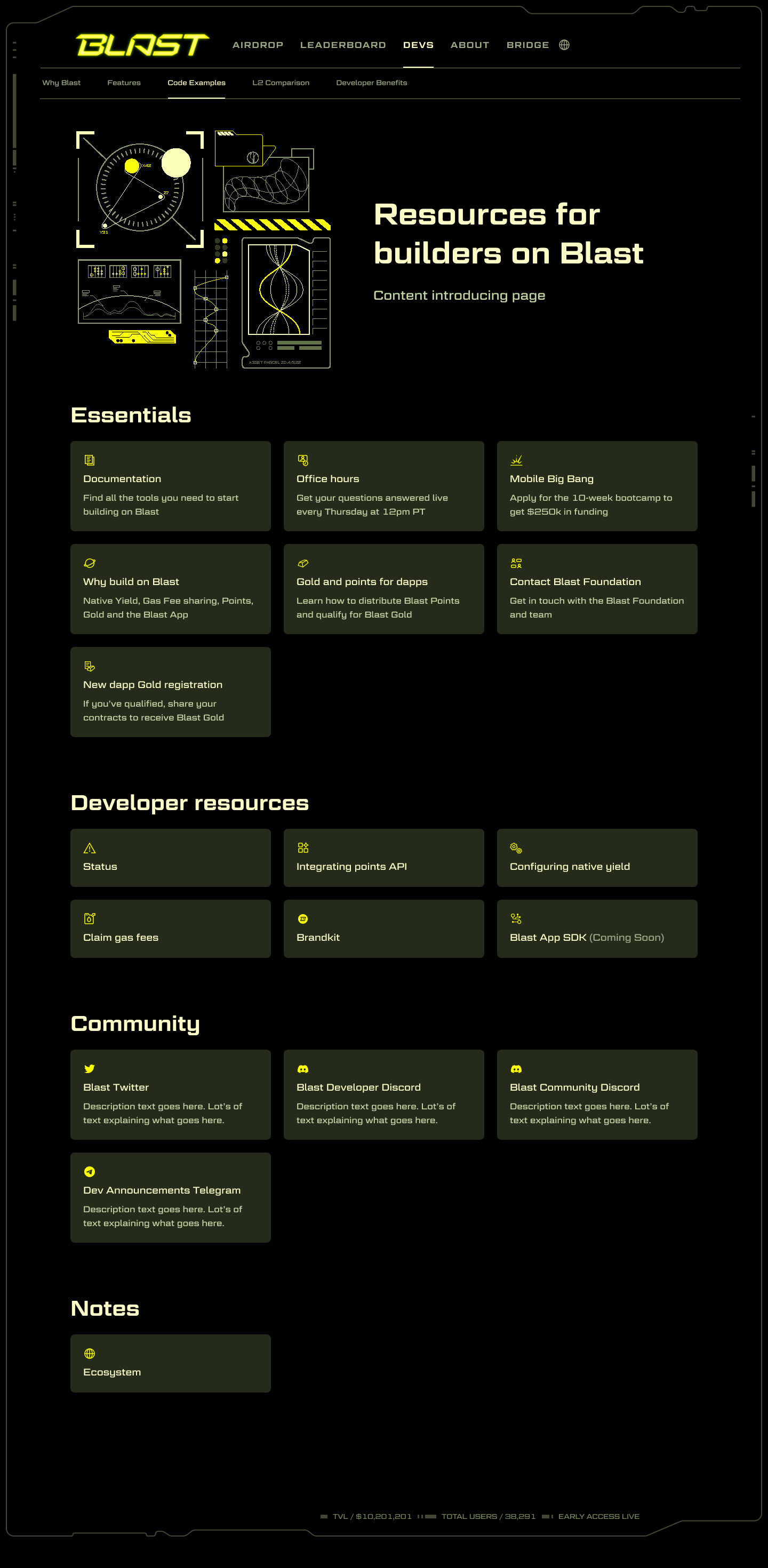
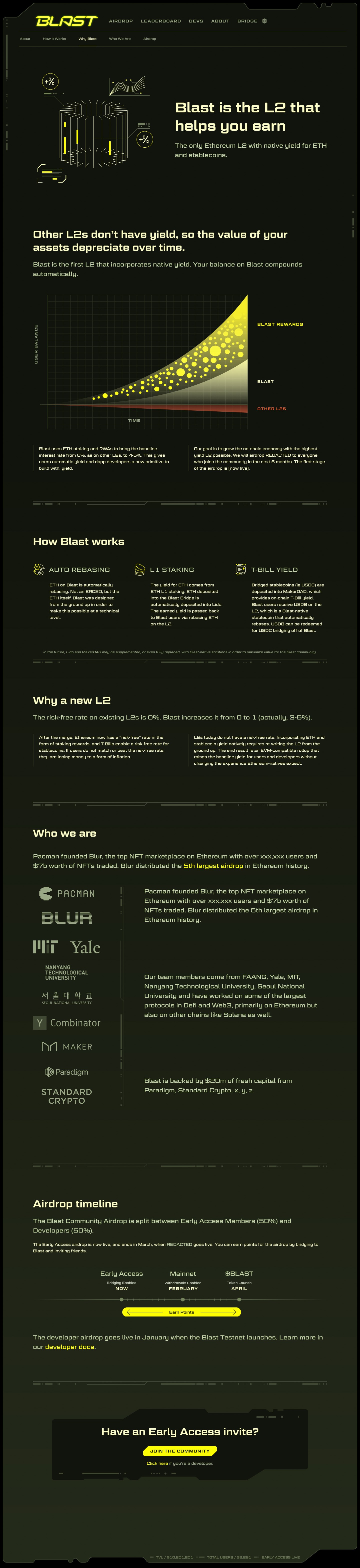
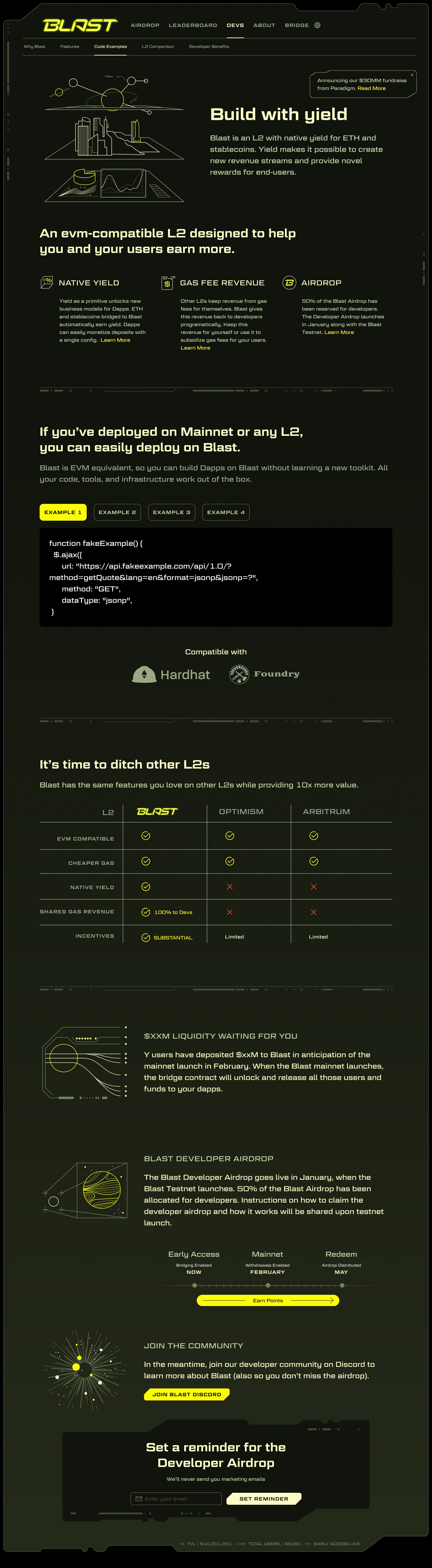
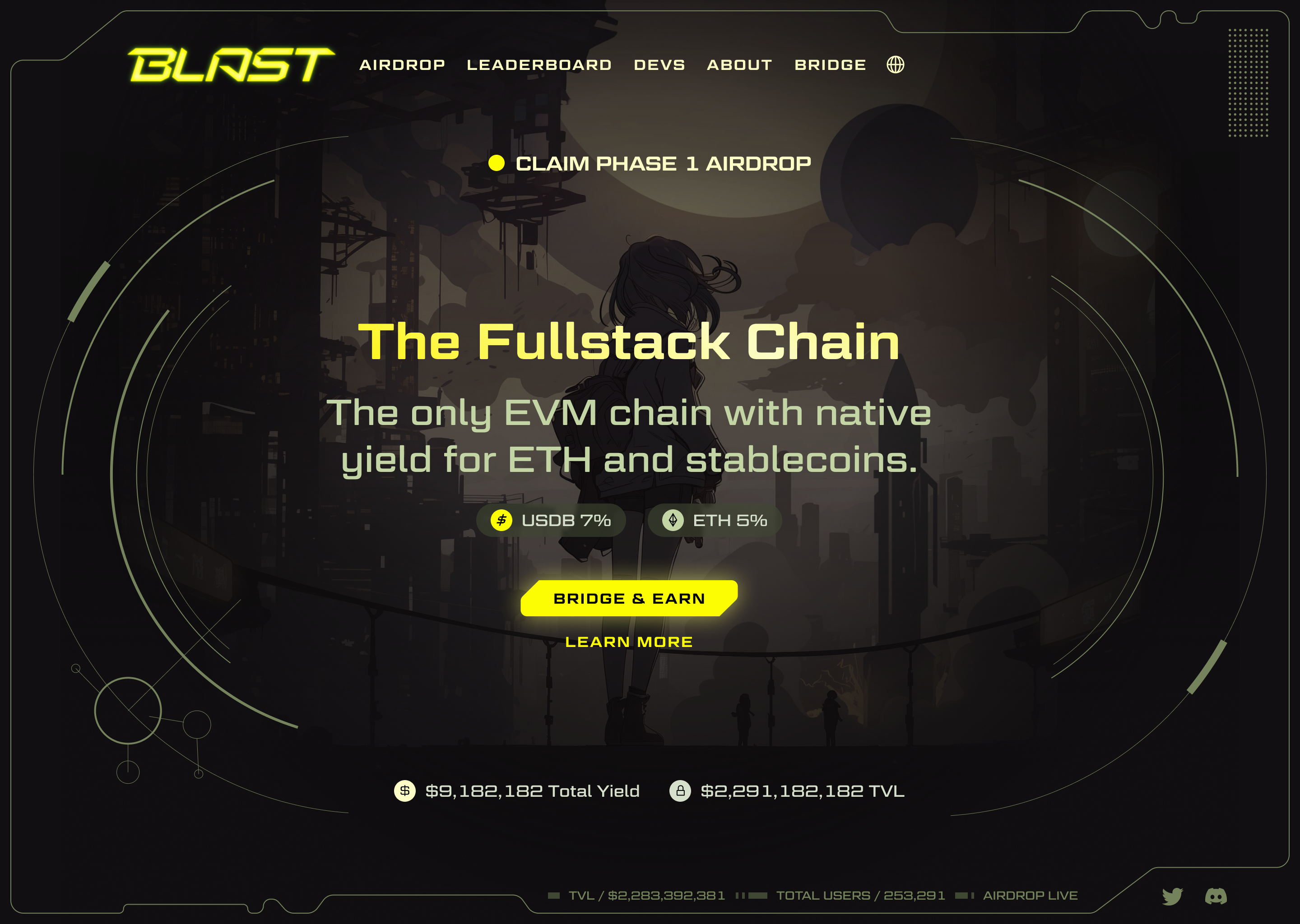
A new L2 is only worth the users on it and the apps built on top, so the launch needed a web presence that sold two audiences at once. For users, the marketing site made the native-yield thesis legible. For developers, a parallel set of builder pages pitched the same upside: deploy on an EVM-compatible chain where your app and its users earn yield.
Phase 2 — The mainnet launch
Early access worked. Before any functioning product was launched, and before any mainnet transaction was processed, the designs and marketing converted thousands of users to deposit and bridge over $2 billion of ETH and stablecoins.
From early access to mainnet
Phase 2 was about converting our head start into a real product — a mainnet. The hand-off from early access to mainnet was its own designed moment. Each user got a personal recap with what they’d bridged, the points they’d earned, the early-adopter bonus they’d locked in, before being walked across to the live chain.
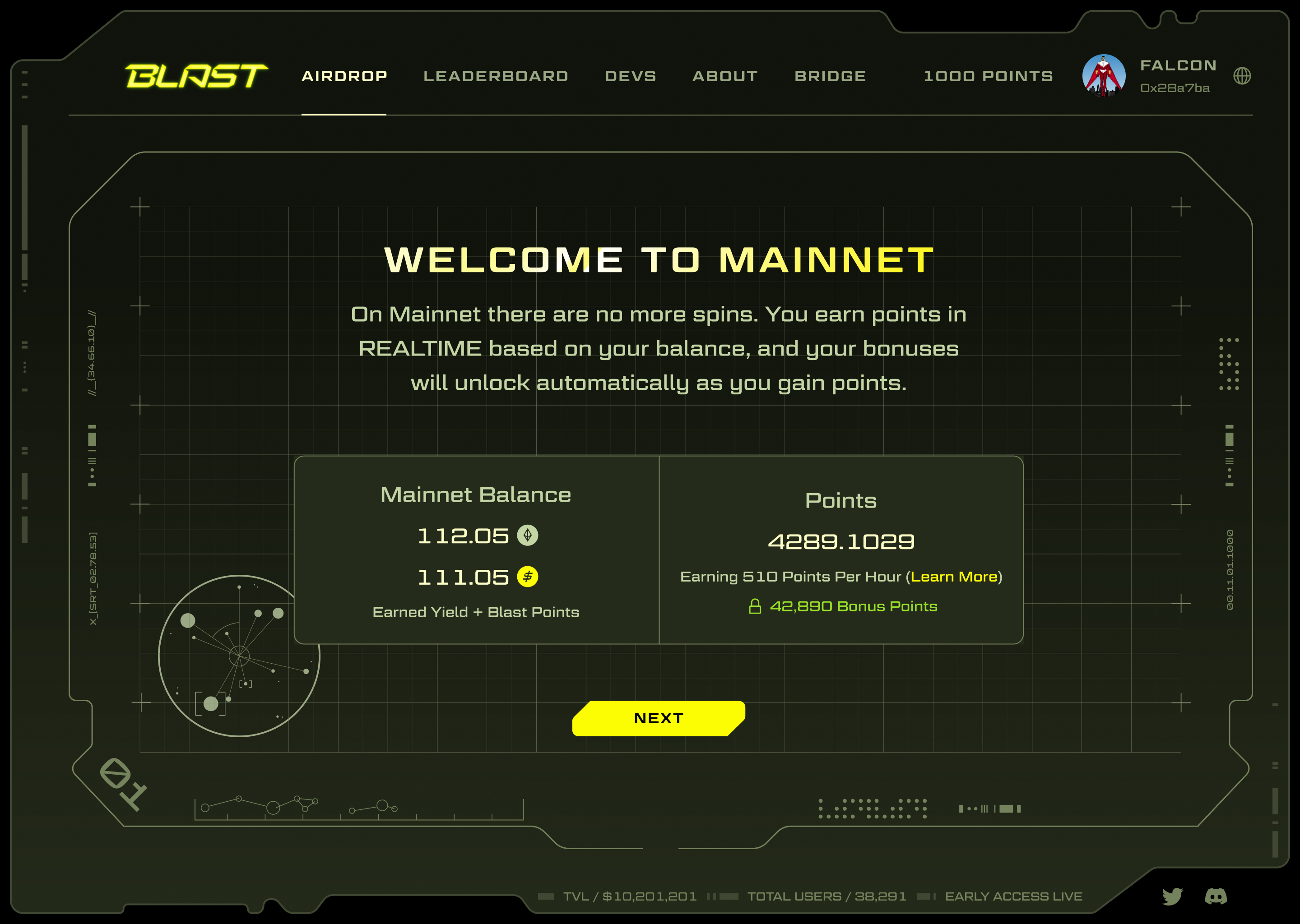
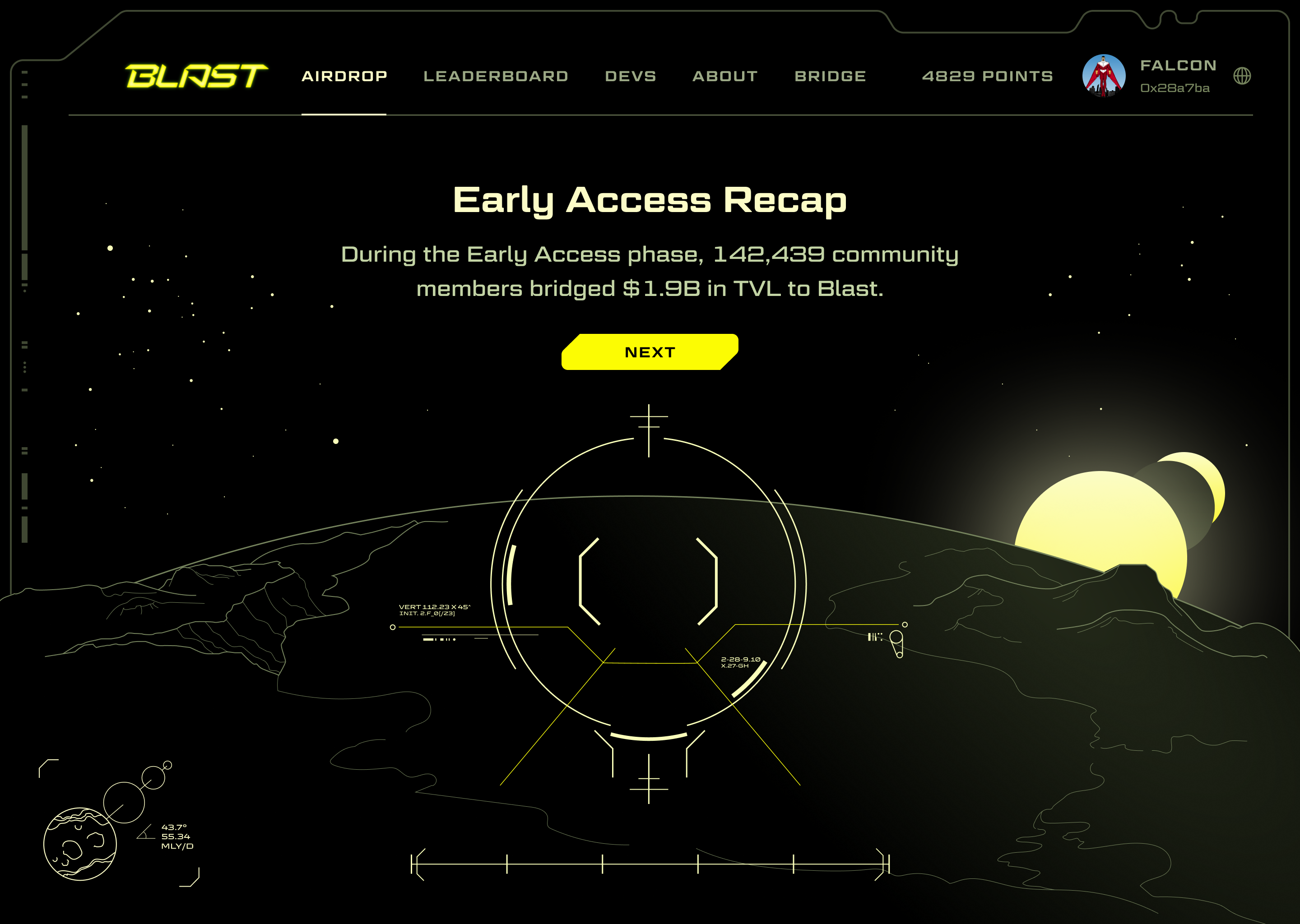
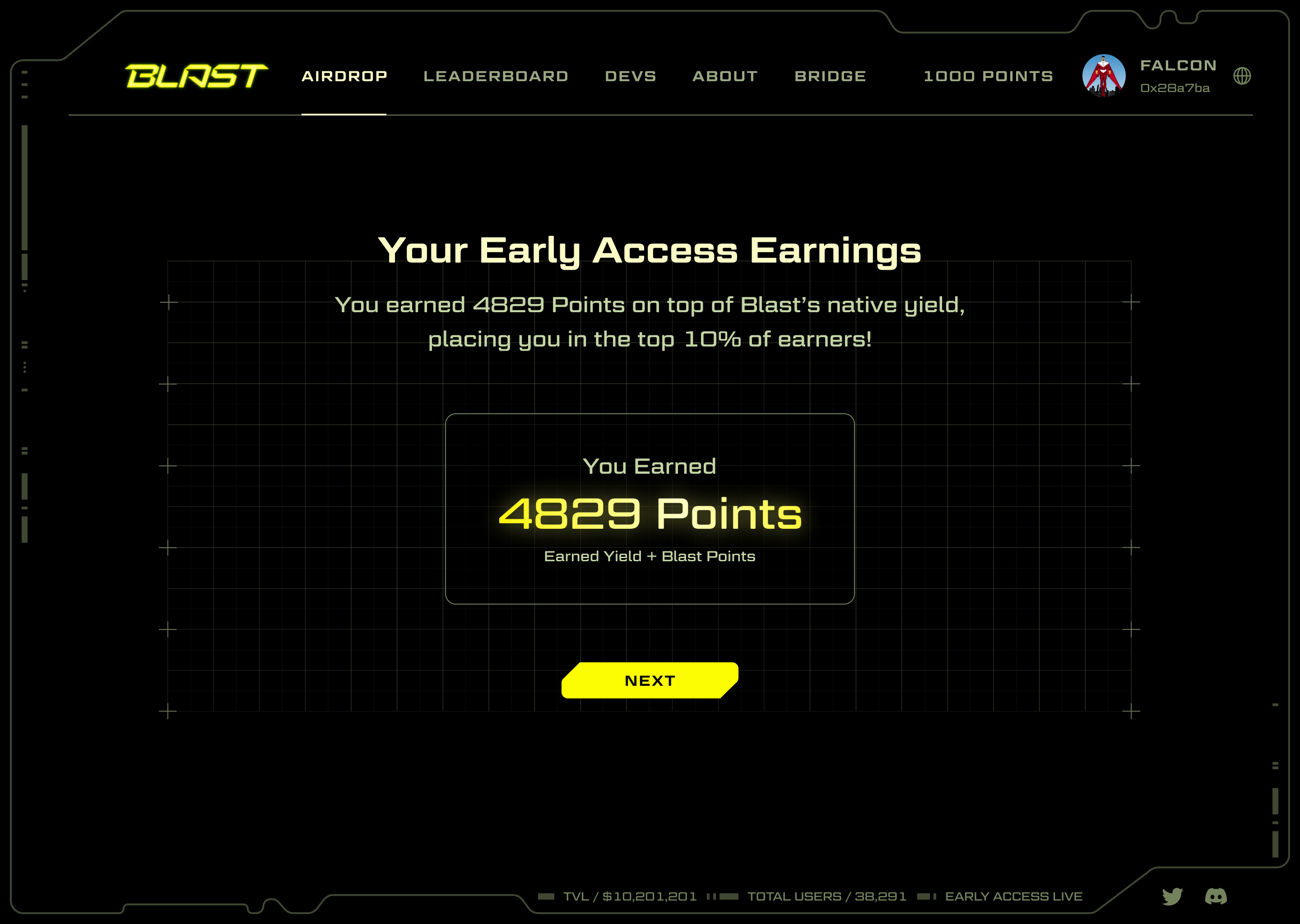
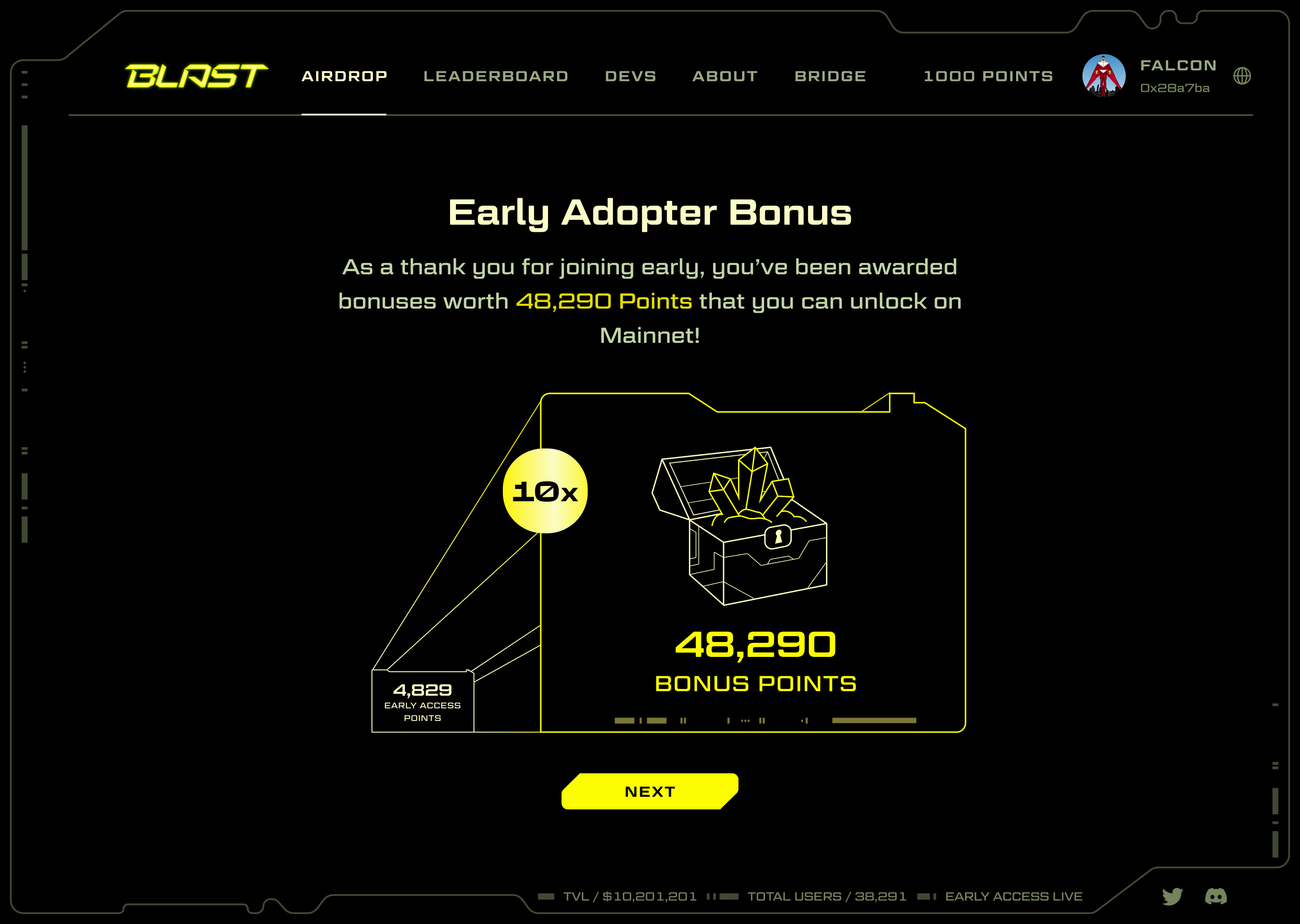
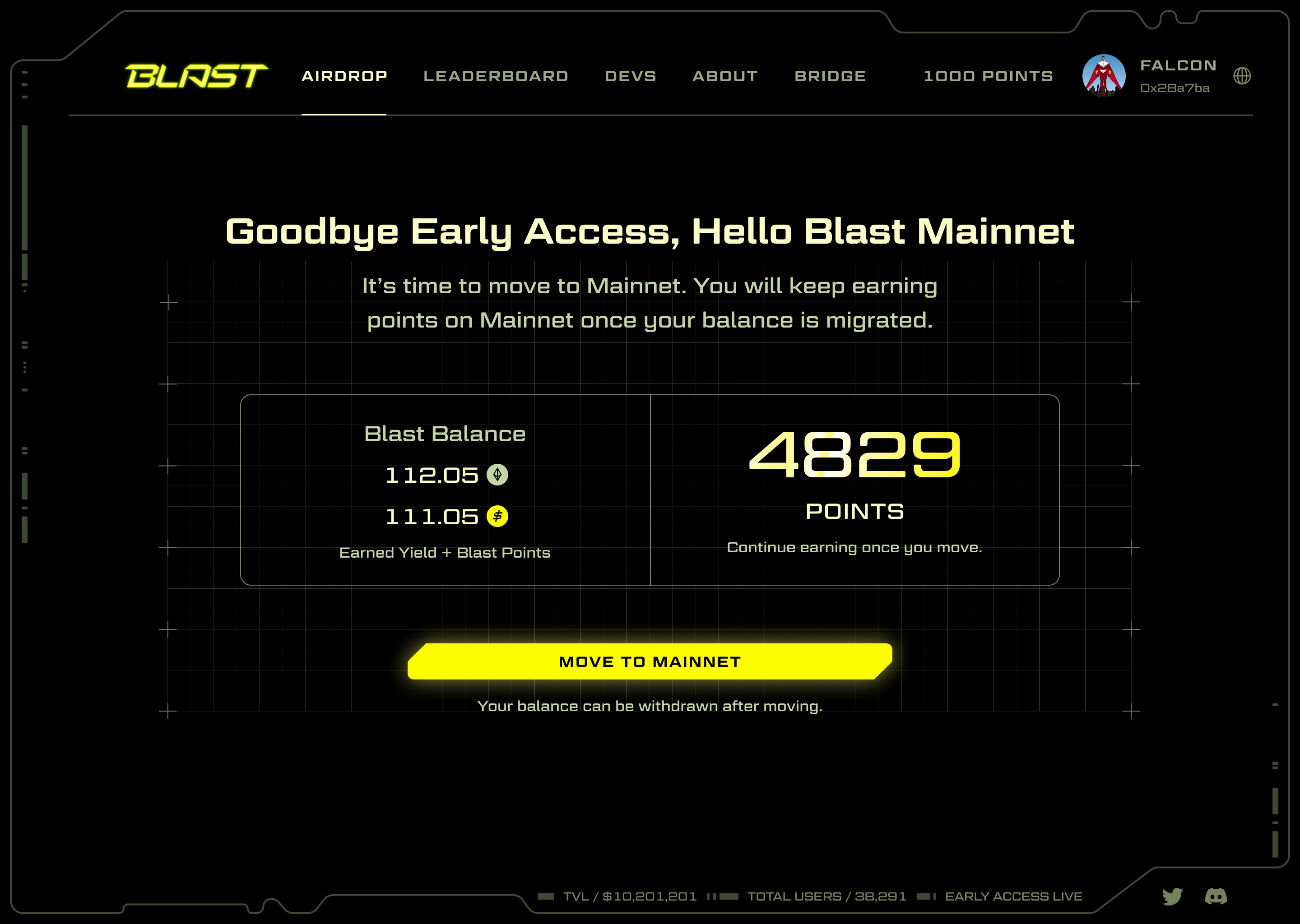
Watch and listen to the full Blast Off experience
An ecosystem, not just a chain
By mainnet, more than 3,000 teams were building on Blast, backed by investors like Paradigm, Standard Crypto, and Dragonfly. The site put that ecosystem front and center. A chain is only as valuable as what people ship on it.
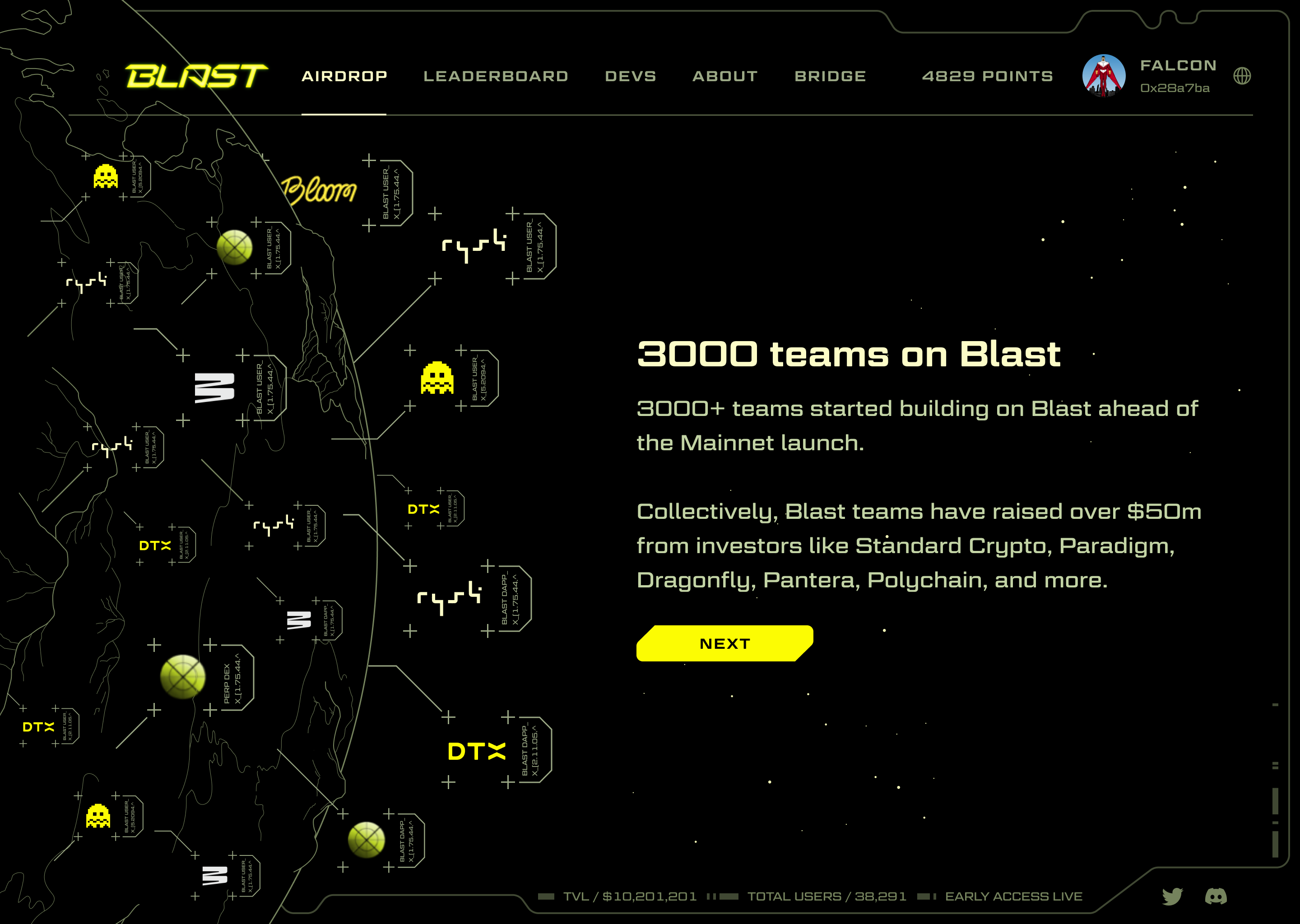
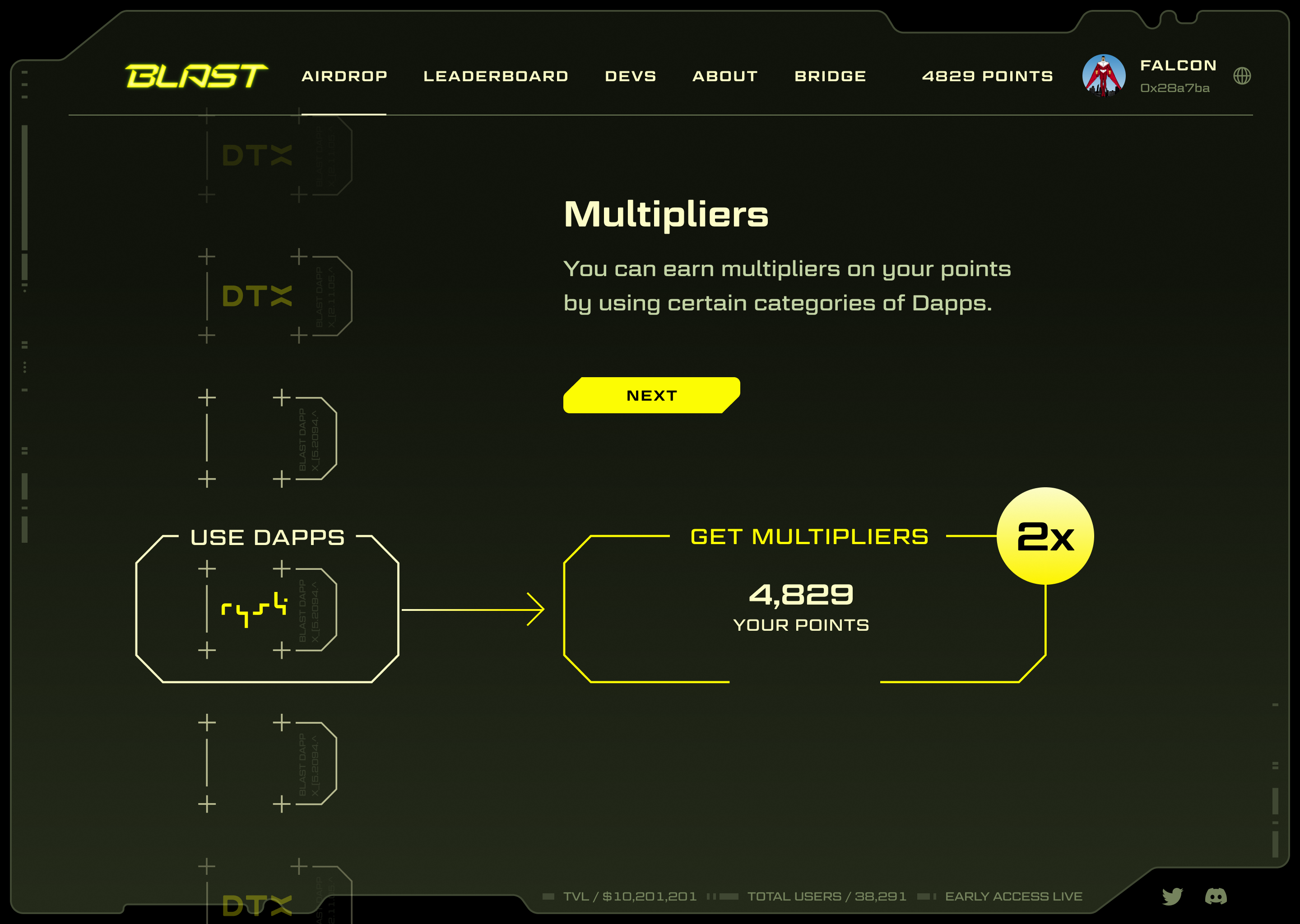
Four ways to earn on mainnet
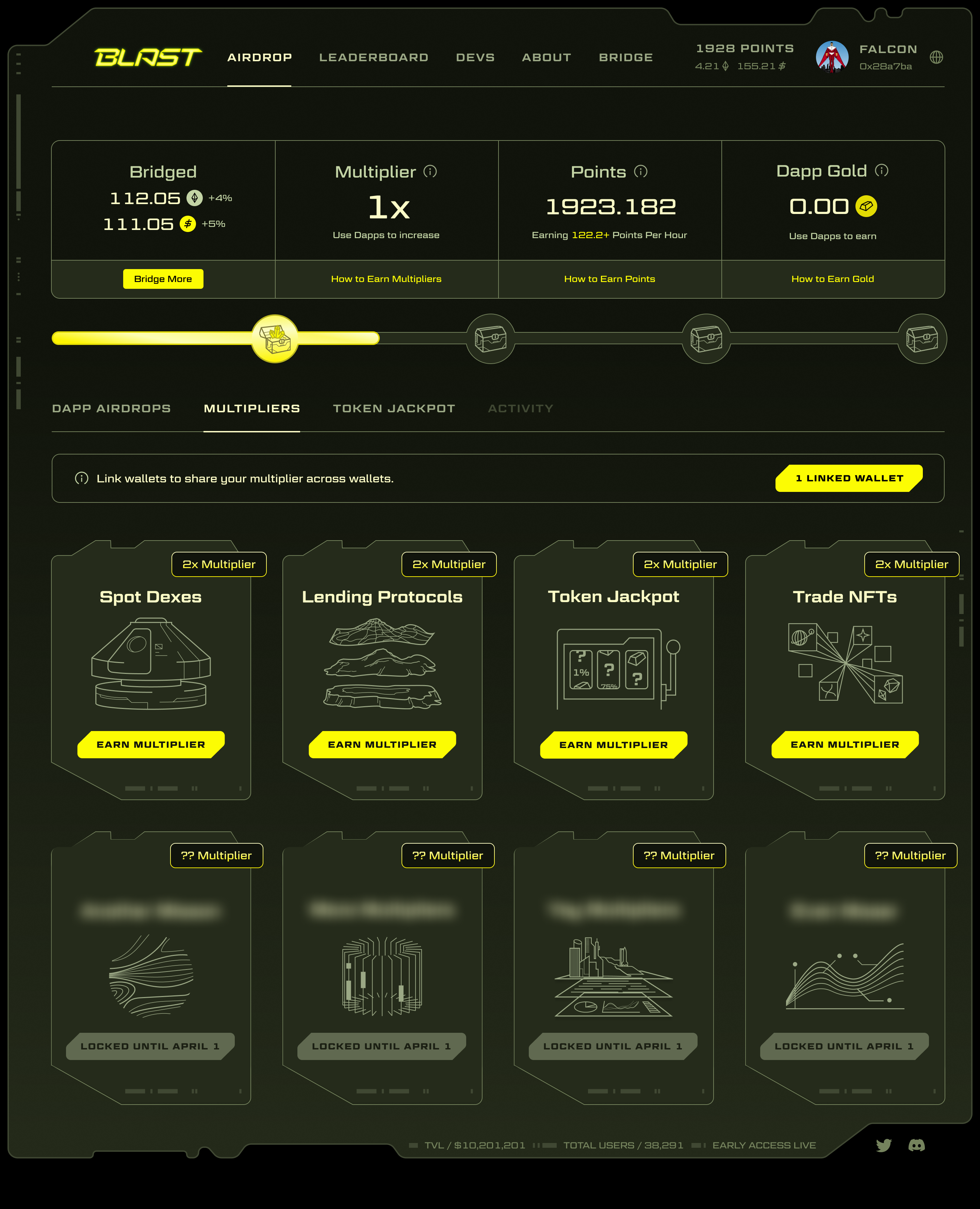
Mainnet rewards were layered with native yield, points, multipliers, and dapp airdrops. The product had to make a complex incentive structure understandable, and let a user act on each lever.
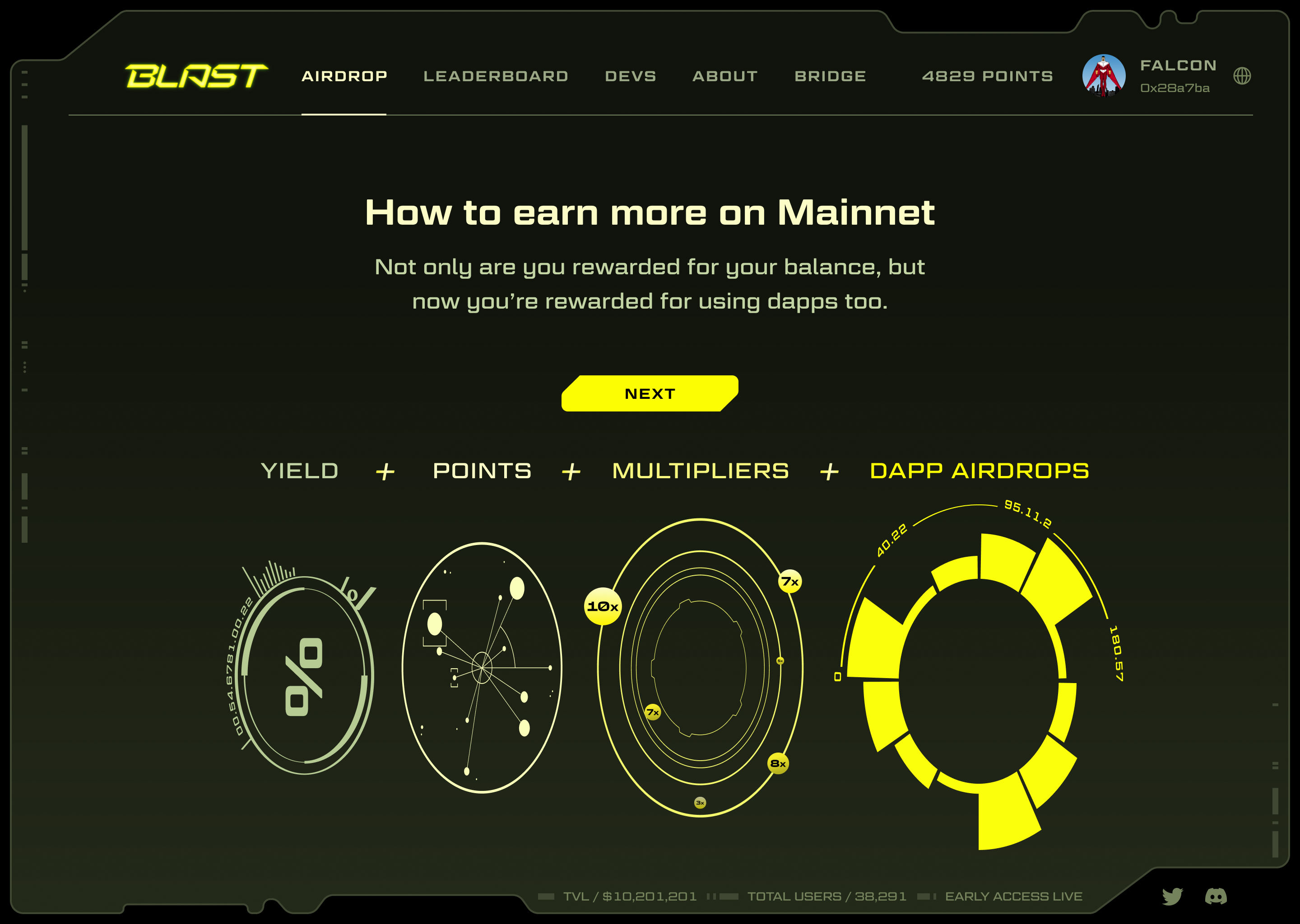
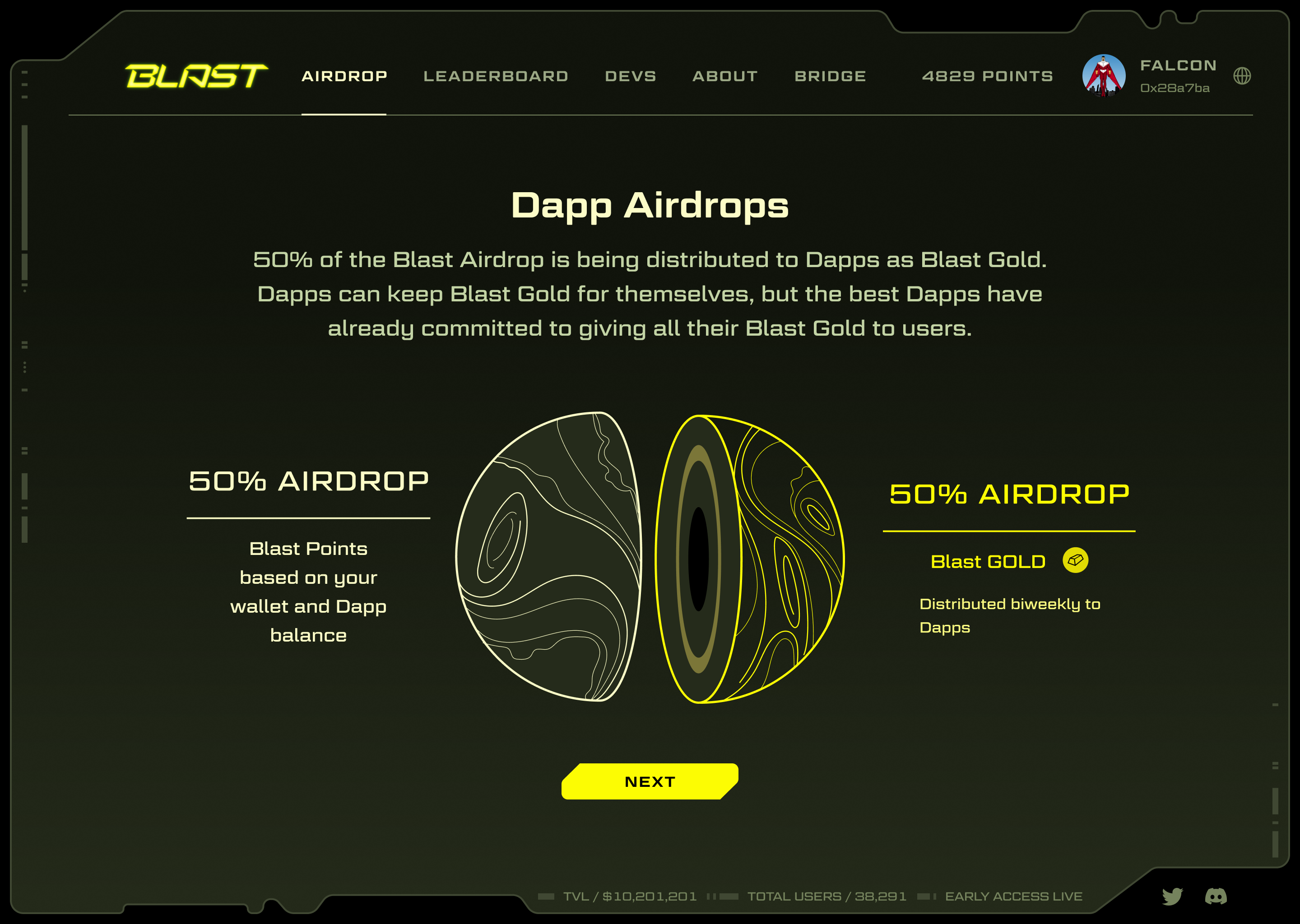
Putting the airdrop in users’ hands
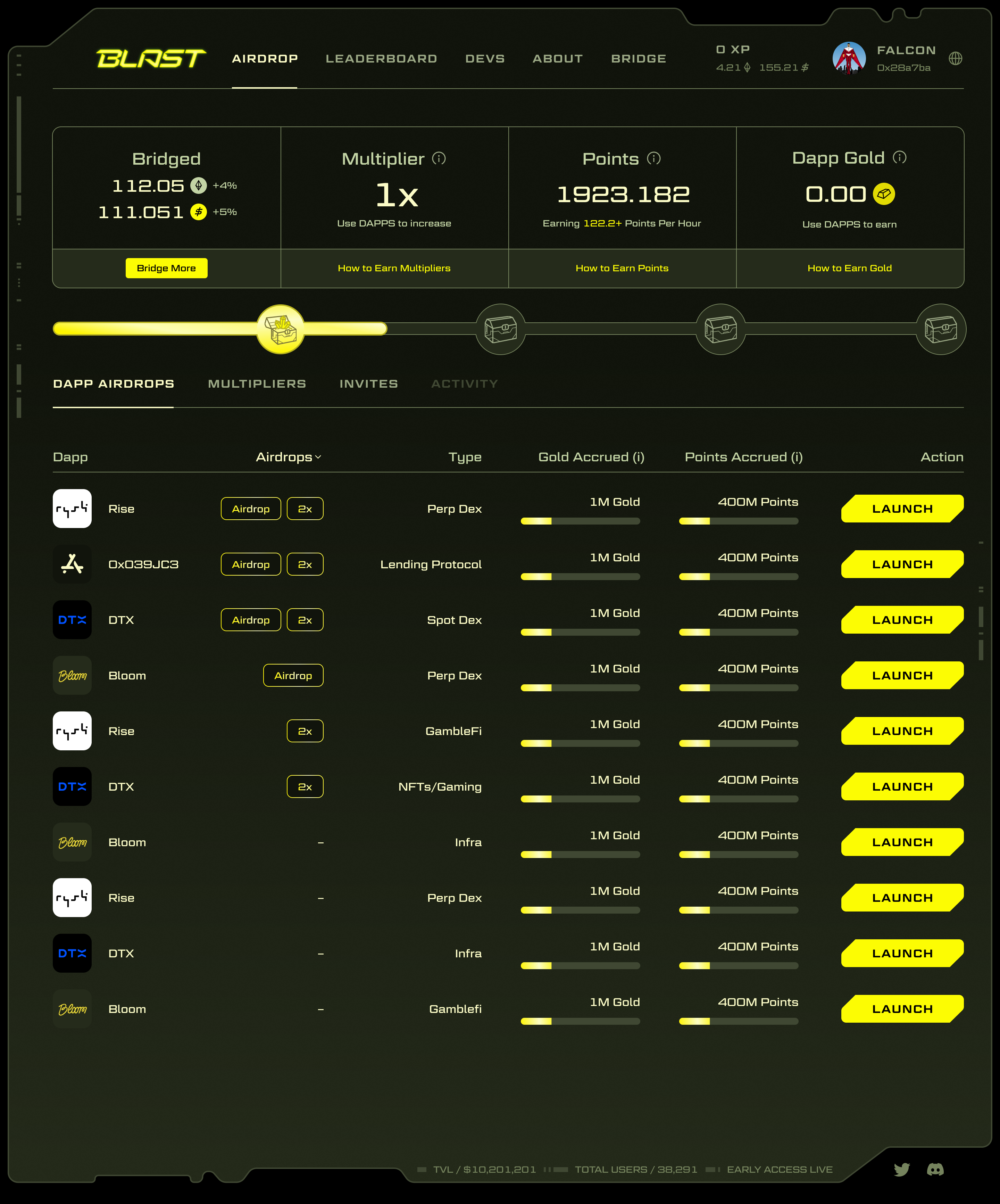
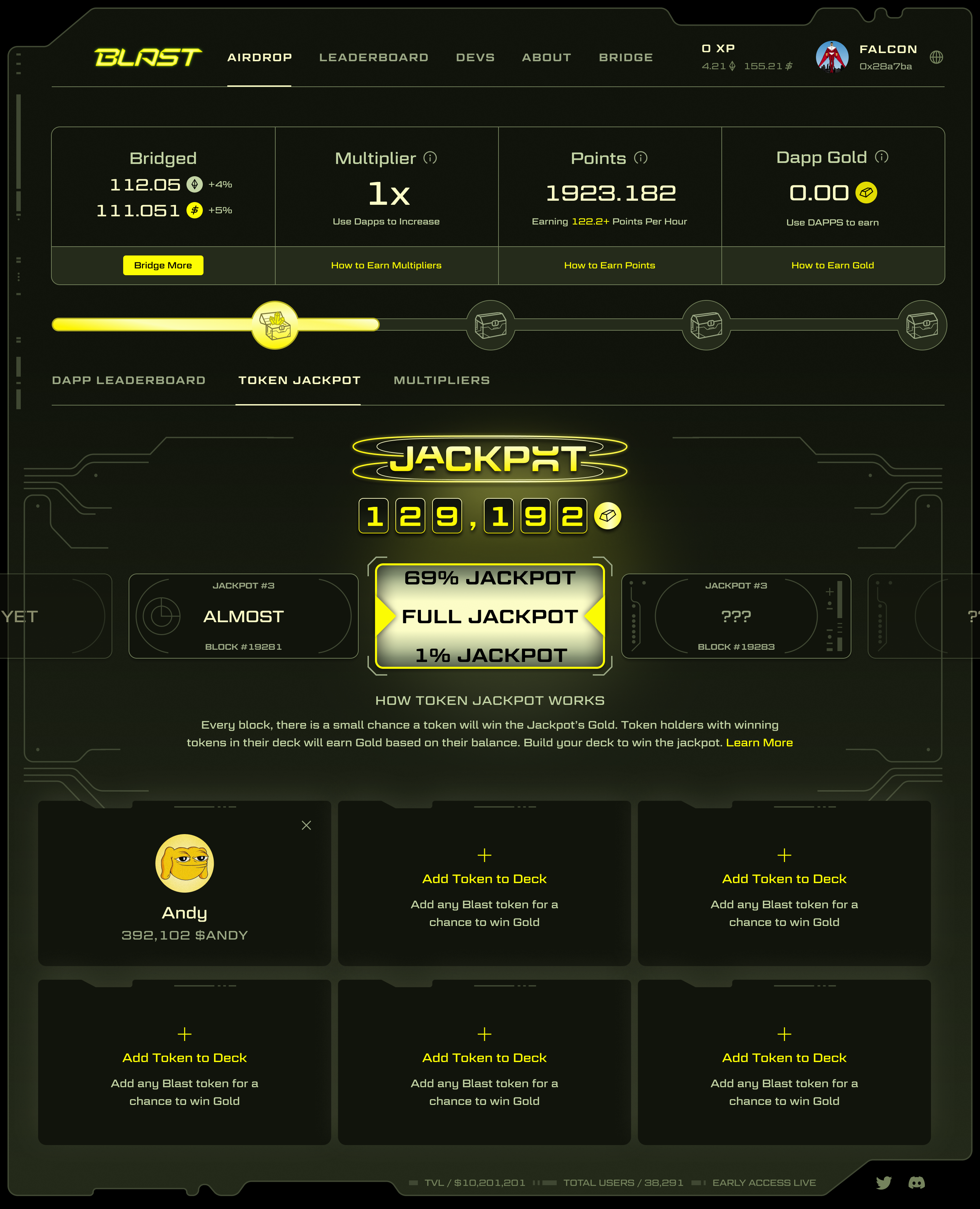
Half of the Blast Gold airdrop was handed to the apps, and the best apps passed it straight through to their users. That needed a distribution surface: a directory where users could browse every dapp, see how Gold was allocated, and weight where their own share went.
Claiming the rewards
Everything led up to the airdrop — the single experience where months of bridging and earning points became a real, claimable airdrop. It earned the boldest treatment in the whole product.
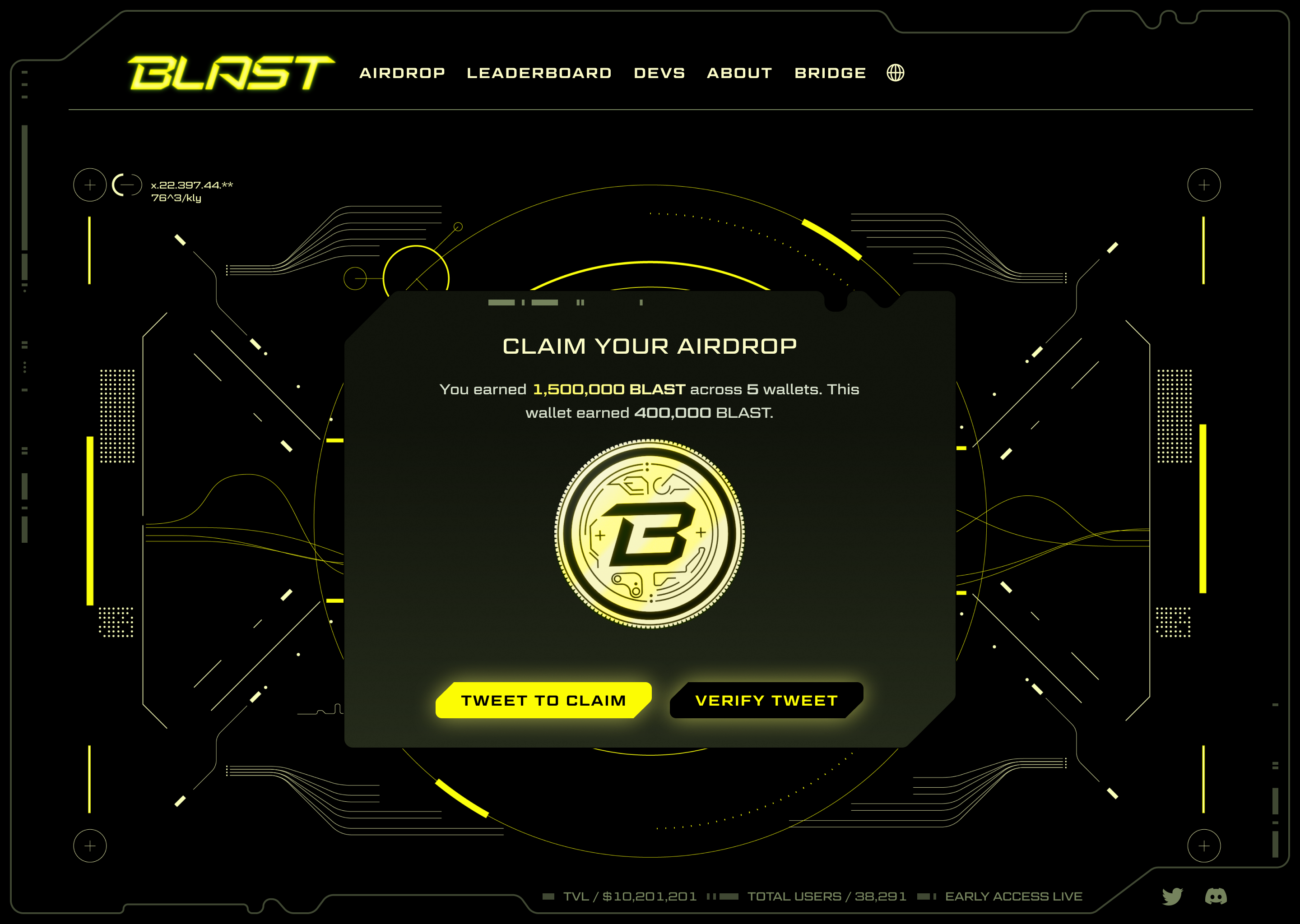
Watch and listen to the token launch
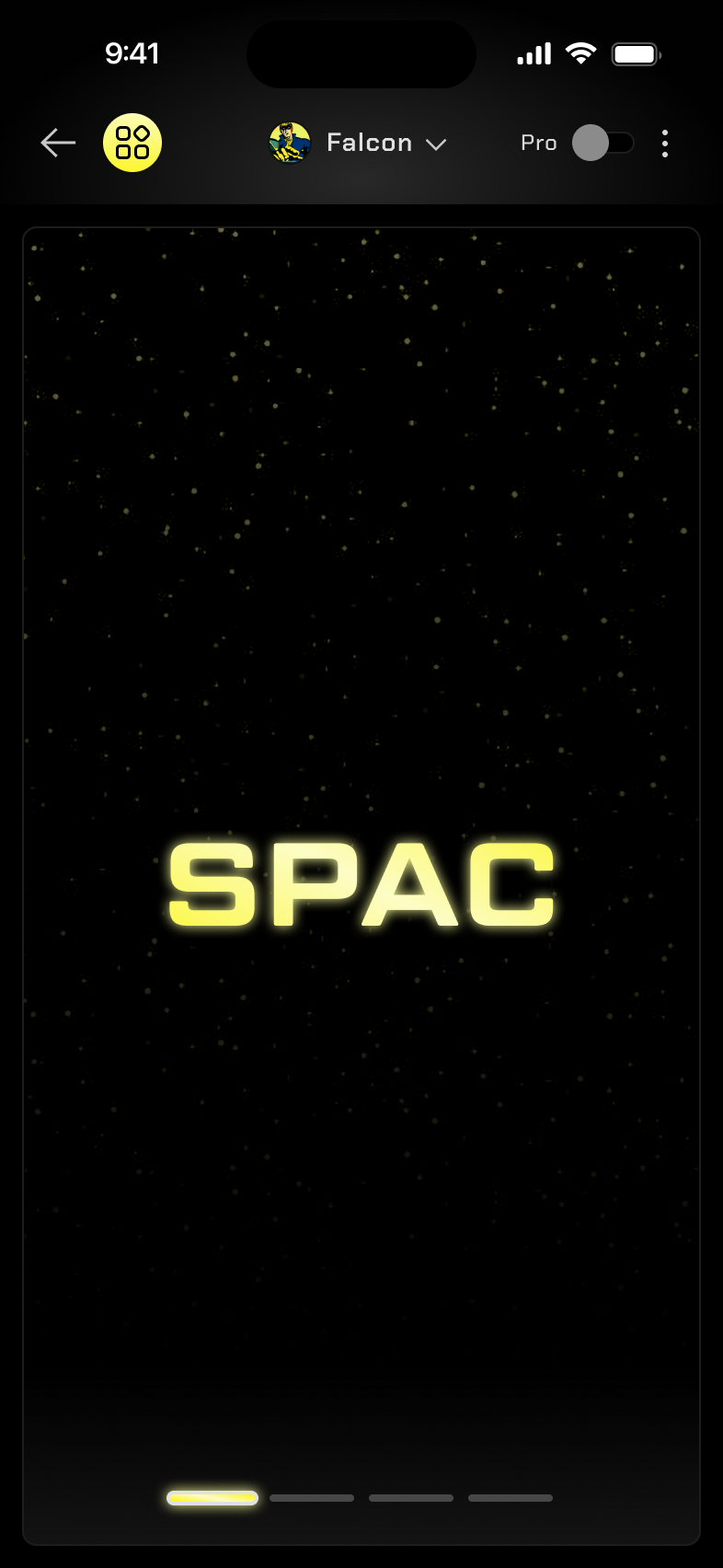
…and a Blast app in your pocket
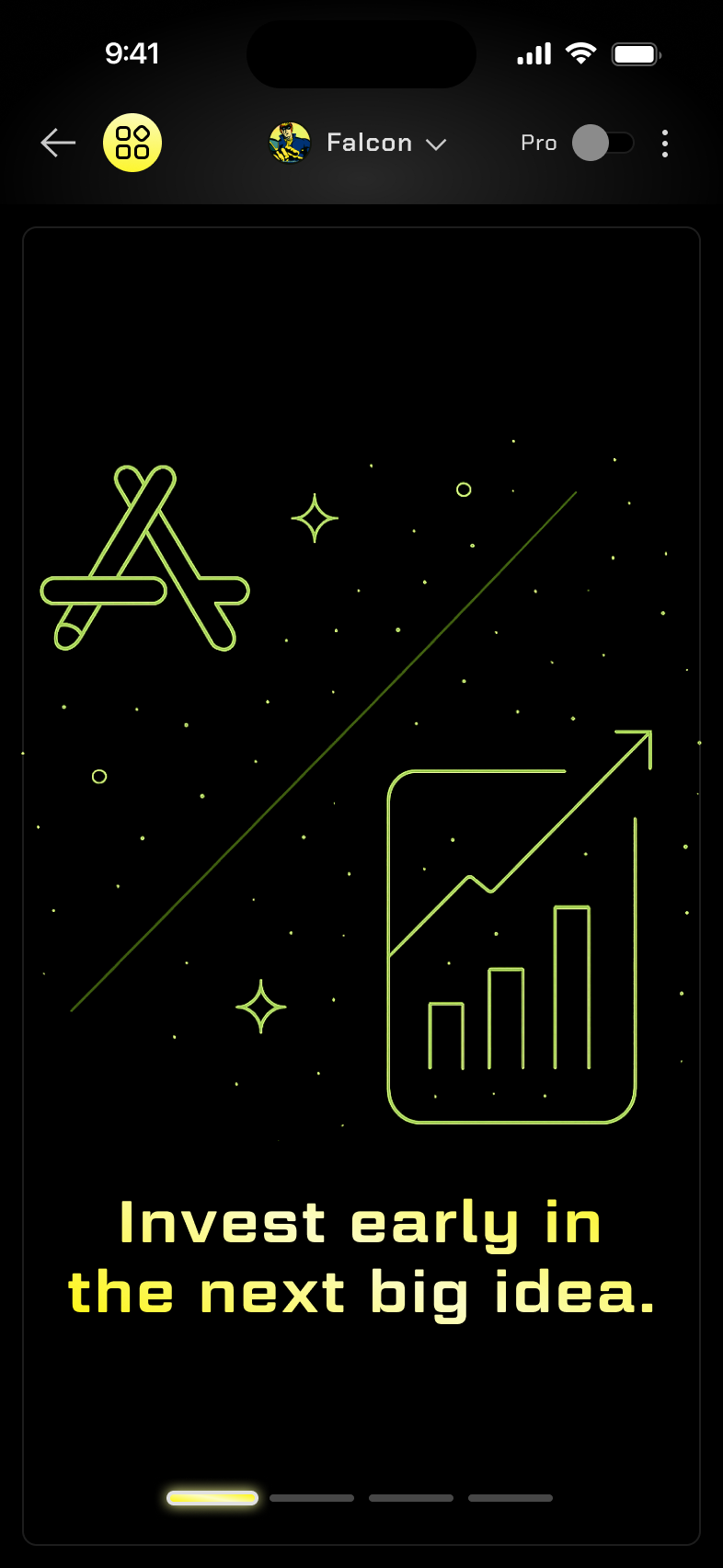
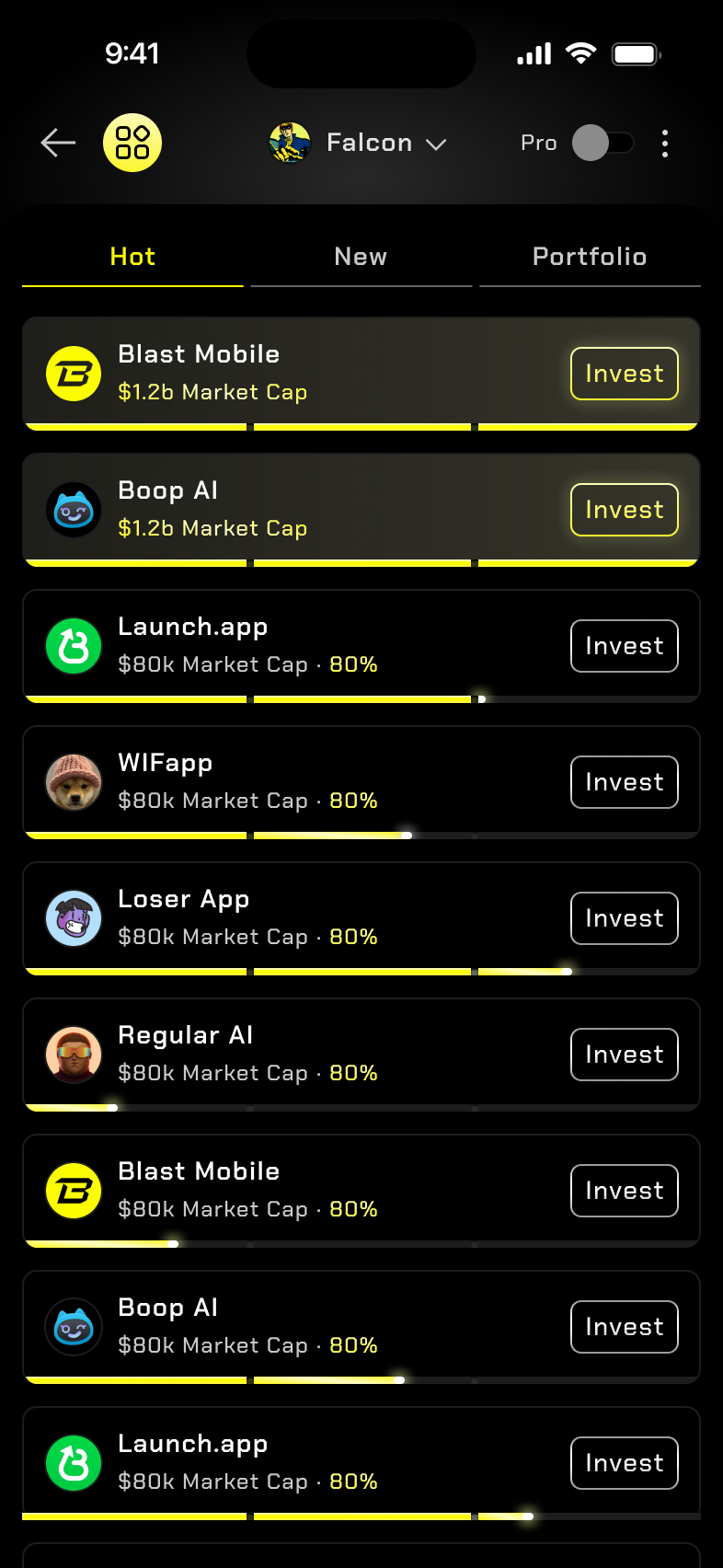
Phase 2 also put Blast on mobile. The entire flow, from creating a wallet to claiming an airdrop, rebuilt for a phone in the same brand language as the web product.
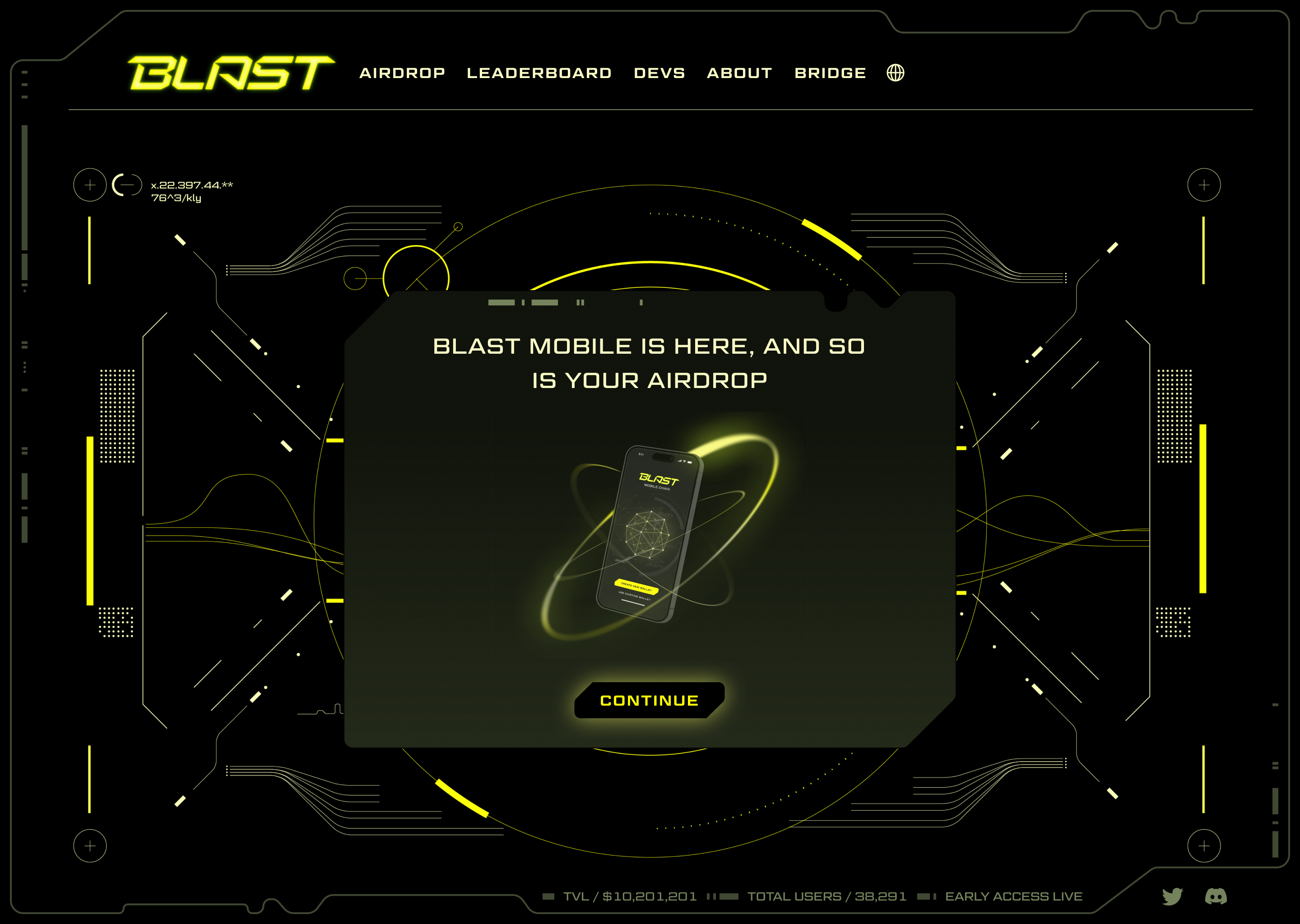
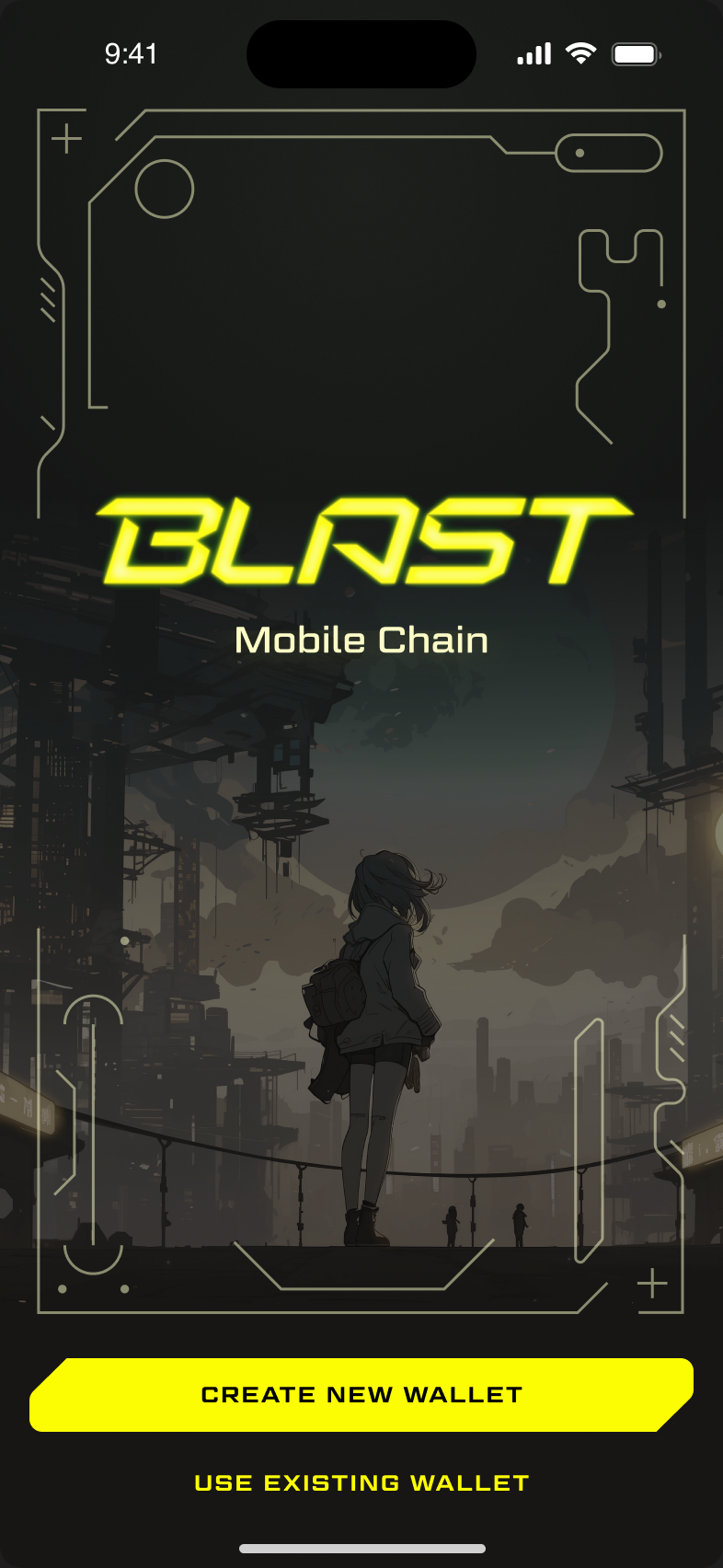
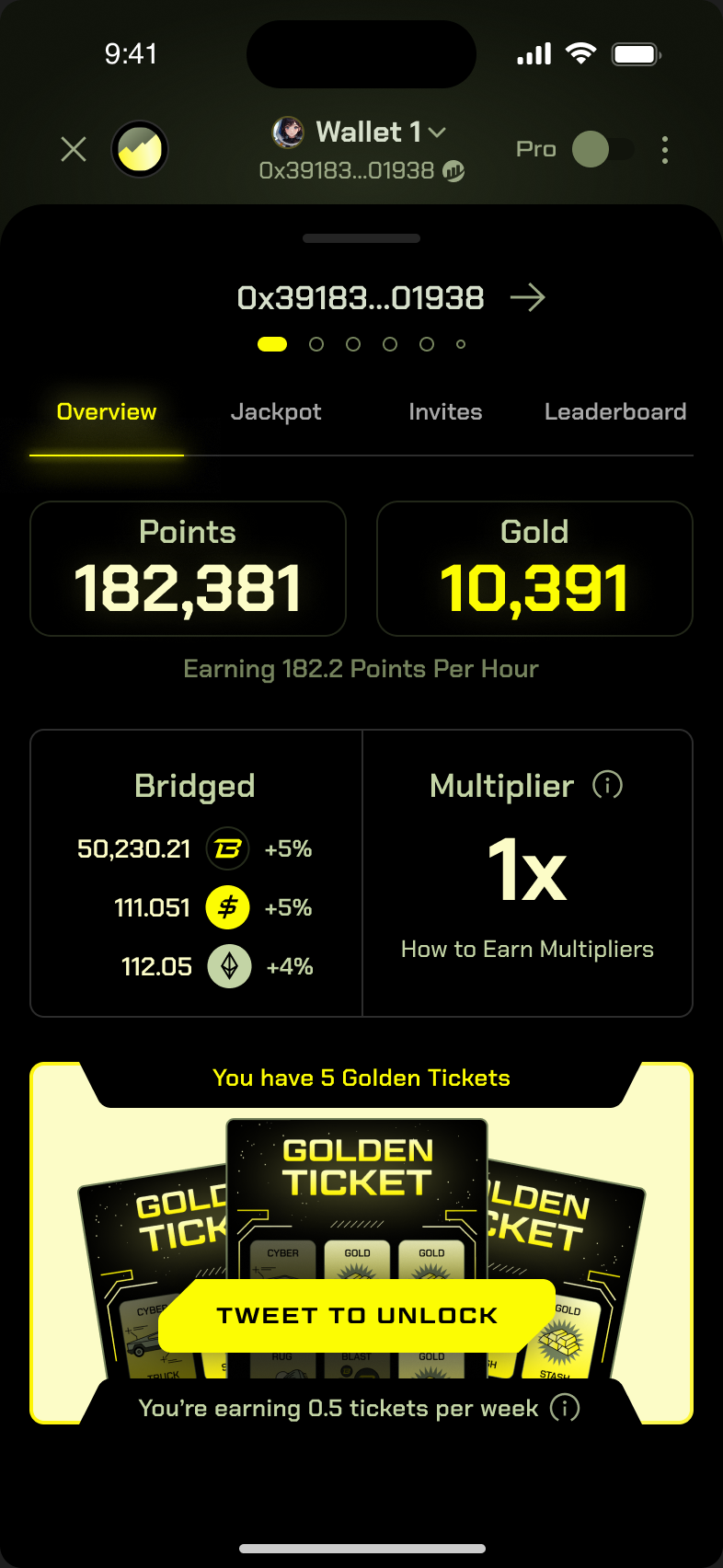
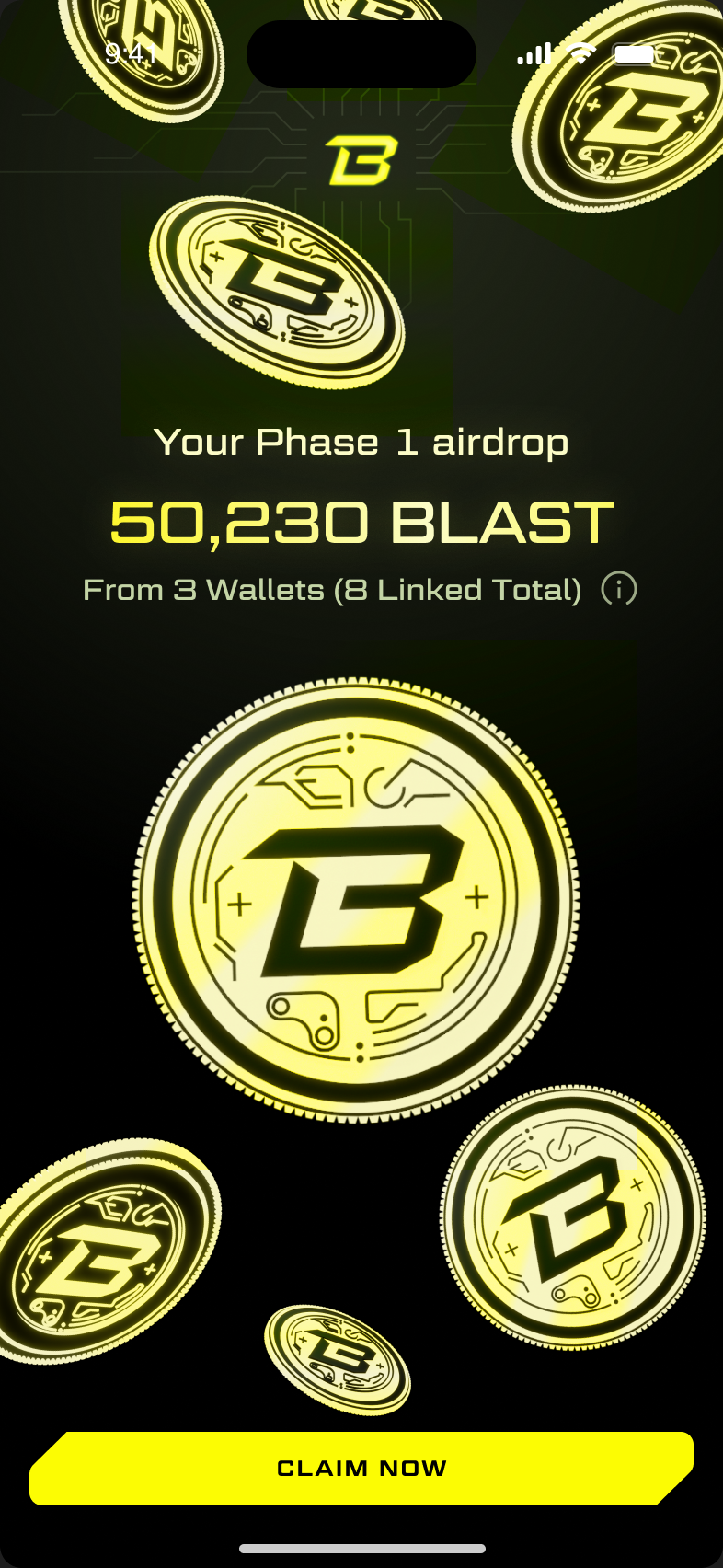
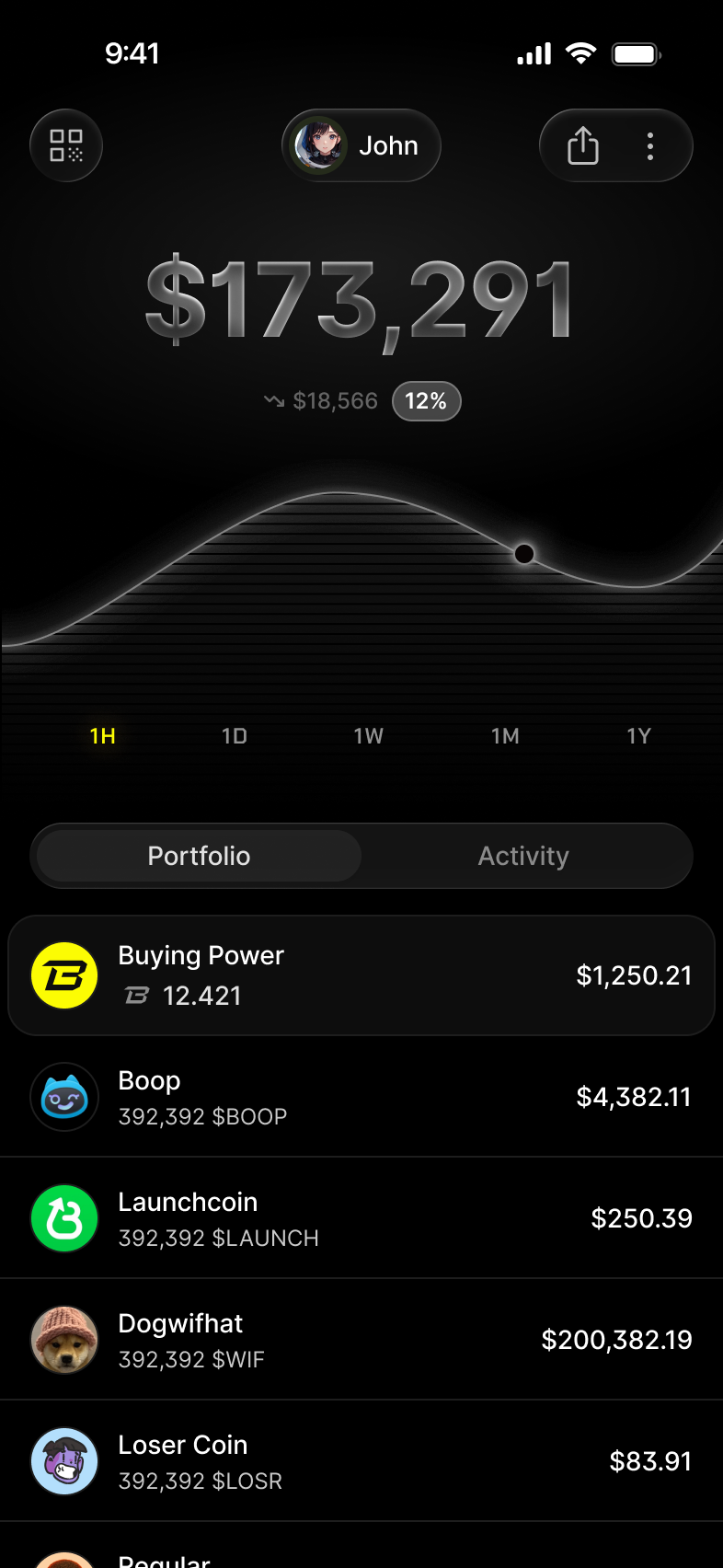
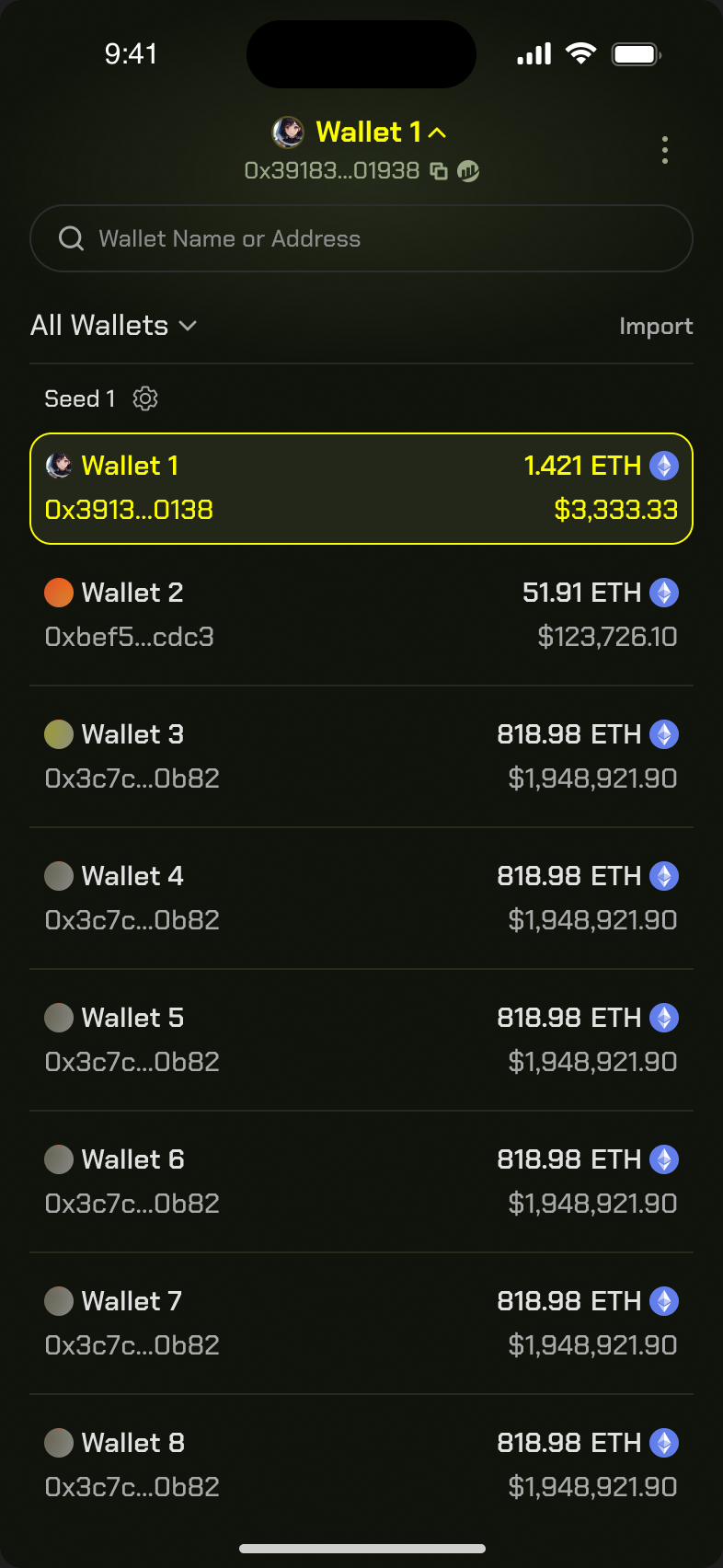
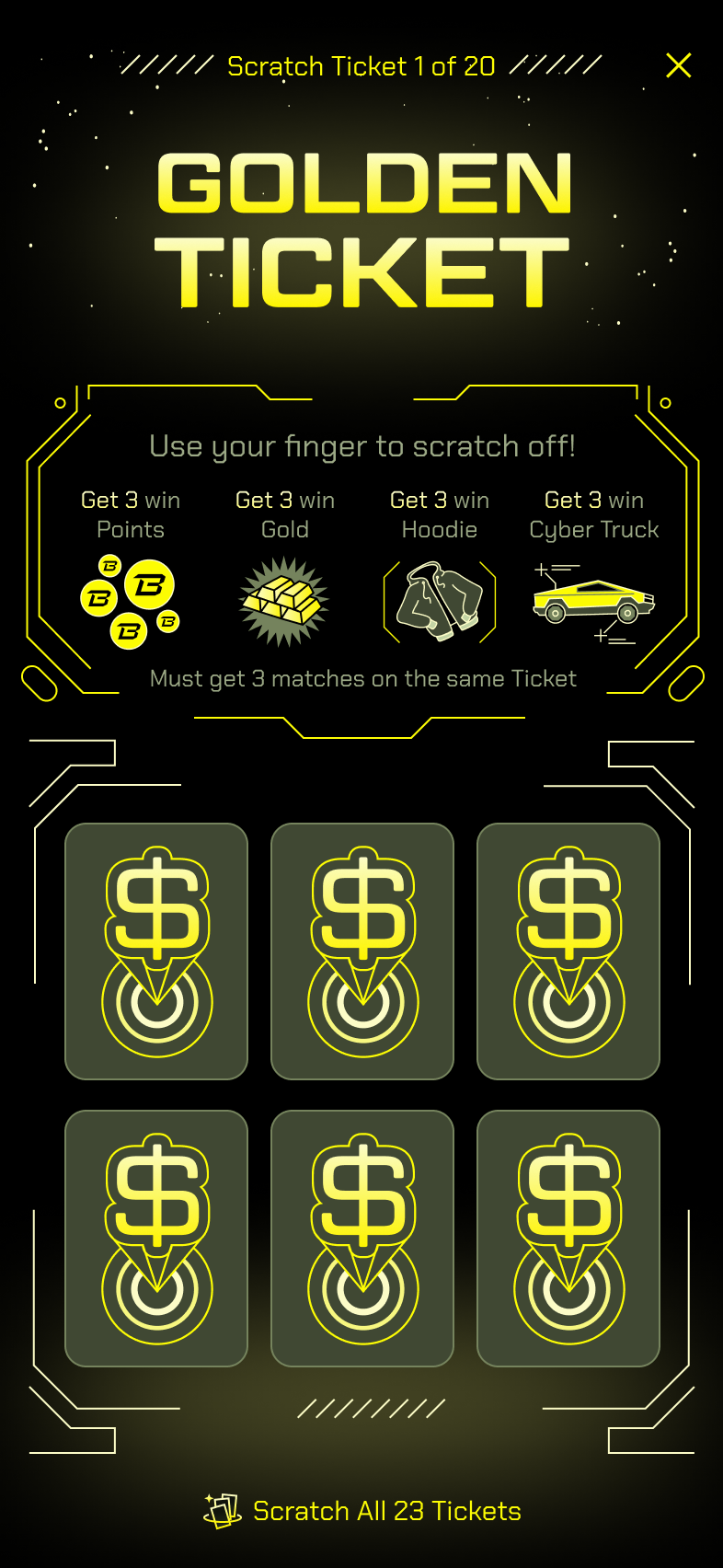
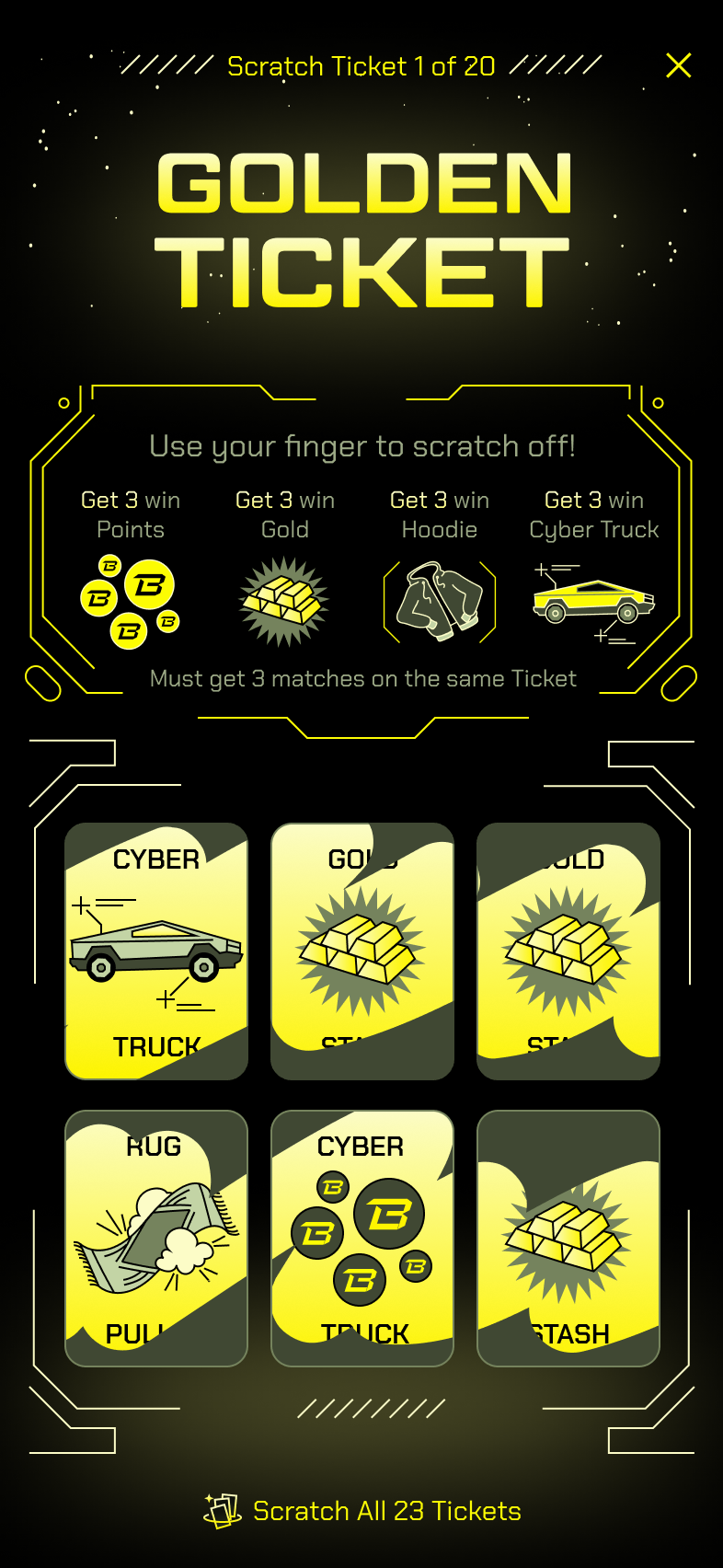
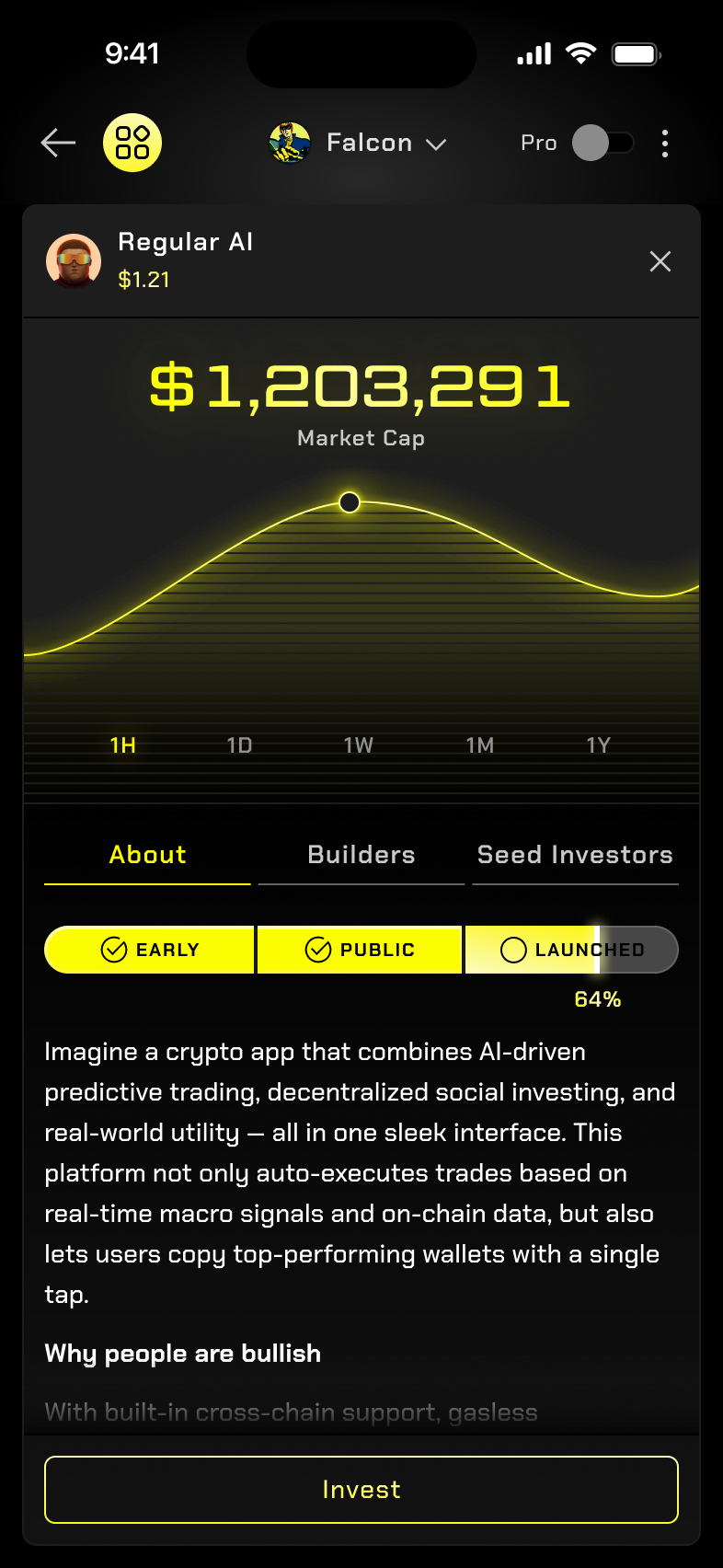
The whole product, in your pocket
Every surface has a mobile counterpart — rewards and wallets, the Golden Ticket game, a dapp browser, and a live portfolio — so a user never has to leave the app to do anything Blast offers.