I’m Joshua Sortino, a Miami + NYC-based Design Director, advisor, and investor. I will improve your startup’s user experience, design culture, and team. We should talk →


A high-speed terminal for trading memecoins
Head of Design · 2022 – Current
UX and speed as the product
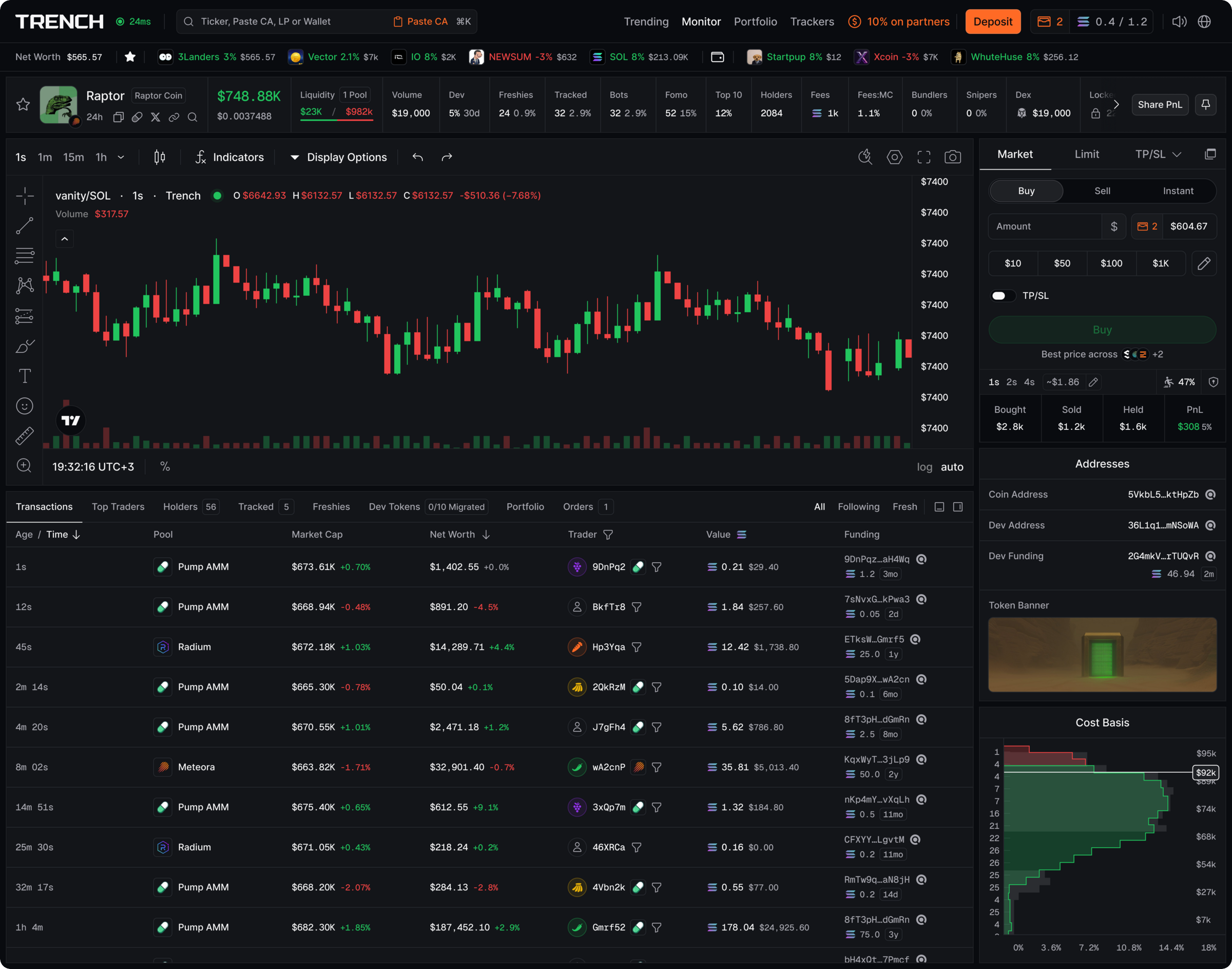
Memecoins can 10x or rug within seconds, and most big traders are tracking dozens at once. Trench was designed by directly talking to traders and understanding their problems. The biggest problem traders had was density of information. There are many metrics that could indicate a unicorn or scam token. I designed and tested hundreds of UX/UI directions and features to solve their needs across all of our product’s surfaces.






The most advanced token trading terminal
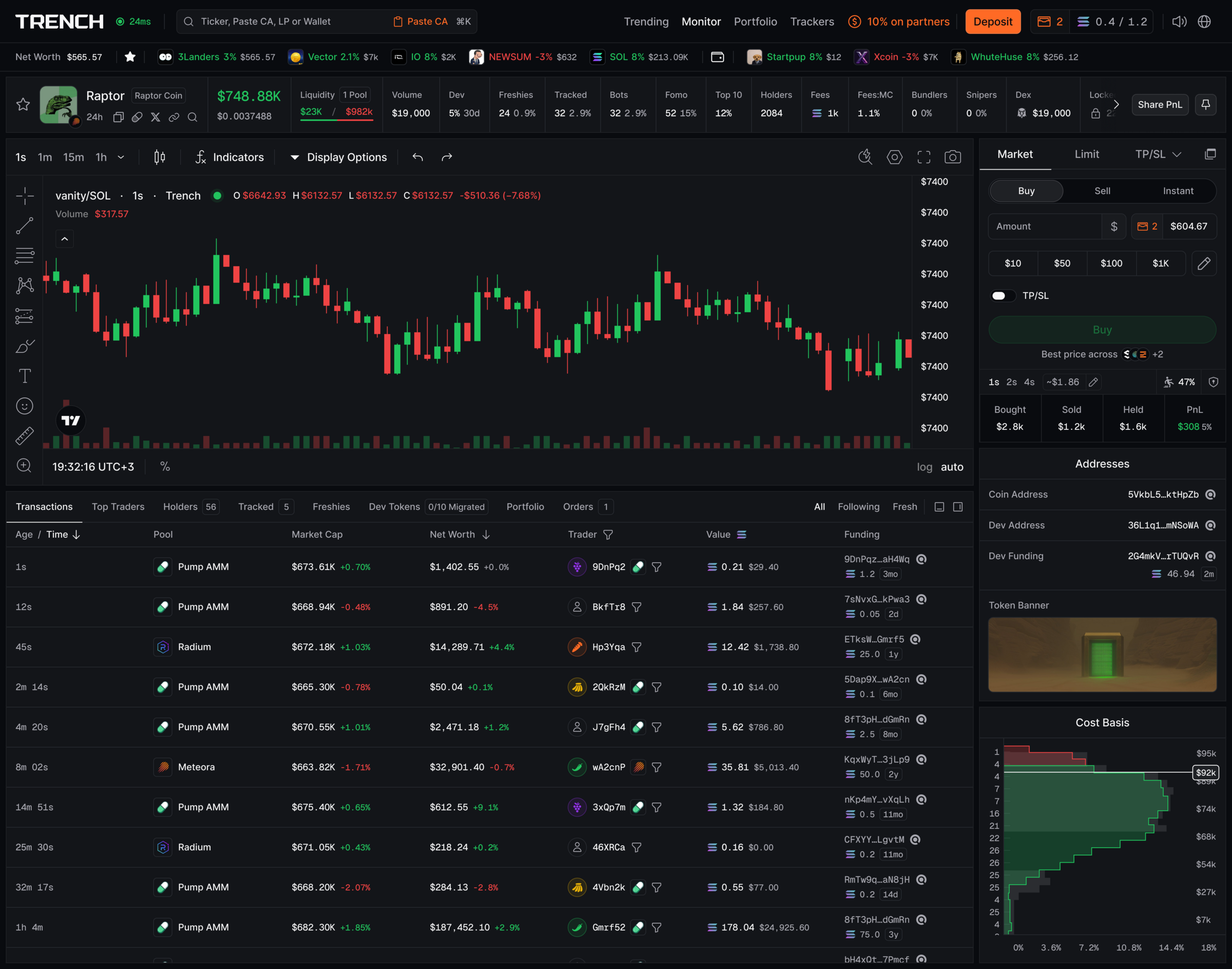
Everything a trader needs to make a decision is on a single screen, no tab-switching: market data, holders, orders, the dev’s wallet, and cost basis. Including a live chart and full transaction orderbook with trade panel controls for Market and Limit orders, Take Profit/Stop Loss, and TWAP orders, presets, and MEV protection. With instant trade mode, a trade is one click, not ten.
Finding the next trade
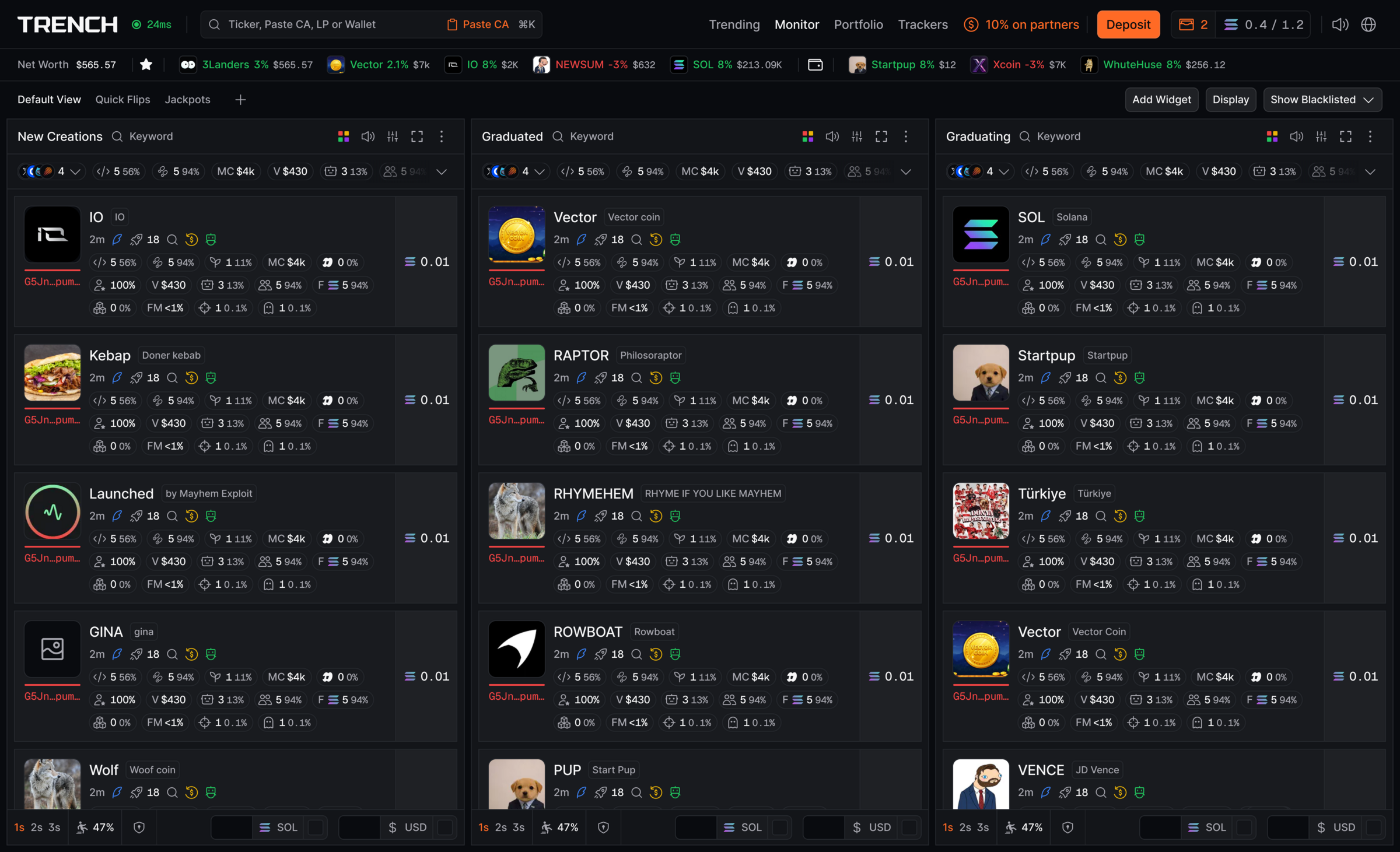
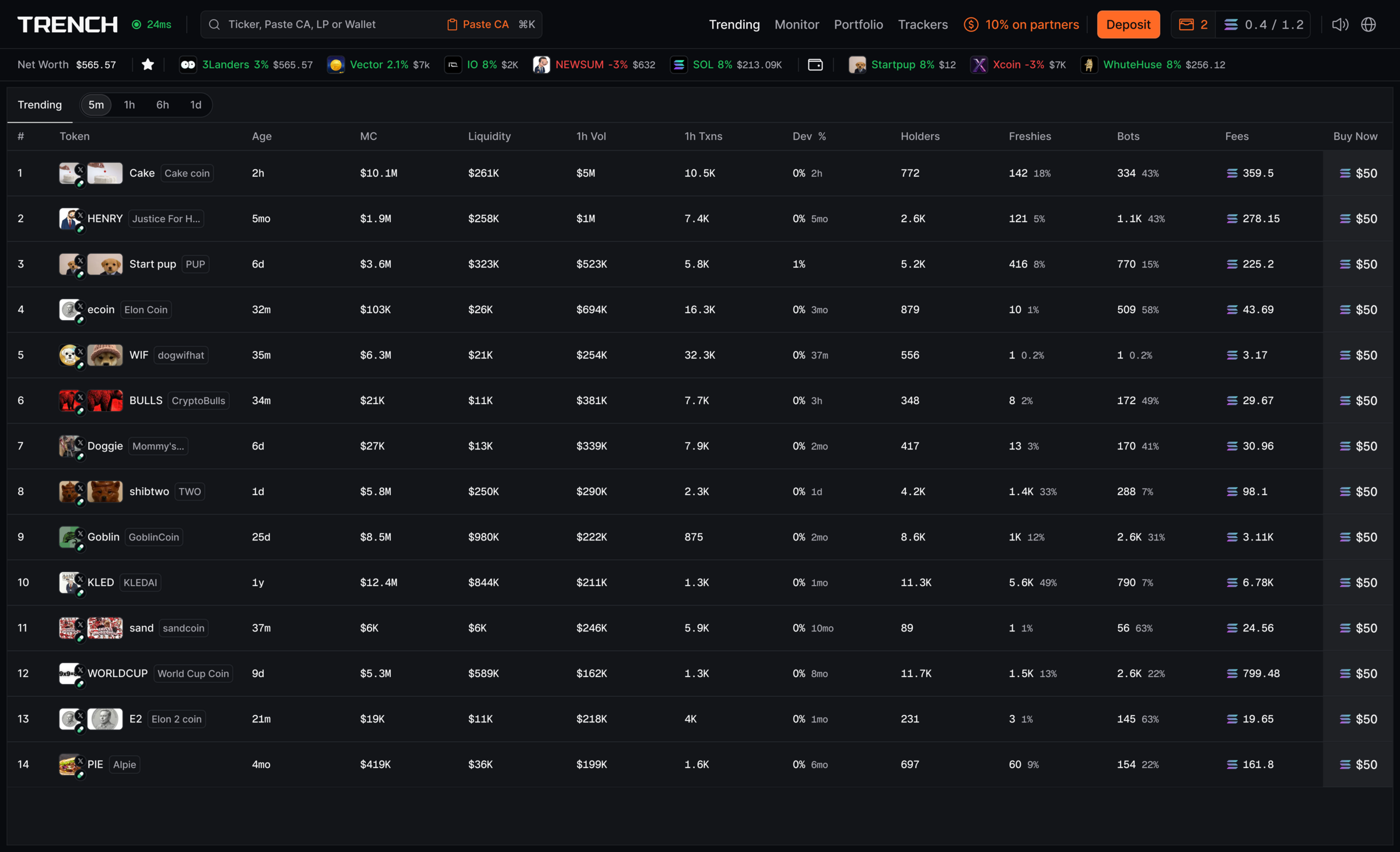
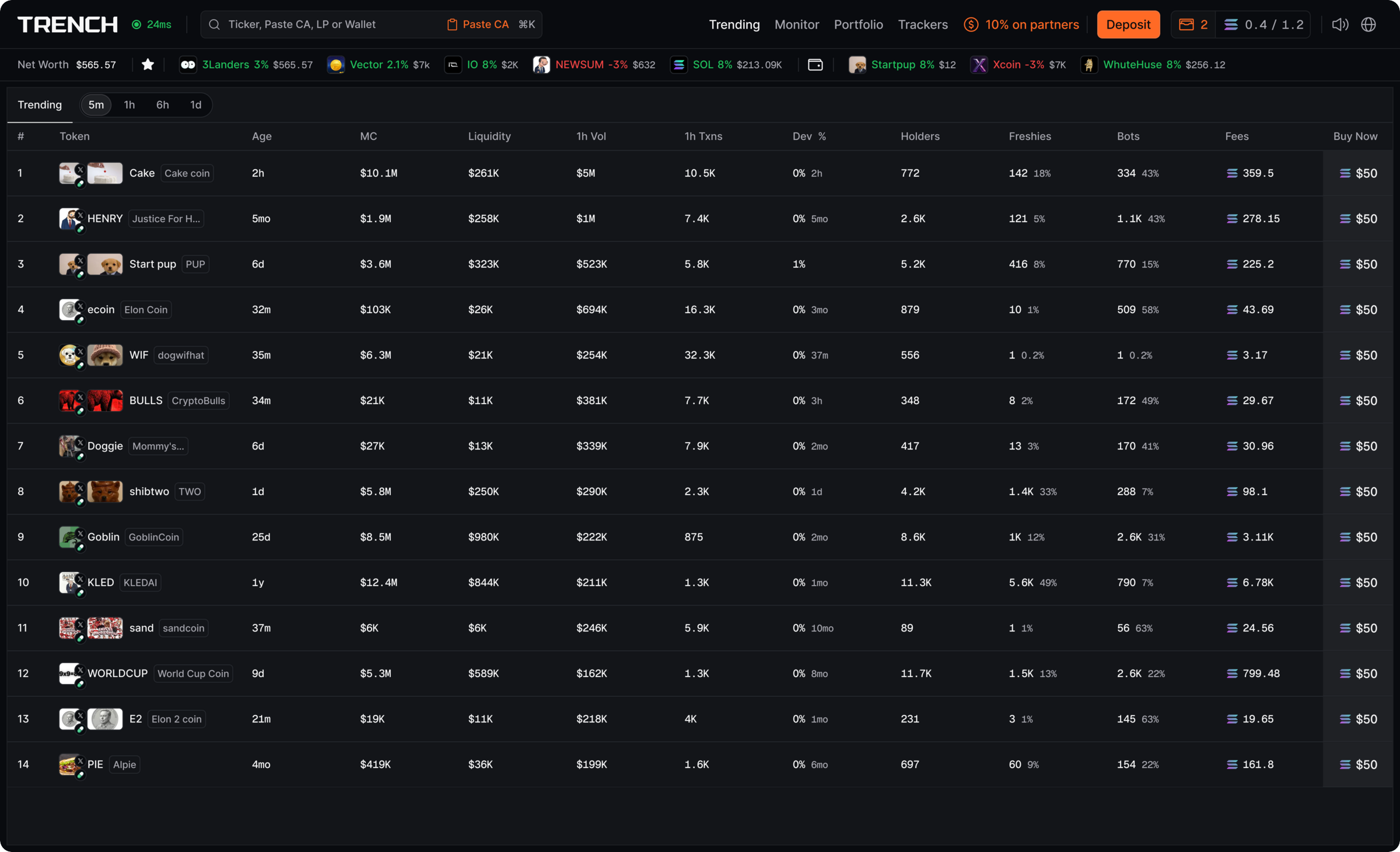
Discovery splits into two surfaces. Trending is a ranked, scannable view of what’s moving right now, with data a trader actually needs: price, volume, liquidity, age, holder count. Monitor turns it into a live, multi-column feed of new pairs and migrations in real time, with custom filtering.
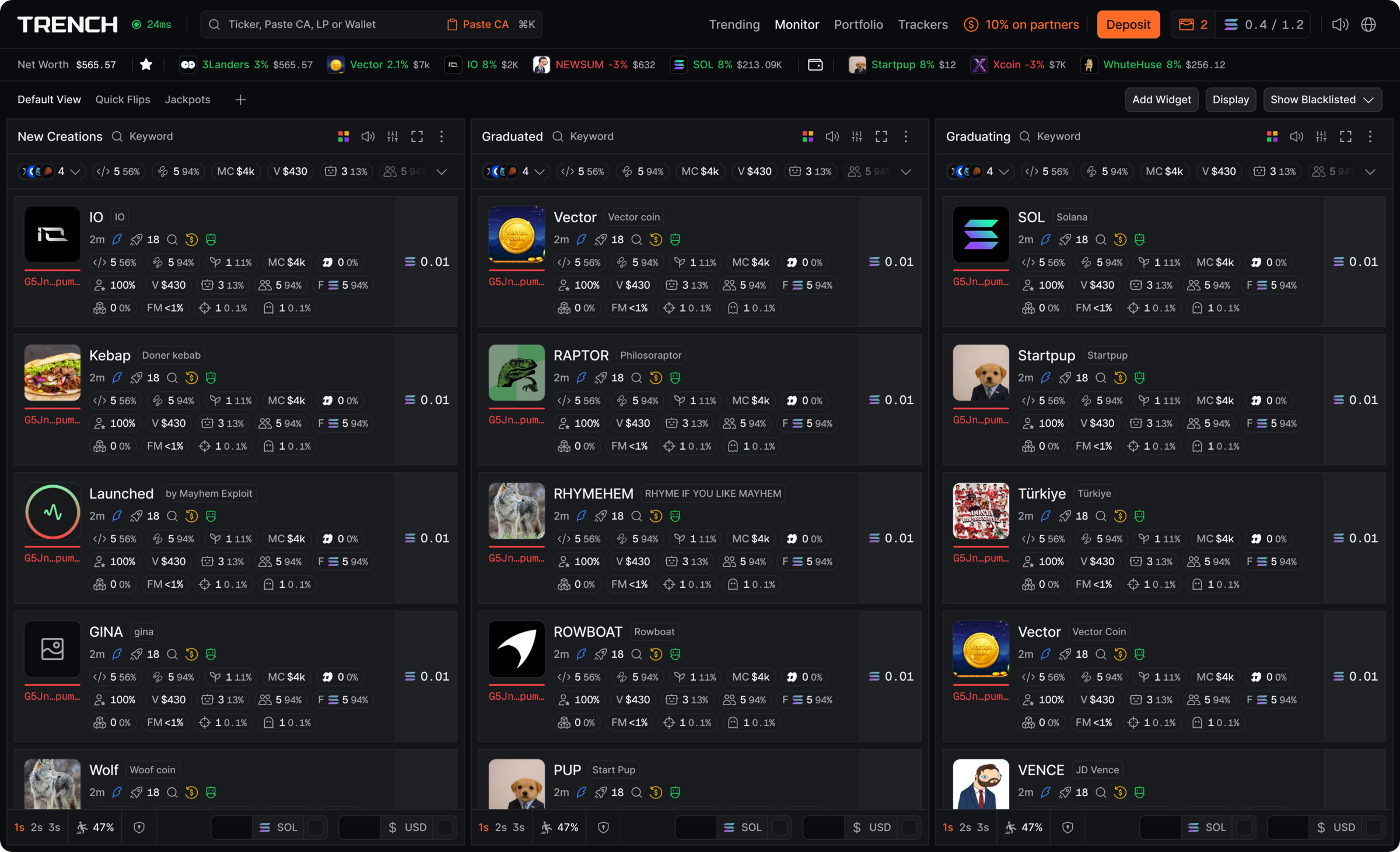
Fully Customizable Trading Experience
Traders can build their own command center from widgets and filters, including a live social feed, new creations, and graduating and graduated pairs, all arranged around how they actually watch and trade with the market.
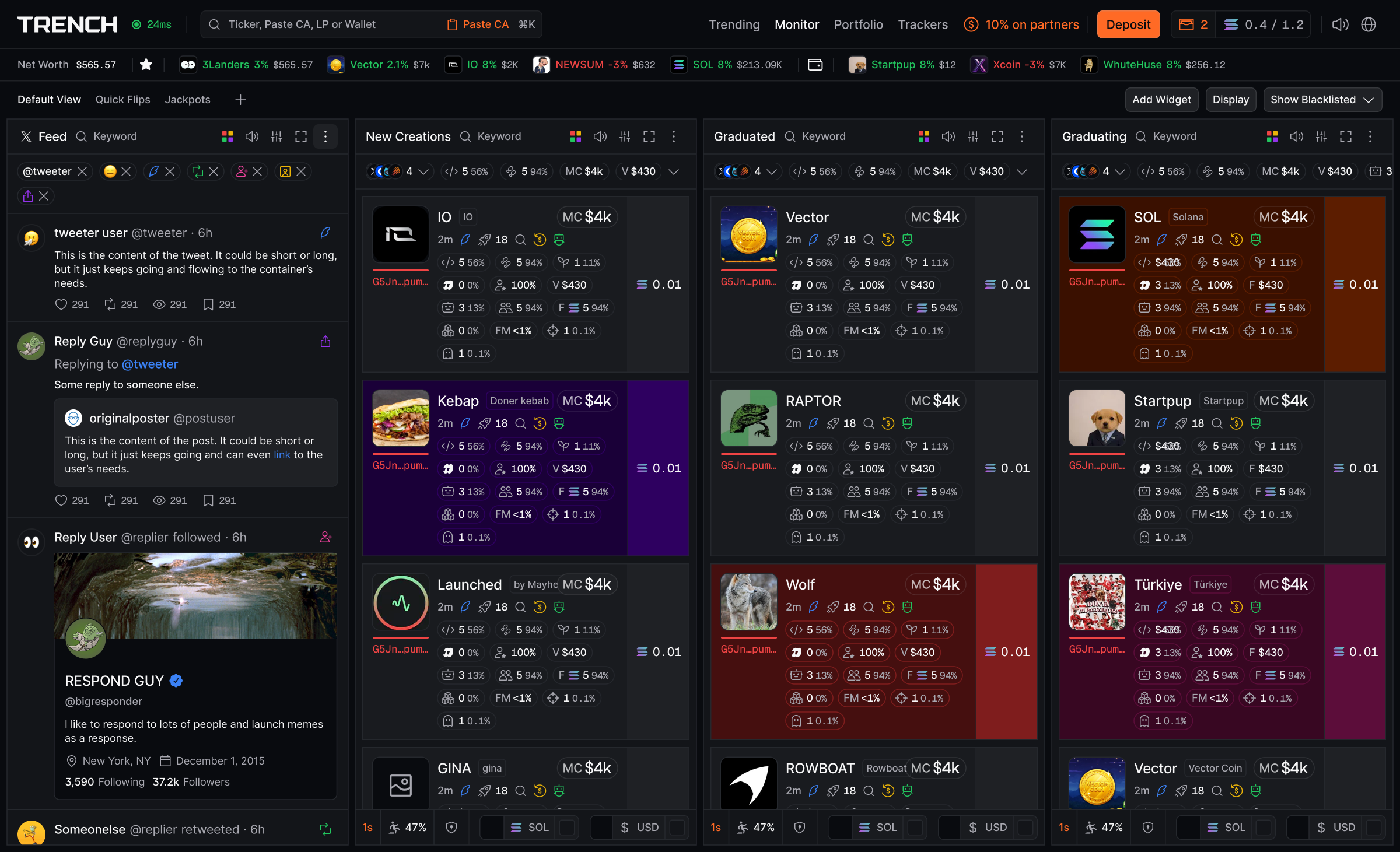
Traders customize views so tokens are filtered and color-coded based on specified criteria.
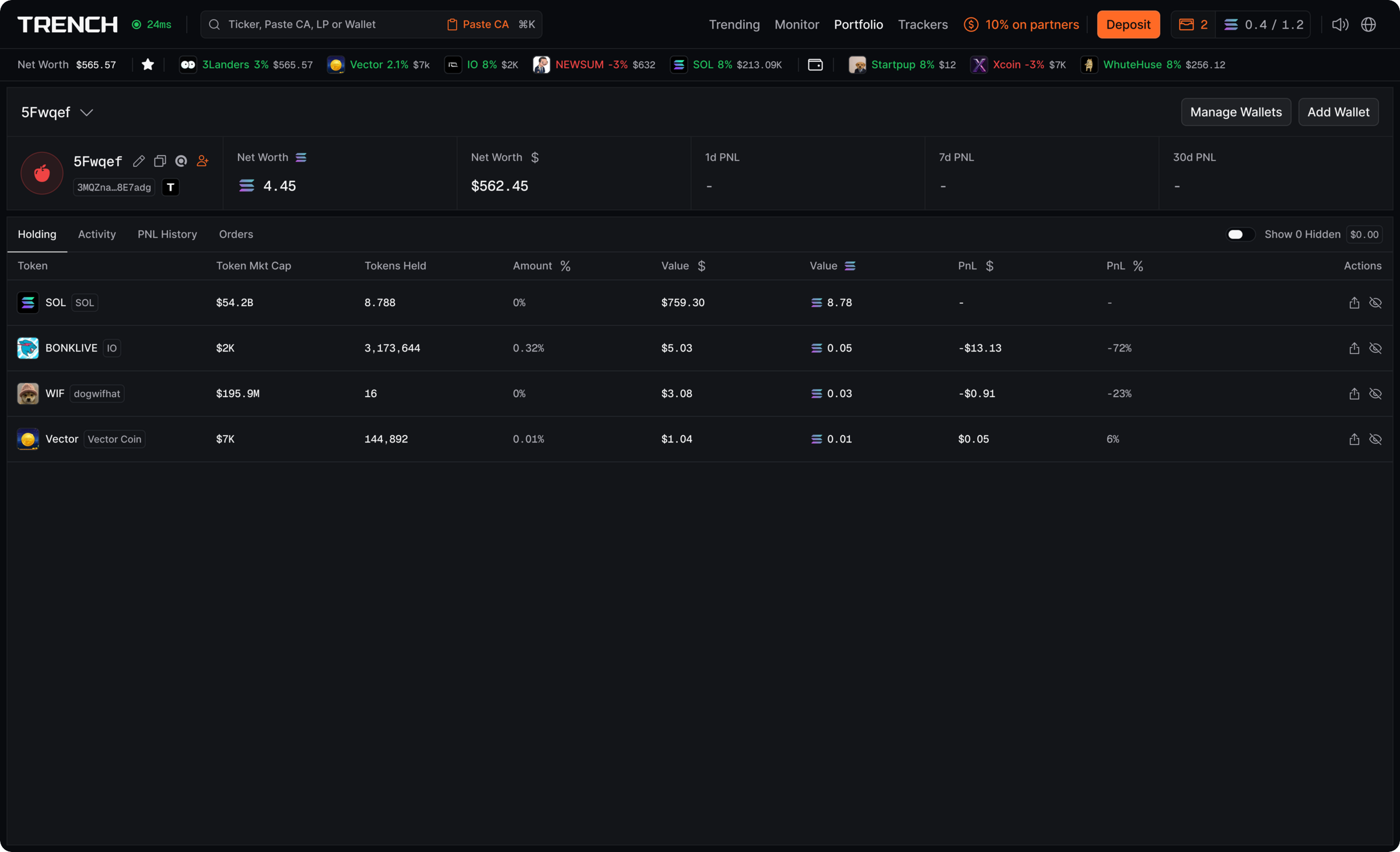
Know your position
The portfolio consolidates every wallet into one view: holdings, open orders, activity, and full PnL history. Wallet management, private-key import, and naming all live inline, so a trader running ten wallets never gets lost.
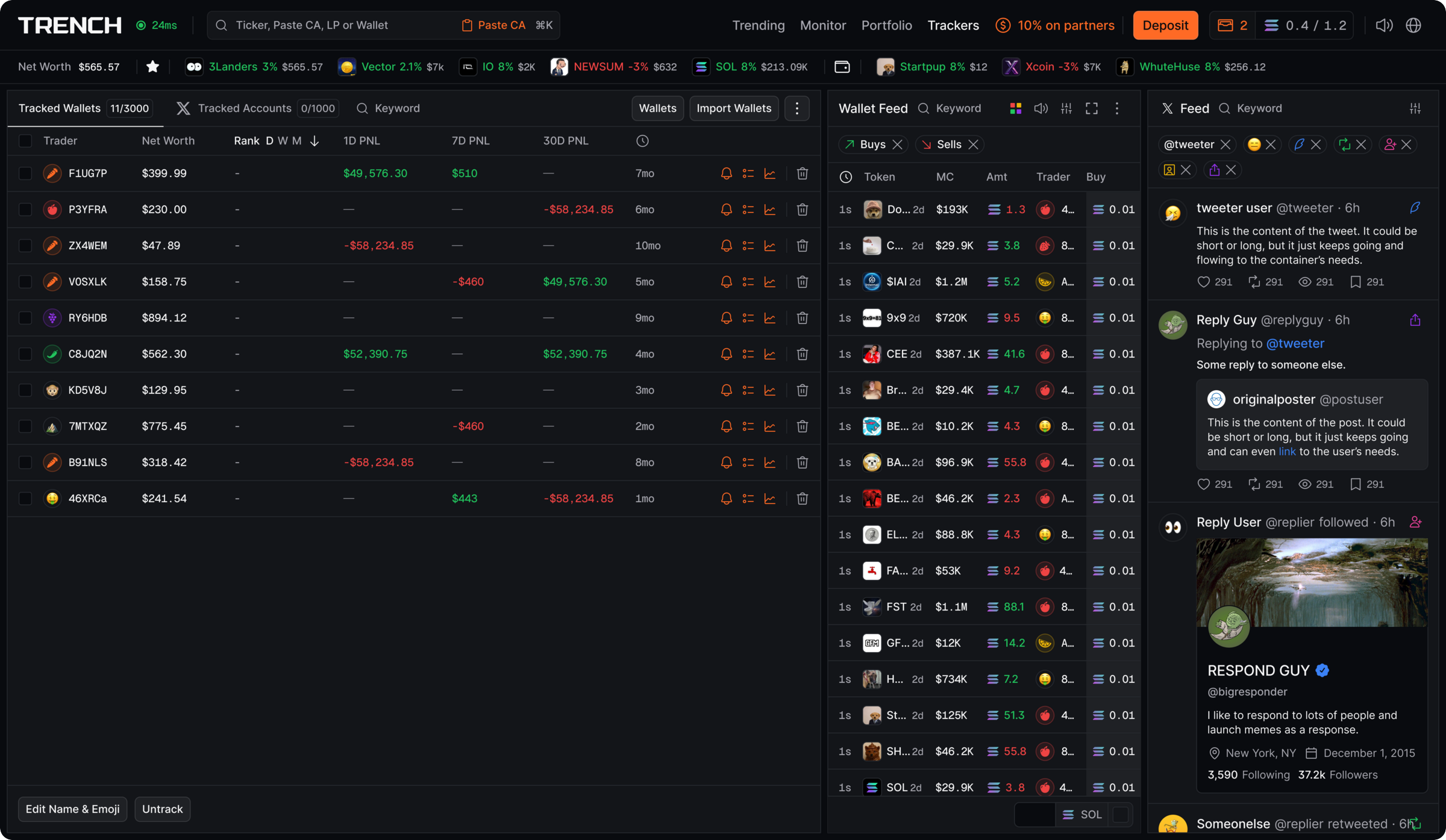
Follow the smart money
Trackers let a trader watch specific wallets (usually, the accounts that are early and right), and see their moves the instant they happen. It turns copy-trading from manual work into a live feed.
A frictionless on-ramp
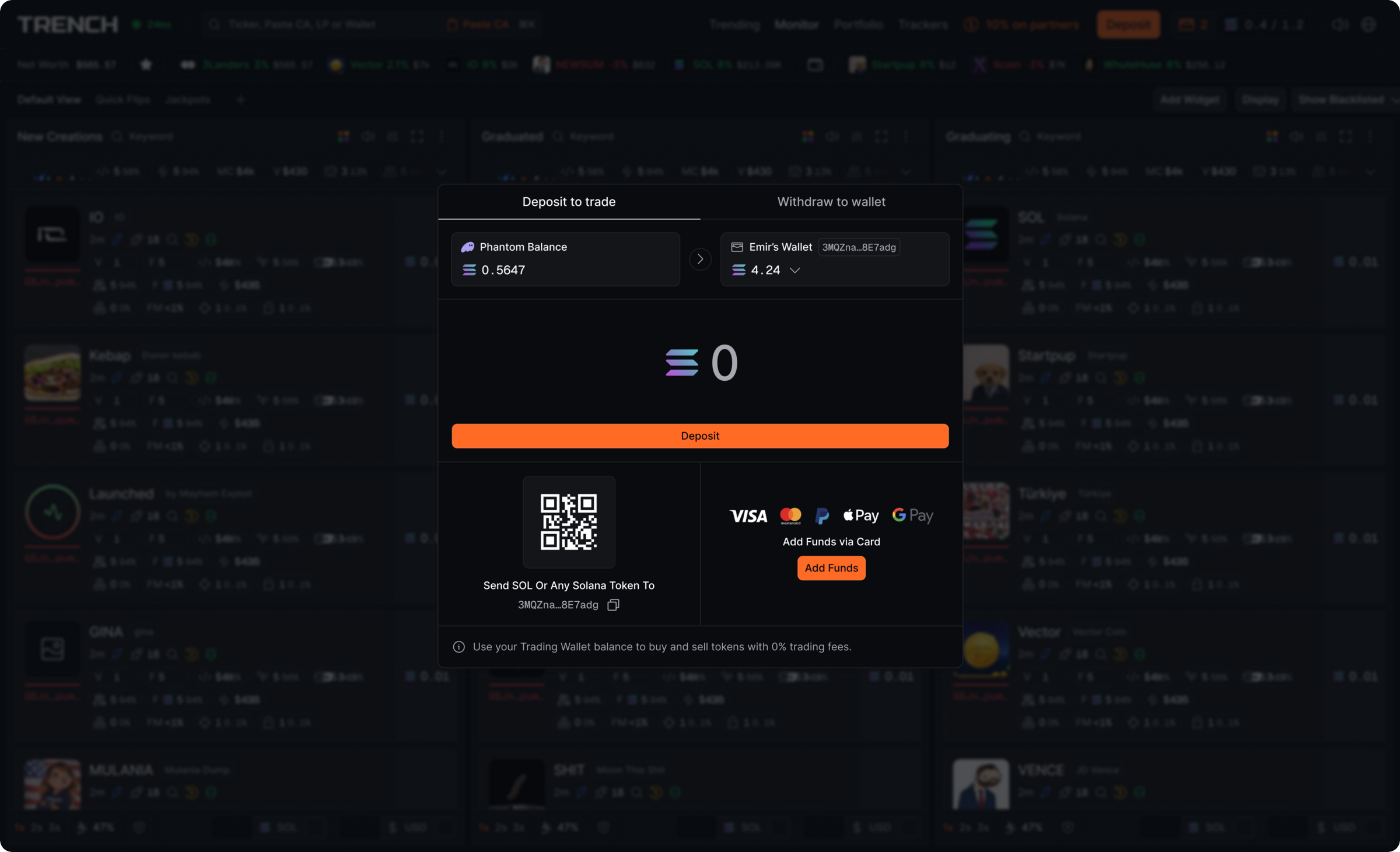
Onboarding is a single step: connect a wallet — Phantom, Solflare, MetaMask — sign once, and you’re done. Funding to trade is an inline modal, not a detour.