2021 to 2026 / October 27, 2026
The story
From $0 to $3 billion to zero
On October 12, Blur announced it's shutting down. The product that dominated the NFT market, and that traders used every day, is going dark.
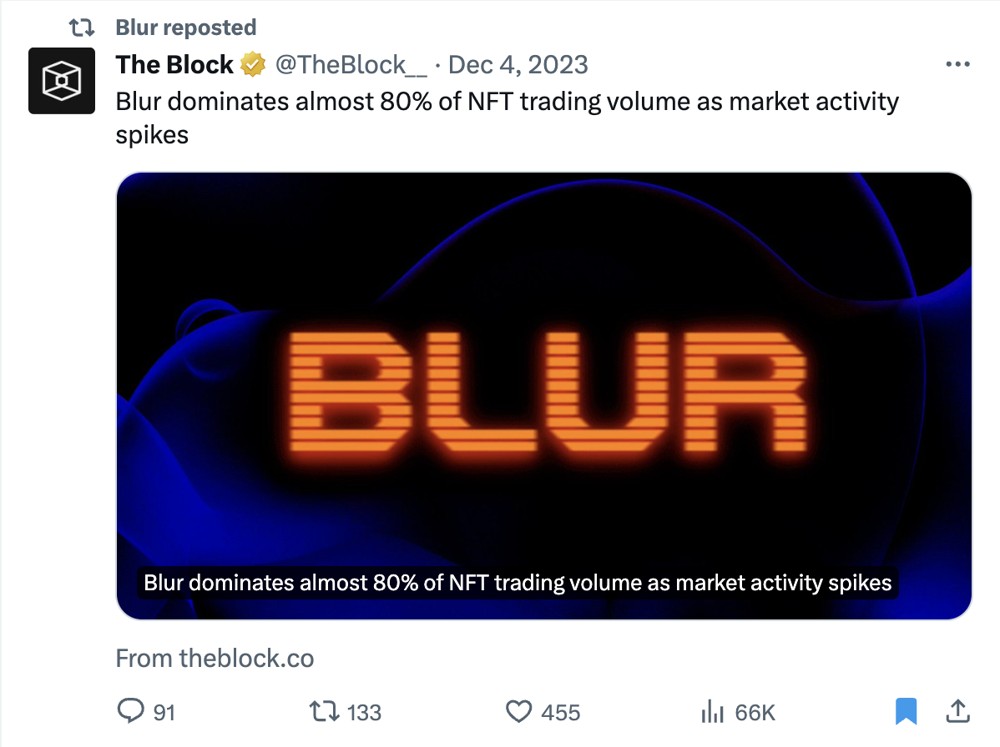
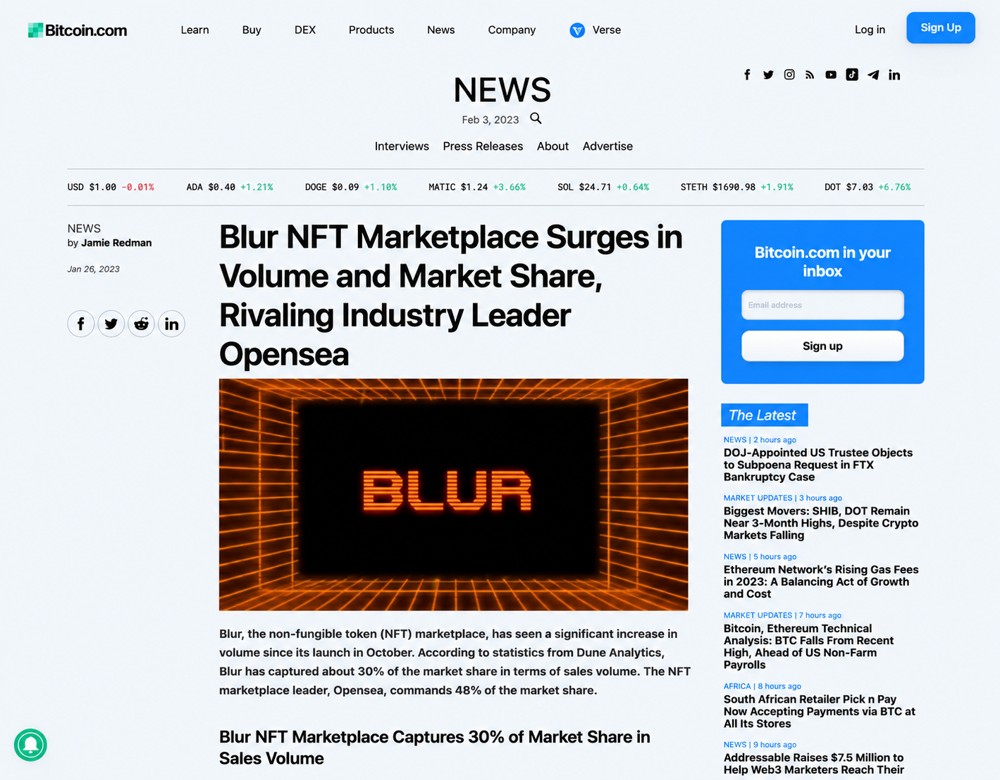
If you traded NFTs in 2023, you probably used it. At its peak, Blur handled more than 80% of all NFT trading volume. It passed OpenSea within months of launch and moved more than $10 billion through its order books.
I designed it. I was there from the first prototype to the very end, and until now, I wasn't allowed to tell anyone. This is the story I had to keep secret.
It started as a side project
Blur began in late 2021 as a side project for me. The first prototype I shared with the team in November 2021 had one idea on it: trade NFTs faster.
That was the whole pitch. NFTs were at the height of the mania. Every marketplace back then was built like an art gallery. The people actually moving the market were trading, not collecting, and other tools treated them like shoppers.
I believed NFTs would be more than digital art. I thought they were the future of tokenized assets, and that I was going to build that future.


A trading terminal, not a gallery
OpenSea, LooksRare and Gem all looked roughly the same in 2022: a banner, a big avatar, and a grid of large image cards. They were art galleries, not trading floors. None of them had an order book, a depth chart, or a live price chart next to the listings.
Pro traders don't shop that way. They read floors, depth and order flow, and they act in seconds. So we treated speed of information as the product and designed Blur like a Bloomberg trading terminal.
The brand went just as hard the other way. Crypto in 2022 was a sea of gradients and geometric sans-serifs. We built an 80s-arcade, synthwave world with neon wireframes, film grain and even a custom monospace typeface, working with the brand studio Hoodzpah. The airdrop was theater too: care packages that exploded open on a neon grid to reveal your $BLUR by rarity.
It was loud and a little dangerous. It looked like nothing else. You saw it once and remembered it. Traders embraced it, and the brand turned into a meme.
Flipping OpenSea, then everyone copying us
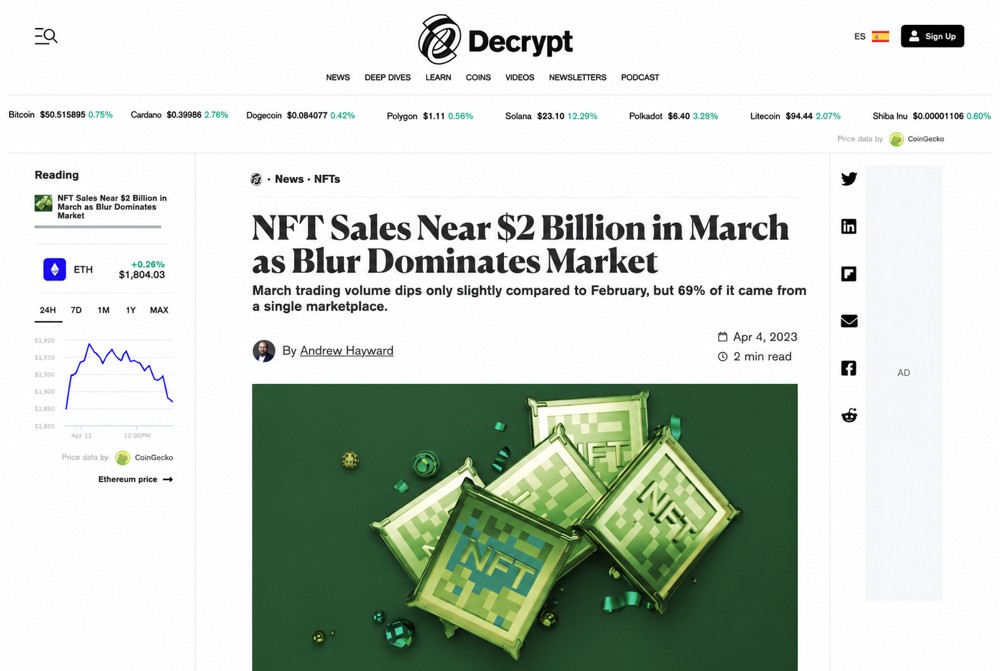
By early 2023, Blur had passed OpenSea. We went from $0 to billions in trading volume in less than a year. At the peak we were doing more than 80% of NFT volume. CoinDesk, Decrypt, The Block and Cointelegraph all ran the same headline in different words: a new marketplace had taken over.
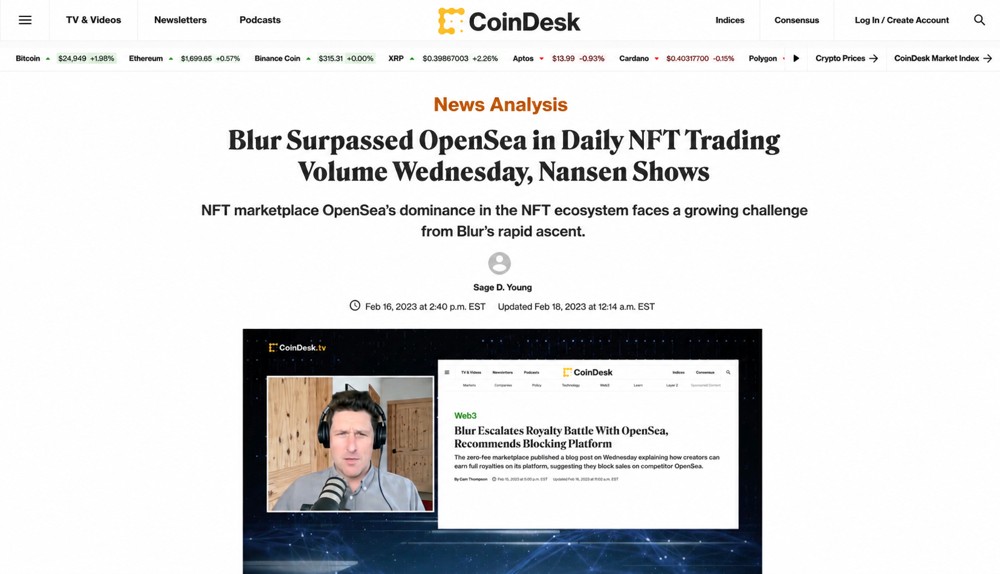
Within months, marketplaces on Solana, Bitcoin and everywhere else were shipping dense data tables, sweep sliders and the terminal look. Hundreds of crypto apps still use patterns I designed for Blur. The brand spread the same way, and you can still find synthwave crypto brands that trace straight back to it.
You can argue about a lot of things in crypto. You can't argue with being copied by an entire industry.
Praised and despised

Blur was never neutral. Traders loved it. The reviews were loud and immediate, and most of them came back to how the product felt to use.
A lot of people hated us, too. The incentive programs and the airdrop pulled in farmers, users who were only there to collect Blur's rewards for market making. Low creator royalties put pressure on artists and on the big collection teams. Some of that criticism was fair, and some of it was people losing a market they had owned.
When Blur announced the shutdown, one of the replies told it to close and never come back. That's the range: the most-used product in the category and, for some people, the most resented.
 Ryan Carson@ryancarson · Oct 19, 2022
Damn the @blur_io interface is FAST and intuitive.
Feels completely pro compared to Gem and OpenSea.
I know where I'm going to do my sweeping from now on.
I can see why @Zeneca_33 decided to become an Advisor.
 AC@ACthecollector · Jan 30, 2023
The collector and trader UX toggle on @blur_io is not just great its phenomenal.
I do not have any real case for using OS anymore (I sell w/ royalties).
 Ericuuuh@0xEricuuuh · Feb 12, 2023
Blur is thinking Amazon with Robinhood and interactive brokers while every other marketplace is still trying to make EBay.
 Cryptobscure@Cryptobscure · Oct 12, 2026
Good riddance. You destroyed NFTs. Please shut down and never come back.
 starfruit@starfruit_sol · Oct 12, 2026
You may not have been able to complete your mission to destroy NFTs.
But you acted with extreme determination and tried everything.
Congratulations to us for surviving you.
The design side of me learned something from that. A product that changes a market will make enemies of whoever the old market served. You don't get the first part without the second.
Working in the dark

Keeping my identity and my involvement secret was a condition of working with the company. Most of the team was anonymous. It's hard to say whether that was to keep us from getting poached or to protect us from nefarious actors. At this point, it doesn't matter. In New York, I was told to keep my screen turned away from other people when I worked in coffee shops, and at meetups I had to be careful about who knew where I worked.
It also makes for a strange career. For years I watched people argue about something I designed, praise it, copy it and trash it, and I couldn't say a word. The biggest thing I've ever worked on wasn't something I could even talk about.
This is the first time I've talked about any of this publicly.
$12 million on paper
My $BLUR was locked, like most early team allocations. At the peak, while it was still locked, my tokens were worth about $12 million.
By the time I was allowed to sell, they were worth a fraction. By the time I did sell, they were worth pennies.
People ask if that hurts. Honestly, it's harder to explain than it is to feel. The money was never real in any way I could use. It was a number on a screen that I watched rise and fall without being able to touch it. What was real was the work, and the work held up.
Still, if you've ever wondered what it looks like to be a paper decamillionaire for a year, it looks a lot like a normal life with a very distracting chart.
The people and parties
The best part was the team. I worked with some of the best engineers of my career at Blur, people who could take a design on a Tuesday and have it trading real volume by the weekend. We were a small team with a very high bar and no patience for anything that slowed traders down.
It's hard to believe a team of fewer than 20 people built and ran a multibillion-dollar company. But that's crypto.
The team is one of the reasons I stayed until the very end. Most of them are still anonymous, and I'm keeping it that way.
And then there's the parties. Crypto at the top of a cycle throws parties like nothing else. Some were just loud. A few had a quiet crypto-illuminati vibe: private venues, people who moved entire markets, and conversations that stopped when the wrong person walked up. The market's next move could be decided over a glass of whiskey.
People wanted access to this crowd for its influence. At one party at The Box, the infamous New York City club, I watched the bouncers turn away a prime-time TV host at the door because he wasn't on the list. Some events really were that exclusive.
Working with Pacman

Most designers never have to be on call. At Blur, I basically was, 24/7.
That came from the founder, Pacman. I first met him when he was a 16-year-old intern at a previous YC-backed company. He's a product and marketing genius. He knew how to create a hook. He knew how to get people interested in a product. And he knew how to solve real problems that users actually had.
His directness and last-minute demands were sometimes frustrating. But I knew I had to deliver at any moment and learning how Pacman thought about product and speed of delivery was worth it. During the busiest stretches, I took my laptop everywhere after hours and on weekends, just in case.
We were the fastest product team imaginable. A trader would make a request in Discord, and within the same day we'd have the feature designed, built, and shipped – and that was before AI coding.
His management style could be difficult. He admitted he wasn't a great people manager (he leaned on his co-founder for that), but what he lacked in management, he more than made up for in product sense.
At our peak, I thought of him as a kind of Steve Jobs of crypto: difficult to work with at times, but so phenomenal at certain things that you wanted to see the world from his point of view.
He's both a hero and a villain in the story of Blur: praised at the company's peak, and demonized for its failure.
Building multiple companies at once

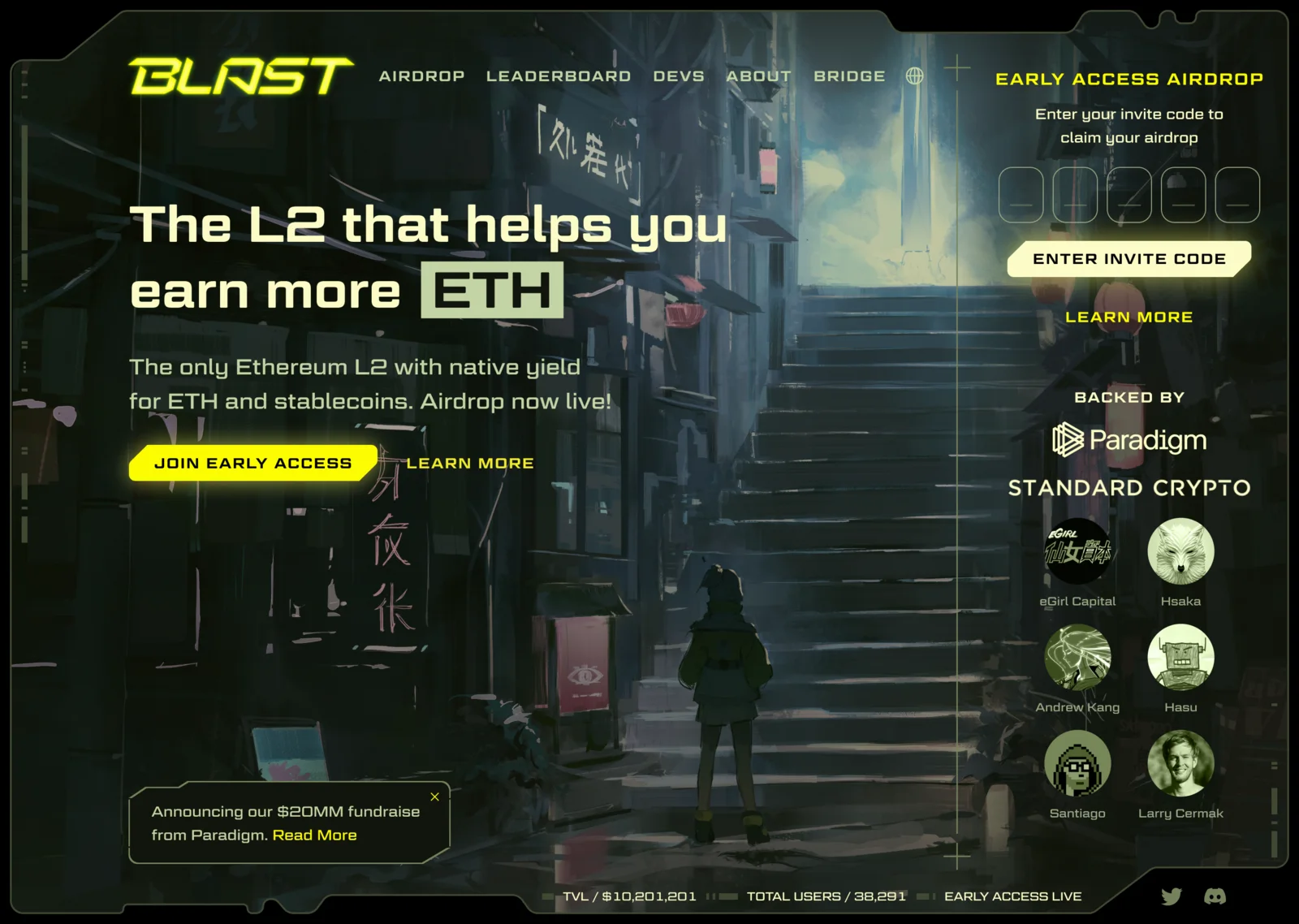
Alongside Blur, we were also building Blast. Blast is a story in its own right, and honestly probably deserves its own entire blog post.
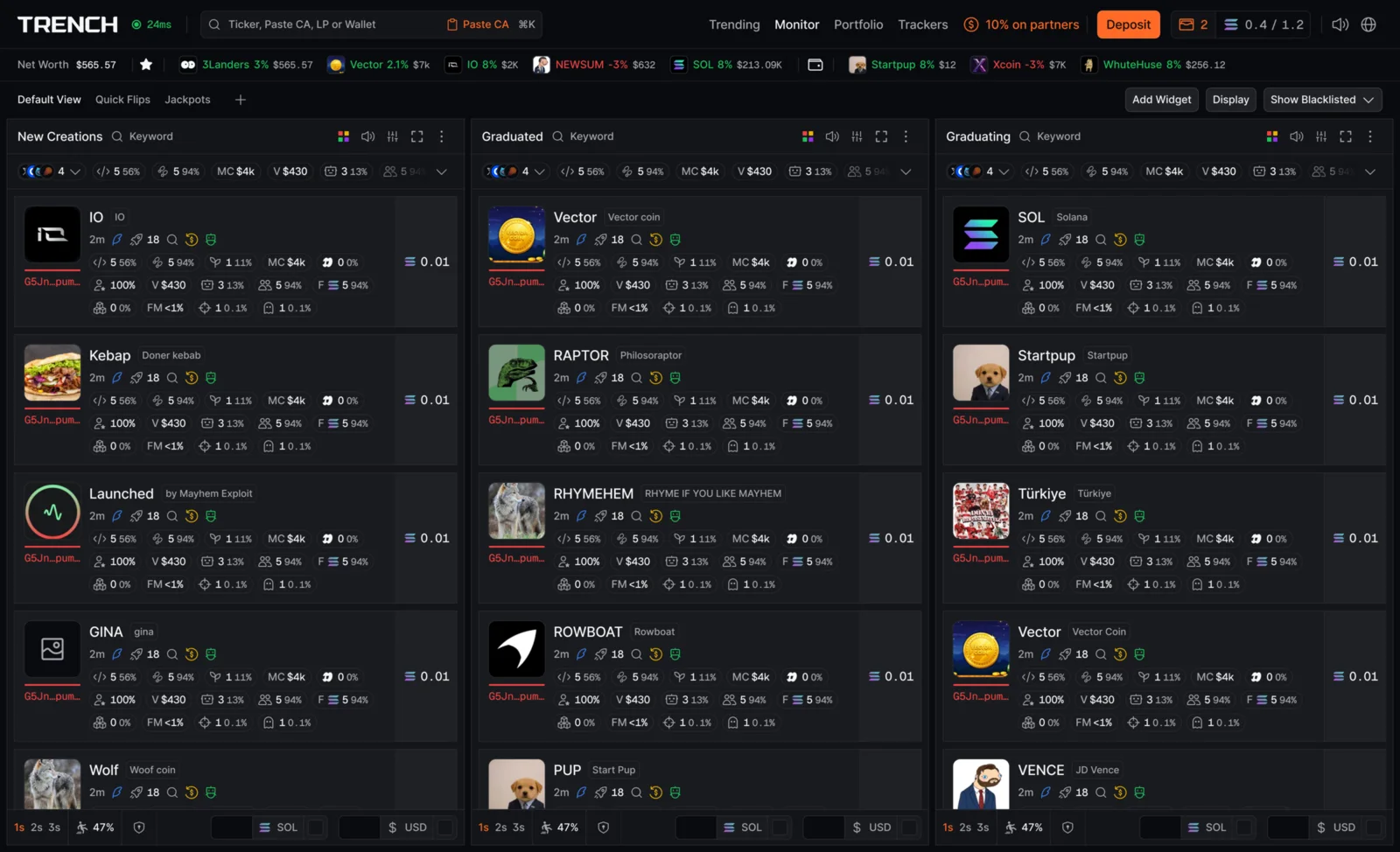
What I will say is that it created a lot more pressure. I was designing UI for two different companies at the same time. I disagreed with splitting our attention, and I felt it was important to stay focused on Blur. If we had, we might have actually gotten Trench (Blur's take on a meme coin trading terminal) off the ground. It's a project that will die with the company.
Some weeks, I worked on Blur for 12 hours one day and on Blast for 12 hours the next. The context switching was overwhelming, and AI tools hadn't yet evolved enough to help manage it.
Blast ultimately reached over $2 billion in locked deposits before it launched. It was another potential massive success that fizzled out into a mega failure. But, like I said before, that's a story for another day.
Design did more than the brand
People tend to file design under the logo and the colors. At Blur and Blast, it did a lot more than that.
Blur won on design as much as on anything else. The order book next to the listings, the sweep slider, the speed of every click: traders switched because the product was better to use, and the brand made sure they remembered where they'd found it.
Blast is the clearest example I've ever seen. When it opened, no backend had even been built. What people could see was the design and the marketing: the site, the invite codes and the story around them. That alone brought in thousands of signups and more than $2 billion in deposits before mainnet launched.
Design usually gets credit for how a product looks. It rarely gets credit for whether people believe in the product enough to show up. At Blast, design and marketing were carrying the company before there was anything underneath.
When the value dried up
The market cooled, and then it kept cooling. Speculative interest drained out of NFTs, volume fell more than 99% from the peak, and the token went with it. Within weeks, my schedule emptied out. Twelve-hour workdays turned into three hours of maintenance, and eventually into whole weeks with nothing to do. We kept building features and chasing anything that might spark interest again. It didn't matter. The market itself was done, and no product, however good, was going to bring people back.
It reached my personal life too. My relationship rose with Blur, and it fell with it. The financial swings were extreme, from millions on paper to almost nothing, and swings like that don't stay on the screen.
One night, I was playing pool at a dive bar near Manhattan Beach while my unlocked Blur tokens dropped more than $500,000. By the end of that week, they were down nearly $1 million. For me, that was most of their value.
For the rest of my time at Blur, I couldn't bring myself to sell what I had left. I kept hoping for another NFT boom, or that we'd find the next big opportunity in crypto. I had diamond hands, and they ended up holding worthless paper. I too, fell for the hype.
That's when it finally sank in. I really thought we were building the future of tokenized assets, but in reality we built digital Beanie Babies.








What I took from it
Product quality wins the category. The market decides the outcome. We built the best version of the thing, and it won. But you can design the best product in a category and still be at the mercy of the tide it sits on. No interface can create demand that the market has moved past.
Design for the person who moves the market. Everyone else designed for art collectors. We designed for traders, and the collectors followed. The most valuable user is often the one your competitors find inconvenient.
Speed is a design decision. Most of what made Blur feel different wasn't decoration. It was removing every step between deciding and acting.
Power users are fine with a busy interface. Designing for pros is radically different from designing for retail. Good design can still be busy design. Experienced traders need more information visible at a glance than retail traders do. Don't simplify what doesn't need simplifying.
Pick your people carefully. Crypto attracts some of the most brilliant people I've ever encountered, but also some of the most questionable. When billions of dollars are moving around and fortunes are being made overnight, it's not always easy to know who's there for the right reasons. The experience taught me to pay as much attention to the people behind a product as the product itself.
Don't count your chickens before they hatch. I never let myself get too excited about the money, because it was always just a number. I knew that until it hit my bank account, it wasn't fully realized.
It's strange, and that's fine. Going from the most-used product in a category to a shutdown notice in four years is disorienting. Both things are true. It was a massive success, and it ended.
What's next
I've spent the last stretch building my own things:
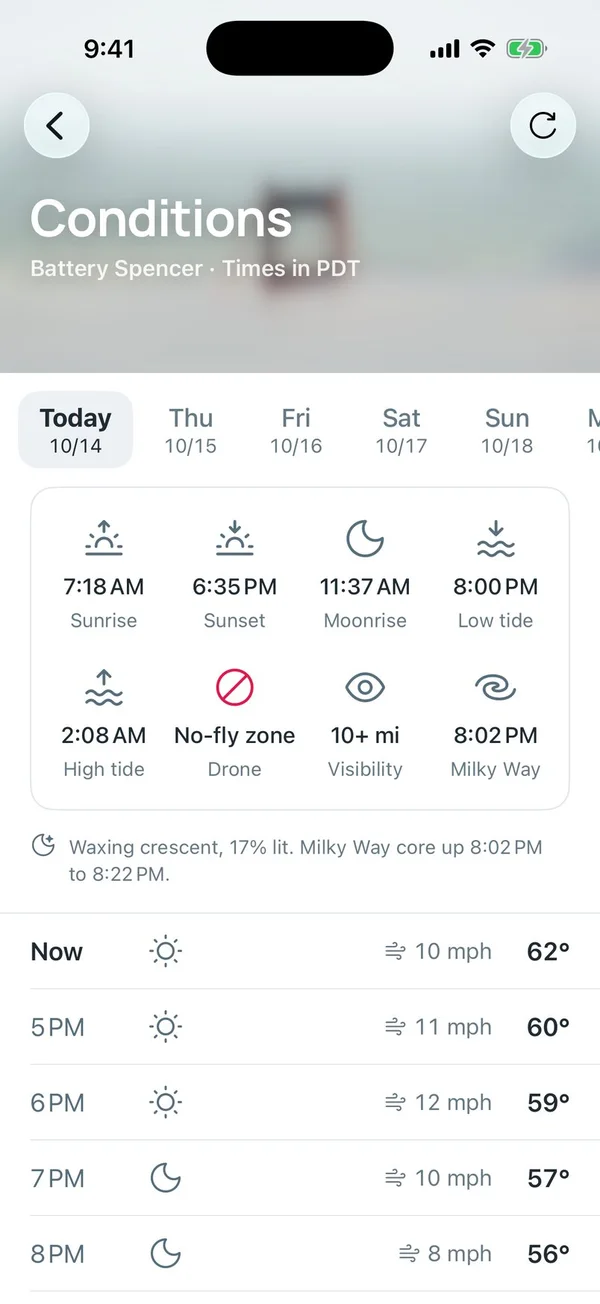
- Viewfinder, an app that shows you the most beautiful spots and photo locations.
- Talk Across, a real-time conversation app for people who don't share a language.
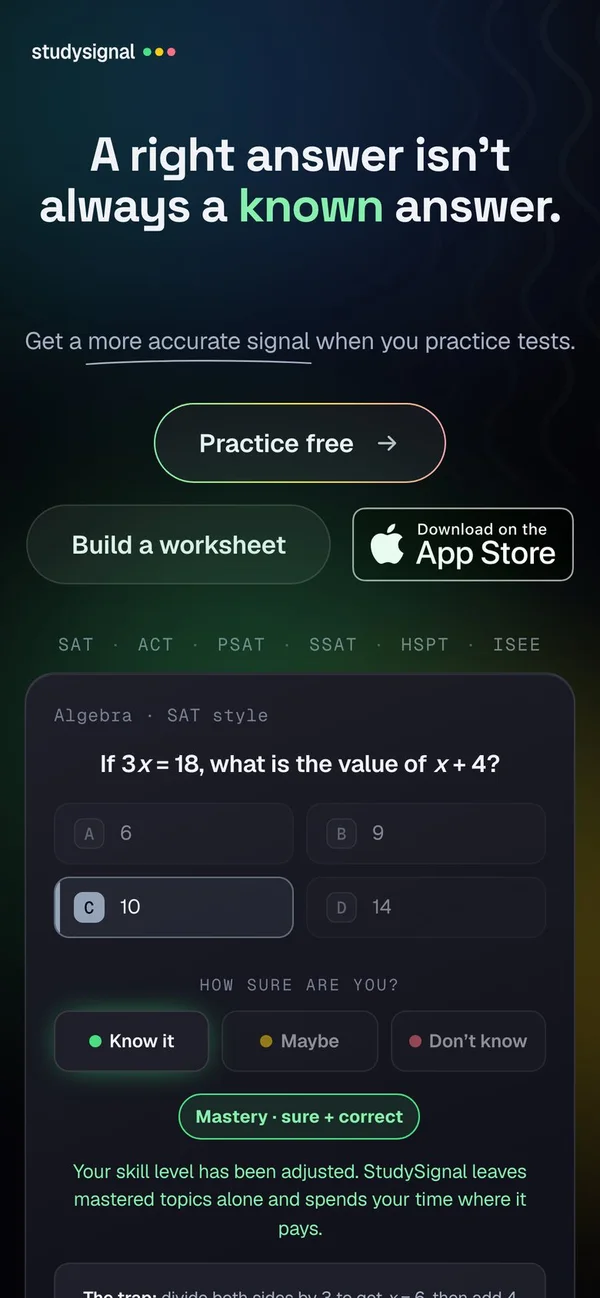
- StudySignal, test prep that measures how confident you are, not just whether you got it right.
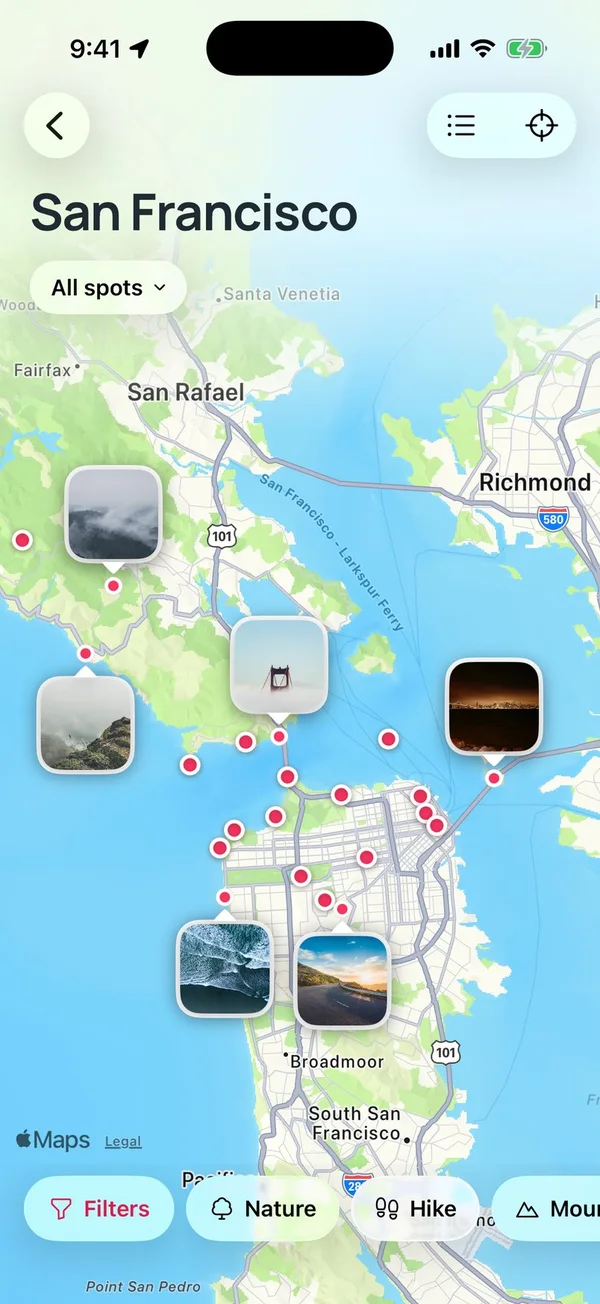
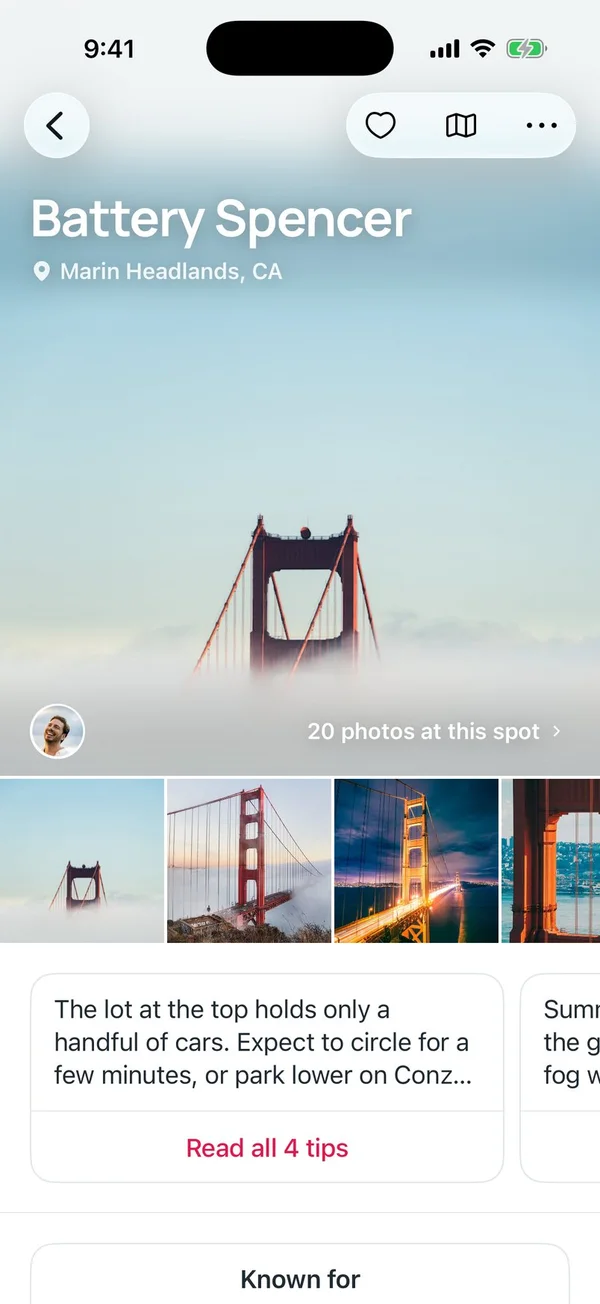
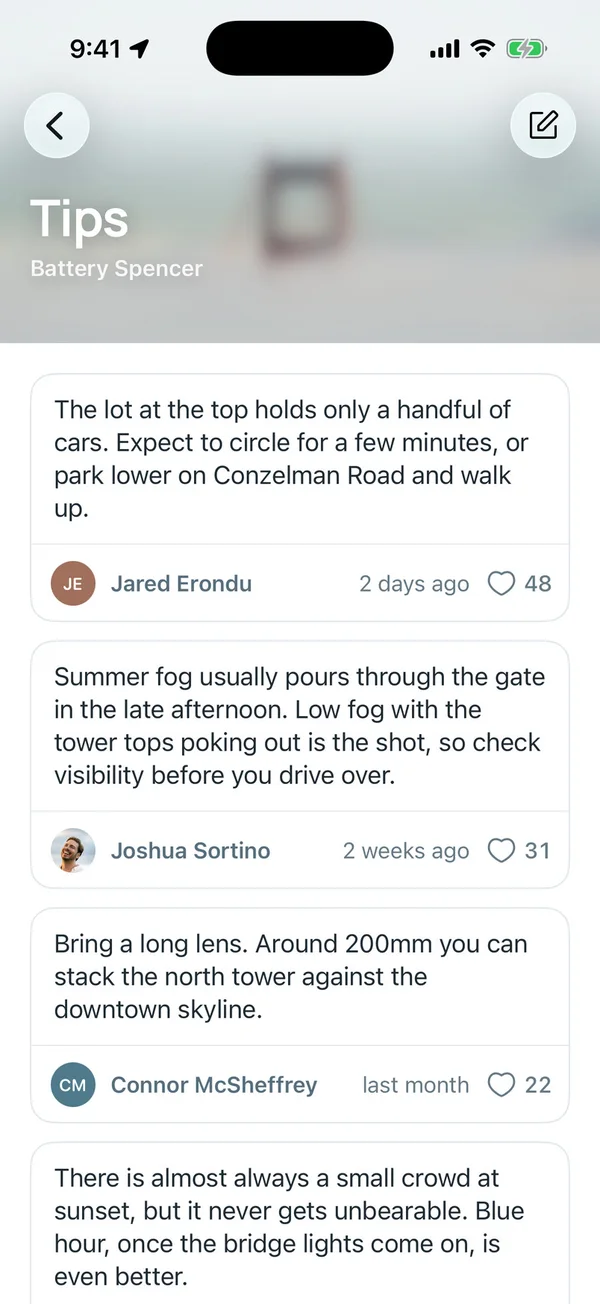
Blur showed me what it's like to design something that changes how an entire market works. I want to do that again.
If you're building something ambitious and need a design leader who has been through the whole arc, from sketches on a napkin to number one to an exit, we should talk. Reach out here.
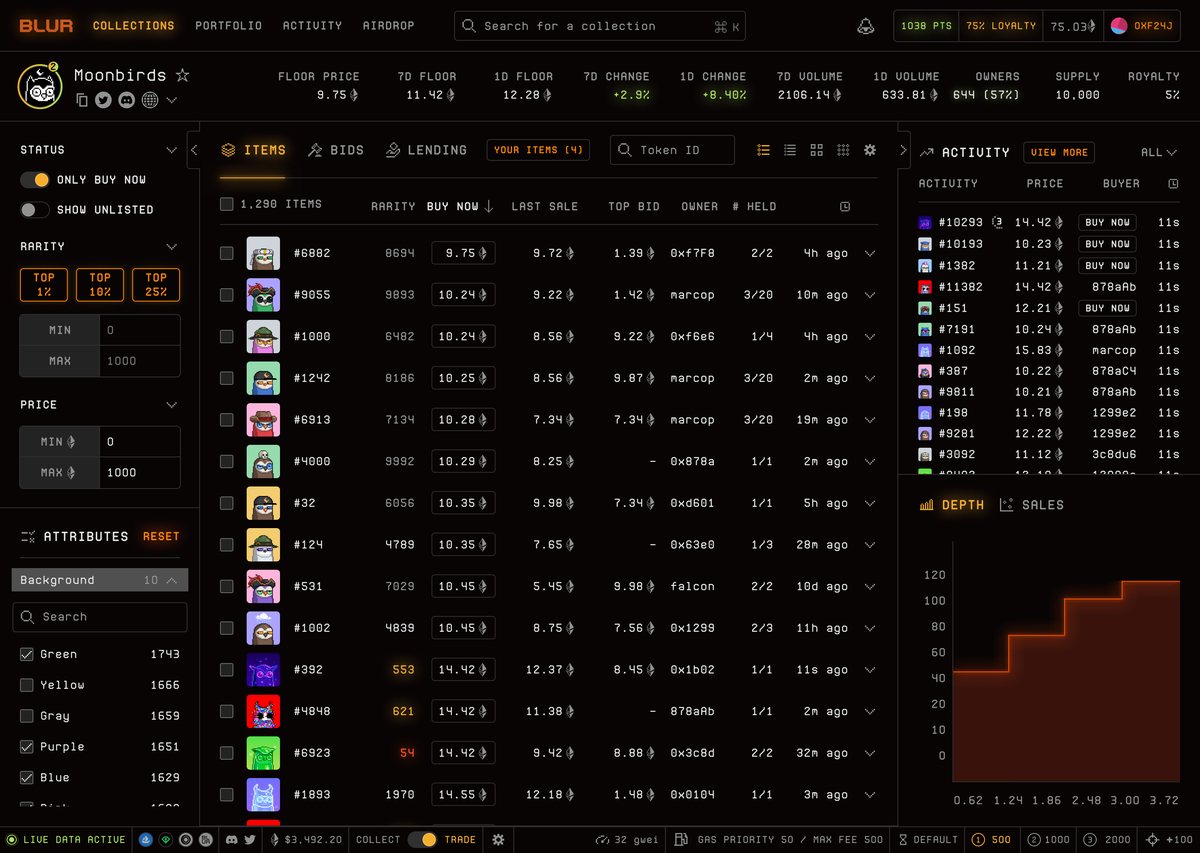 Case studyRead the full Blur case study, with screenshotsOn my portfolio →
